Tuesday’s Headlines Stay Safe
Political rhetoric notwithstanding, you're much safer on a bus or a train than in a car, or walking or biking near cars.
By
Blake Aued
12:01 AM EDT on September 16, 2025
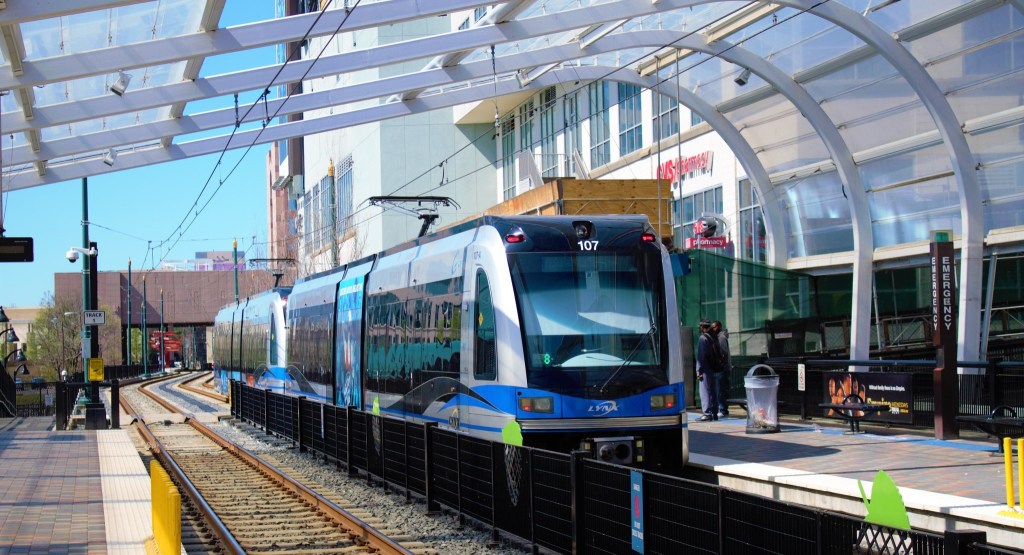
- The United States has the most dangerous roads of any high-income country. On a miles-traveled basis, Americans are 17 times more likely to die in a car than on a bus, and 50 times more likely to die in a car than on a train. Vehicular homicides and road-rage killings are far more common than murders on transit, which may explain why they don’t make national news. (The New Republic)
- Although violence on transit is rare, poorly lit spaces and men’s unwelcome behavior like sexual harassment make using it uncomfortable for many women. (Huffington Post)
- The man who killed Iryna Zarutska on Charlotte light rail didn’t buy a ticket. Could turnstiles and fare checks have prevented her death? (Mass Transit)
- Former House Speaker Nancy Pelosi, San Francisco Mayor Daniel Lurie and state Sen. Scott Weiner helped talk Gov. Gavin Newsom out of going back on a deal to provide $750 million in loans to struggling Bay Area transit agencies. (Politico)
- Pennsylvania Gov. Josh Shapiro quickly agreed to let Pittsburgh Regional Transit use $107 million meant for capital projects to cover its operating costs, avoiding service cuts or fare hikes. (Union Progress)
- Pollution in formerly smog-choked Atlanta is rising again now that commuters are returning to their pre-COVID driving patterns. (AJC)
- The City of Milwaukee is formalizing its support for a commuter rail line to Racine and Kenosha. (Urban Milwaukee)
- Mayor Brandon Scott and other Baltimore officials characterize parking reform as a way to undo structural racism, but Black homeowners aren’t buying it. (Brew)
- A road diet with a bike lane and angled parking on Kansas City’s Broadway could start as soon as this week. (Star)
- The Omaha Chamber of Commerce created a $1 million fund to help small businesses impacted by streetcar construction. (KETV)
- Under court order, Philadelphia is removing loading zones that replaced street parking as part of the Spruce and Pine bike lane project. (CBS News)
- Tourism in Hawaii is threatened by its lack of sidewalks and rising pedestrian deaths. (Travel and Tour World)
- Brandon Donnelly breaks down how the Grand Paris Express fits in with the city’s existing transit network.
- Montreal is naming a section of its cycling network for Robert “Bicycle Bob” Silverman, who helped make it one of the best biking cities in North America. (Momentum Mag)

Blake Aued has been doing Streetsblog's daily national news digest for years. He's also an Atlanta Braves fan, which enrages his editor in New York.
Read More:
Streetsblog has migrated to a new comment system. New commenters can register directly in the comments section of any article. Returning commenters: your previous comments and display name have been preserved, but you'll need to reclaim your account by clicking "Forgot your password?" on the sign-in form, entering your email, and following the verification link to set a new password — this is required because passwords could not be carried over during the migration. For questions, contact tips@streetsblog.org.
More from Streetsblog USA
Thursday’s Headlines Are Another Front in the Culture War
David Zipper explains how transportation, once an issue with broad consensus, became politically polarized.
October 8, 2026

Does the ‘Week Without Driving’ Give Car-Free Living A Bad Rap?
Nope; automobility does that! But there's more we can do to highlight the benefits of active and shared transportation, and demand even better for people outside vehicles.

October 8, 2026
Wednesday’s Headlines Come Not to Bury Caesar
Why is public transportation the only thing Donald Trump doesn't want to build?
October 7, 2026
NYC to Test-Run Bus-Mounted Cameras To Catch Bike Lane Blockers
DOT and the MTA are finally getting ready to expand automatic enforcement to ding drivers who block bike lanes.

October 7, 2026
Pittsburgh Goes All-In On ‘Week Without Driving’ By Celebrating New Bus Lanes
The Steel City is celebrating the Week without Driving ... and some shiny new bus lanes.
October 7, 2026