Commentary: Will San Francisco Succeed at Daylighting?
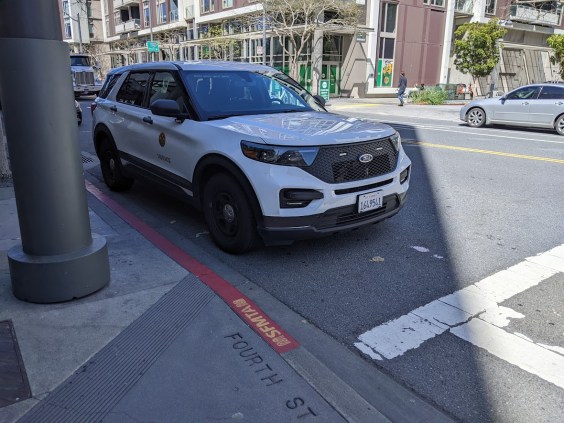
It’s all over mainstream news, albeit framed primarily as a driver inconvenience rather than a life-saving safety measure: on January 1, 2025, in compliance with state law, the SFMTA will begin issuing citations for parking within 20 feet of a crosswalk. More from the San Francisco Chronicle:
City officials confirmed Tuesday that they will only focus on painting red curbs around schools to improve the visibility of kids crossing the street, but that leaves thousands of spots without any marking. That means the city’s drivers will have to be vigilant about where they can and can’t park or face a $40 ticket starting Jan. 1.
“Red curbs and paint are a waste” I opined to a city official during a call last week about the issue (and other aspects of street policy). Albeit it’s not San Francisco, but as if to underscore my point, this was my view out the window:

Daylighting, or banning parking close to corners and crosswalks, aims to give drivers a last chance to spot pedestrians and avoid deadly crashes.
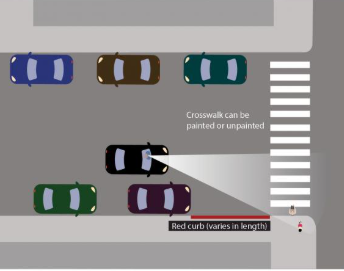
From Walk San Francisco, which helped fight for the legislation:
Daylighting is a clear opportunity to improve safety for everyone, including drivers. Hoboken, New Jersey hasn’t had a traffic death in seven years, and extensive daylighting is one of the top reasons credited for why. Hoboken does 20 feet of painted daylighting at every intersection – and installs protective infrastructure in the space like posts, bike racks, and planters to prevent drivers from illegally parking there.
Streetsblog added the emphasis in that last sentence because that’s key. Hoboken, and New York City, have actually reduced fatal and serious crashes and saved lives not just by writing citations, but, in many cases, by making it impossible in the first place to park near a crosswalk. And that doesn’t require complex engineering and high expense. To illustrate, when I was in New York in October for the Vision Zero Cities conference, I took a picture of transportation professor Marcel Moran outside of New York University sitting on a piece of that city’s parking enforcement:
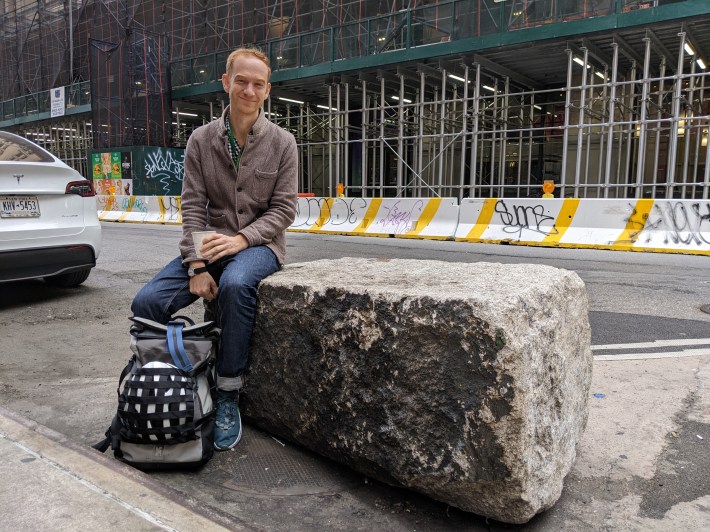
Note that in the above picture there is a double-white line and a painted bulb out (albeit badly faded) behind the boulder to indicate a daylighting zone where parking is banned. So yes, there’s reason for paint—to give drivers a last chance to steer away from an expensive trip to the body shop. But, obviously, it’s the granite blocks that make the difference
Painted concrete blocks are another tool in New York’s safety arsenal:
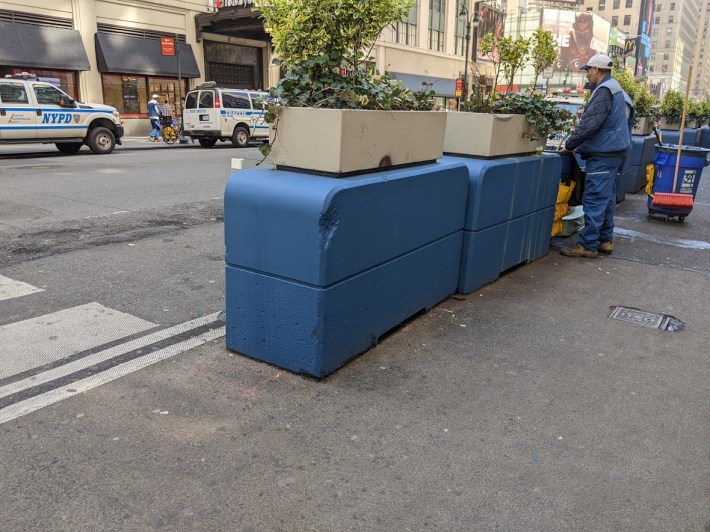
Boulders, bricks, and concrete blocks are not expensive. Unlike parking enforcement officers, they don’t take breaks and don’t discriminate. They also effectively block city vehicles, delivery drivers, and others undeterred by the threat of fines. Yes, SFMTA has built bulbouts at many intersections and those help too, but there’s no reason to avoid using blocks, bike racks, and other physical obstacles in the short term.
If the failure of Vision Zero over the past ten years shows anything, it’s that the city can’t rely on paint, signs, and the threat of citations. Granite, concrete, planters, bike racks in the daylighting zone—whatever it is, it’s got to physically prevent drivers from parking there in the first place.
The post Commentary: Will San Francisco Succeed at Daylighting? appeared first on Streetsblog San Francisco.
Read More:
Streetsblog has migrated to a new comment system. New commenters can register directly in the comments section of any article. Returning commenters: your previous comments and display name have been preserved, but you'll need to reclaim your account by clicking "Forgot your password?" on the sign-in form, entering your email, and following the verification link to set a new password — this is required because passwords could not be carried over during the migration. For questions, contact tips@streetsblog.org.