Calif. Will Continue to Undermine its Climate Goals by Widening Highways

Note: GJEL Accident Attorneys regularly sponsors coverage on Streetsblog San Francisco and Streetsblog California. Unless noted in the story, GJEL Accident Attorneys is not consulted for the content or editorial direction of the sponsored content.
Freeway Widening
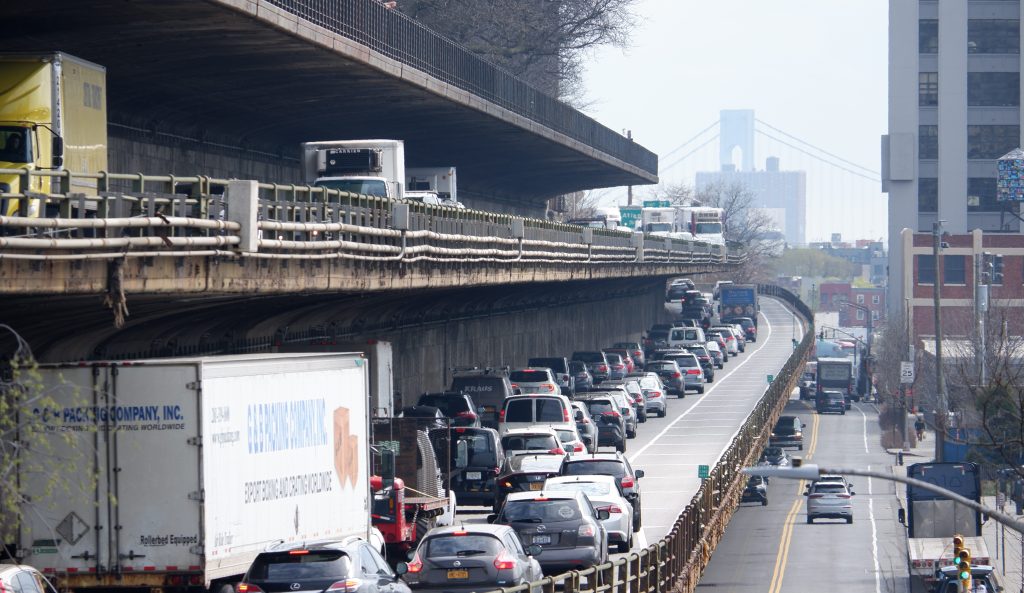
The California Transportation Commission (CTC) went through the motions of listening to objections raised by opponents of a freeway widening project near Sacramento, but the final vote yesterday in favor of the project was no surprise. The commissioners seemed to accept without question Caltrans’ claims that adding a lane on the causeway over the Yolo bypass would reduce the serious congestion in that corridor, and brushed aside most of the other objections raised by commenters.
One of the actions taken by the CTC was approval of the final environmental review of the project, which adopts a “statement of overriding considerations” which basically says that reducing congestion is more important than any other health, safety, air quality, or climate impact.
But the project won’t reduce congestion. Within that environmental document, even with its reworked modeling that shows less of an increase in induced travel than earlier versions, Caltrans admits that the project would increase vehicle miles traveled. Even if an extra lane did speed up existing travel, it would quickly fill back up with new travel, and congestion would be right back where it is today.
The proposed mitigations include some funding for transit improvements, which would come from revenue received by making the new lane a “managed lane.” But what that means is still undefined. A toll lane? An HOV lane? The region has formed a new Capital Area Regional Tolling Authority to figure it out, but it is mere weeks old and has made no decisions yet.
The claims made by project proponents don’t line up. Congestion will be reduced, they say, and buses and trucks will no longer be stuck in traffic. But the only way buses would be sped up is if “managed lane” means bus-only lane; if drivers are allowed to pay a toll to use it, or electric vehicles including freight trucks are allowed to use it, buses won’t escape that congestion.
This is the first major project to come forward under Caltrans’ rules on S.B. 743, which require transportation projects to account and mitigate for induced travel. But Caltrans and the CTC ignored the reasons behind those rules and are moving ahead with ineffective mitigations that would account for less than half of the new vehicle miles traveled.
Other state agencies are trying to figure out how to reduce greenhouse gas emissions, and approving new highway lane miles is a short-sighted business-as-usual approach that undermines that work.
Bill on Trade Corridor Funds
On the same day, a bill that would have required at least fifteen percent of funds in the Trade Corridor Enhancement Program to be used for zero emission projects was killed in the Assembly Appropriations Committee. The bill would have increased that target by five percent every cycle until it reaches fifty percent. It would also have required the Department of Housing and Community Development, and the Air Resources Board to create guidance for projects that expand the physical footprint of a highway to address the impact on disadvantaged communities.
The purpose of A.B. 2535, according to its author Assemblymember Mia Bonta, is to address the harmful impacts of congested freight movement on the low-income communities of color that it tends to be located near or in.
The Charge Ahead Campaign, in a statement expressing deep disappointment in the holding back of A.B. 2535, wrote:
“We cannot afford to continue fueling negative health outcomes and climate catastrophes in our neighborhoods by investing in infrastructure that we know will create more pollution instead of lessening it. This bill represented an essential first step towards shifting investments away form polluting, ineffective highway widening projects and towards sustainable infrastructure… while maintaining and improving the efficacy of freight system investments.”
“A cleaner, safer transportation system will benefit all Californians – and is within reach with minimal trade-offs thanks to a transportation budget that remains, in spite of general fund revenue headwinds, at an all-time high.”
The bill was killed without comment by the Appropriations Committee, along with a list of other bills. More on those later.
The post CA Will Continue to Undermine its Climate Goals by Widening Highways appeared first on Streetsblog California.

Read More:
Streetsblog has migrated to a new comment system. New commenters can register directly in the comments section of any article. Returning commenters: your previous comments and display name have been preserved, but you'll need to reclaim your account by clicking "Forgot your password?" on the sign-in form, entering your email, and following the verification link to set a new password — this is required because passwords could not be carried over during the migration. For questions, contact tips@streetsblog.org.