Survey Says: Empathy Is the Key To Getting Motorists to Drive Safer
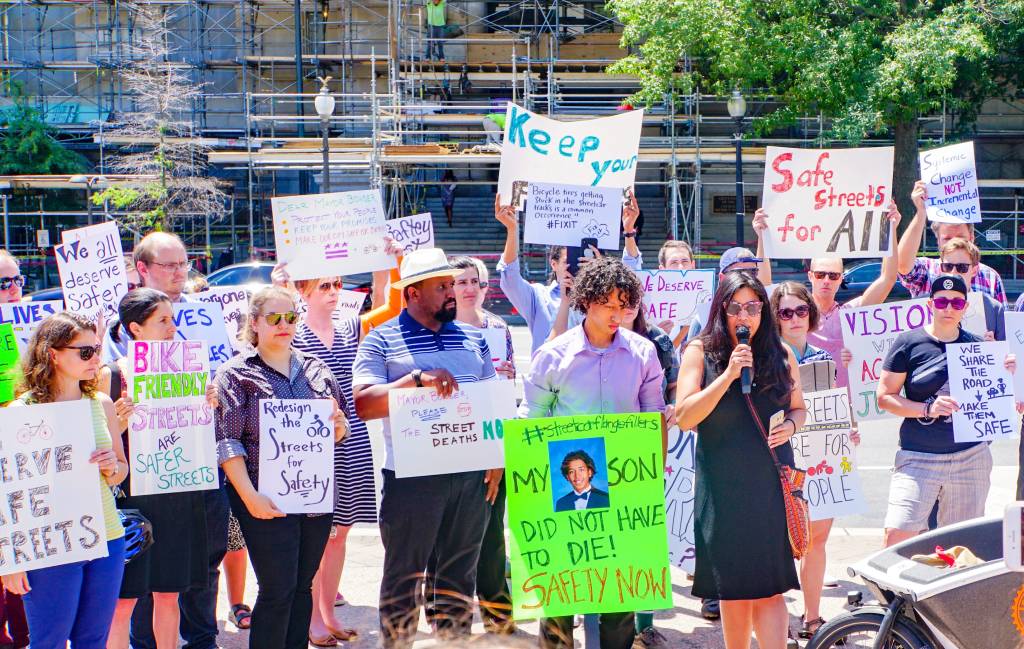
Drivers are stunningly oblivious to their role in America’s road safety crisis — and empathy, not enforcement or traditional education, may be the key to getting them to change their ways, a new study suggests.
A recent survey conducted by the White Line Foundation found that U.S. drivers are overwhelmingly aware that other motorists are engaging in deadly roadway behaviors like speeding, using phones behind the wheel, and narrowly avoiding crashes. But they far less frequently admit to those engaging in those deadly behaviors themselves.
Worse, 68 percent of motorists wildly over-estimate the legal system’s ability to bring all those “other” problem drivers to justice — and only 11 percent know that killing a pedestrian or cyclist in America rarely results in significant punishment.
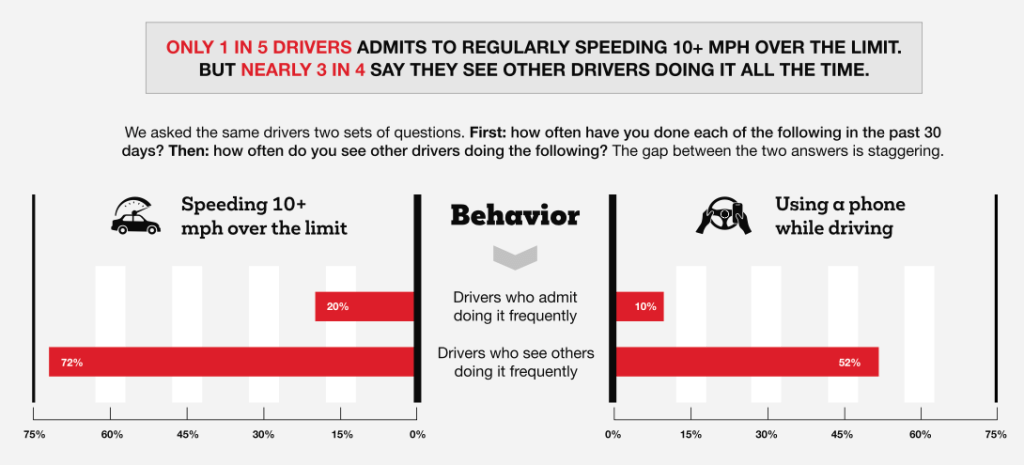
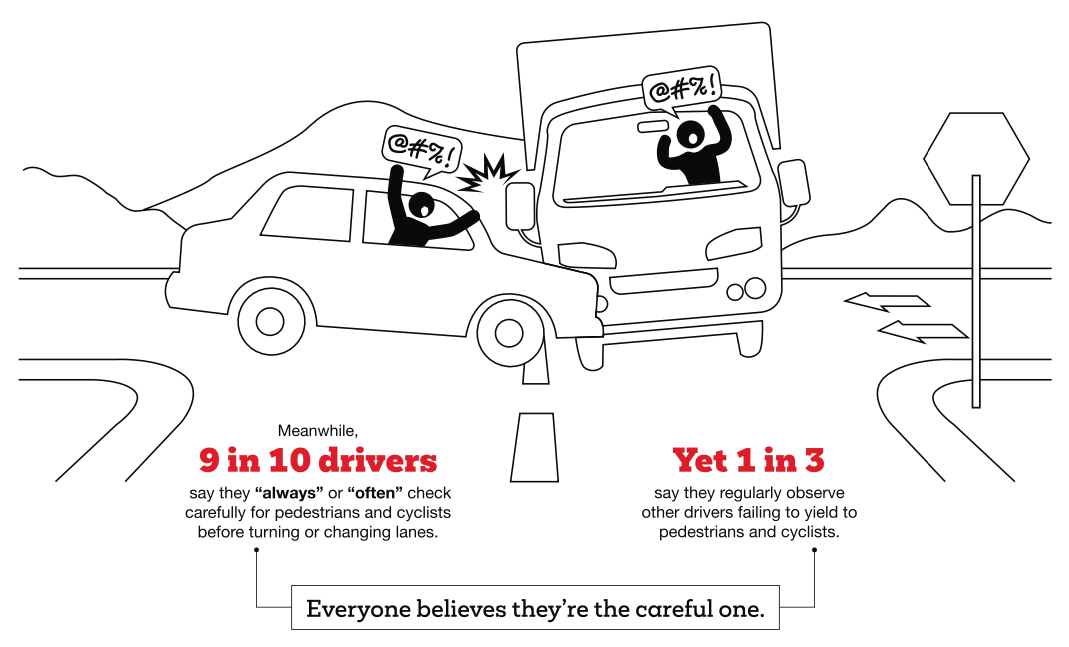
The group says the findings of this anonymous survey show a broken culture where motorists can “see the danger clearly when they look out their windshield, but not when they look in the mirror.”
And without that self awareness or road designs that make it all but impossible to drive recklessly, many motorists will just keep endangering others until the worst happens.
“You operate best in the world if you think that you are a good citizen of the world, so that’s your frame of mind,” said White Line Executive Director Jacqueline Claudia. “It’s not surprising to me that people think, ‘Well, it’s OK; when I speed, I’m actually good at it. I’m aware. But all those other people? They’re the problem.'”
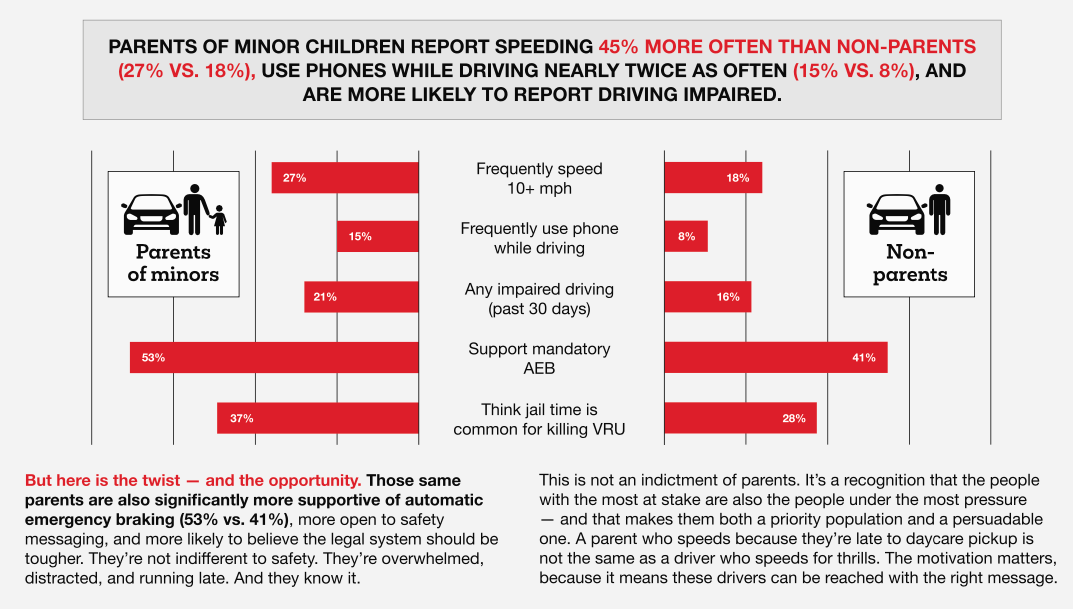
Interestingly, one group in the survey was slightly more aware of their role in America’s traffic violence crisis: parents of young children, who admitted to far higher rates of speeding, cell phone distraction, and even impaired driving that any other cohort.
But Claudia says that “Parent Paradox” may have more to do with the challenges of raising a family in car-dependent places than the moms and dads of the world being more reckless than their child-free peers.
“Parents — especially working parents — are incredibly pressured in today’s environment,” she added. “I mean, the pressure to get everyone to school on time, to get to work on time, get to the meeting, get here, get there — I think that there’s a lot more stress involved, and a lot more potential for distraction.”
Claudia acknowledges that even great drivers can cause deadly crashes — simply because so many U.S. roads and vehicles aren’t designed to put safety first. That’s part of why her group is pushing to pass the Magnus White Cyclist Safety Act, which would mandate automatic emergency braking systems on all new cars that can detect and protect people on bikes whether the driver is paying perfect attention or not.
The bill is named for a 17-year-old cycling phenom who was killed by a Colorado driver in 2024; his parents, Jill and Michael White, went on to found the White Line Foundation in his memory.
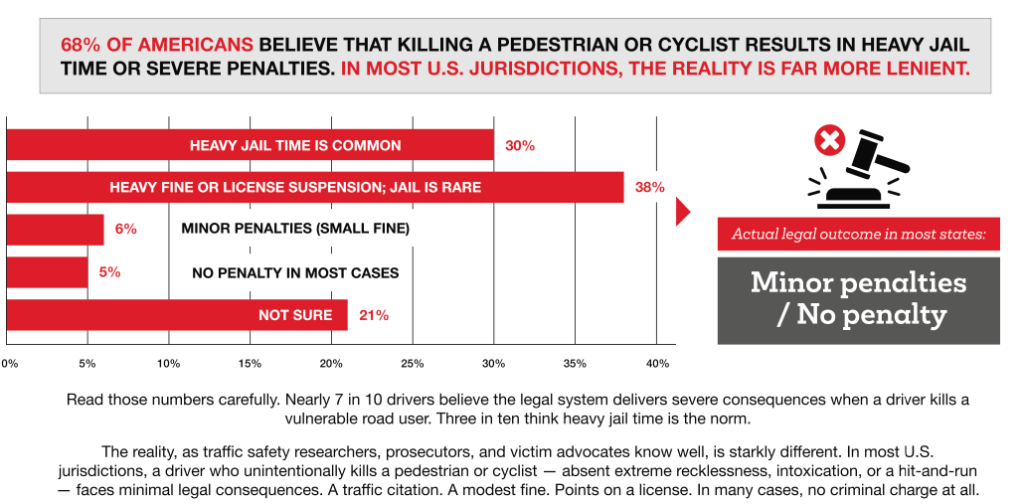
Claudia also believes that enforcement needs to be a part of the equation, if only because victims need accountability to heal.
“People believe that if you kill or injure someone with your car there are serious consequences — and you don’t typically find out that there aren’t until you’re the victim, or you’re the loved one of a victim,” she added. “Then you’re horrified that someone could … kill your loved one, and end up with a ticket that they could pay with their debit card, and maybe some community service. It just doesn’t feel right.”
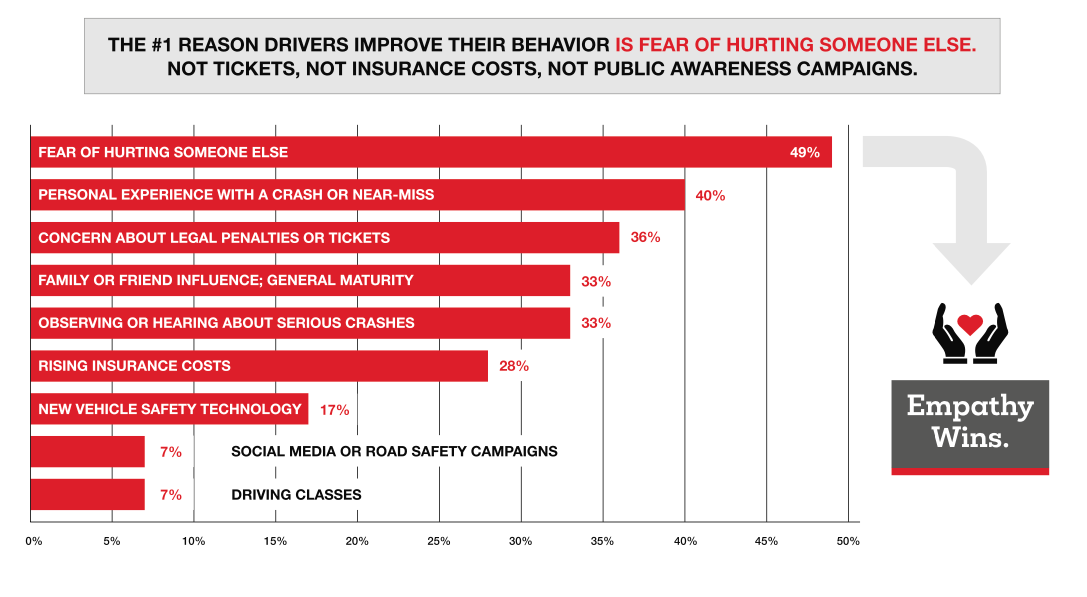
When it comes to getting drivers to change their behavior, though, survey respondents said that fear of enforcement actually isn’t the strongest deterrent — and empathy is a more powerful driver. Both “fear of hurting someone else” and “personal experience with a crash or near miss” ranked higher than “concern about legal penalties or tickets” on the list of why drivers had motivated to drive safer in the past.
Interestingly, social media campaigns and driver’s ed programs both ranked lowest on the list — suggesting that safety leaders will need to get the message out in other ways if they want to humanize victims of traffic violence in a way that prevents future tragedies.
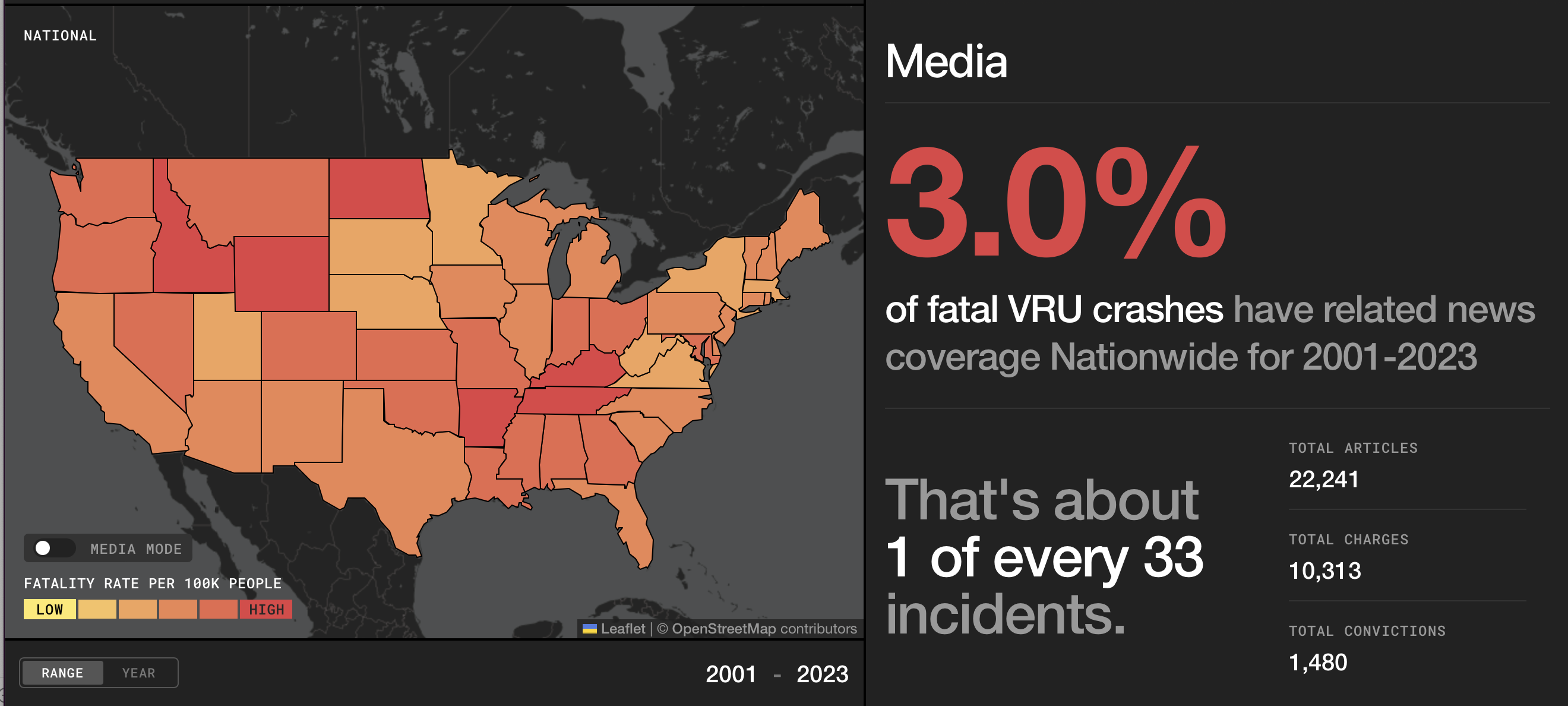
That could mean working with news agencies to get better more extensive media coverage after traffic deaths — though that’s a tall order, considering that the group estimates only 3 percent of all vulnerable road user fatalities end up on the news at all. And when victims’ stories are told, Claudia says telling them well matters, too, as does connecting those stories to the need for concrete action to prevent future tragedies.
“It’s one thing to hear a story of somebody who was biking to work and was hit by a car. [But if the victim says], ‘If the driver had been driving 20 miles an hour, I might still be able to walk today,’ it’s more powerful. … We’re honing in on the marriage of victim impact stories with the education and the data.”
Of course, Claudia acknowledges that surveys have their limits, and the interventions drivers say would deter bad behavior might be different than the ones that actually influence them to drive safer on real roads.
Still, she says that she’s seen firsthand how humanizing the traffic violence epidemic can move the needle — especially with policymakers who can pass legislation for systemic solutions.
“Empathy cannot be legislated,” the group wrote. “It cannot be mandated by a federal rule or funded by a grant cycle. But it can be cultivated. It can be triggered. It can be made unavoidable.”

Read More:
Streetsblog has migrated to a new comment system. New commenters can register directly in the comments section of any article. Returning commenters: your previous comments and display name have been preserved, but you'll need to reclaim your account by clicking "Forgot your password?" on the sign-in form, entering your email, and following the verification link to set a new password — this is required because passwords could not be carried over during the migration. For questions, contact tips@streetsblog.org.