Talking Headways Podcast: Are Arterials Unsafe? Or Are We Making Them Unsafe?
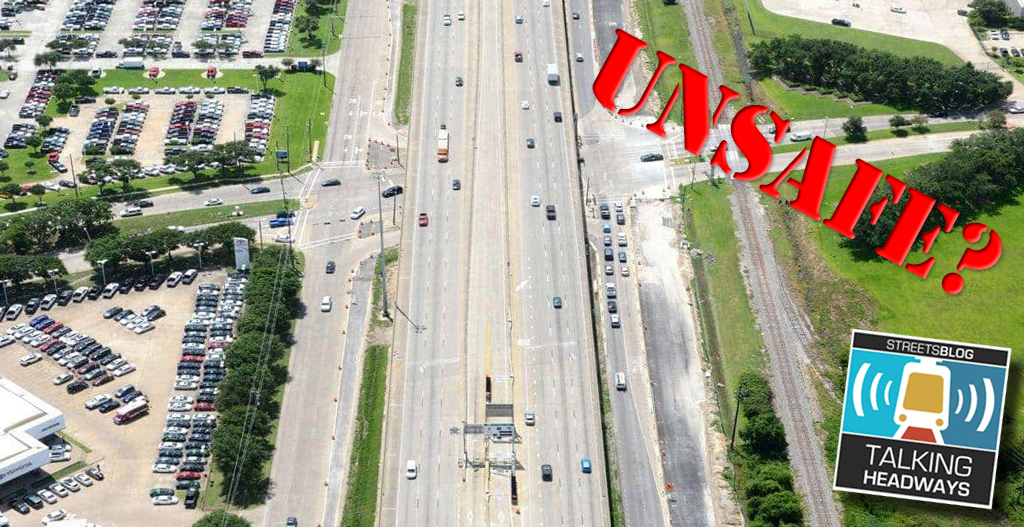
This week, we have a controversial episode featuring the ultimate roads scholar, Florida Atlantic University Professor Eric Dumbaugh, slaughtering some of the sacred cows of the livable streets movement. To Dumbaugh, the issue isn’t merely redesigning roads for safety, but making sure that planners don’t put all the big box stores on arterials.
We at Streetsblog USA aren’t sure we’re convinced, but we always like to hear from important people in the traffic space.
And, as always, let’s review all the ways you can enjoy this spirited content:
- Click here for a full transcript, albeit with some AI typos.
- Click the player below to listen.
- Or check out the lightly edited excerpt below the player.
Here’s the edited transcript:
Jeff Wood: Well, you’ve got a new paper out, Land Use and Road Safety: Understanding the Persistence of Vulnerable Road User Deaths and Injuries in the United States. I’m wondering if you can give us a little bit of the basics of what you found and why you were looking in this specific direction.
Eric Dumbaugh: So I’ve been examining street design issues now for 25 years, and there’s a uniquely U.S. view that street design is the solution to all things. But when it comes to arterials, European designs are indistinguishable from what we use in the United States. The lane widths, the design features are exactly the same. The difference is what we put along our streets, right?
Everyone who goes to Western Europe on vacation comes back and says, “Oh, this is really rather lovely. We should have our streets designed like this.” But those are essentially pre-automobile streets, the streets that were built from the Renaissance through the early industrial era. After the Second World War, they didn’t build American-style, they did not build the stuff we built. They essentially rebuilt the urban fabric that they had, and they haven’t had a lot of population growth since then.
So when we start looking at street design solutions from Europe, we need to understand that we’re looking at a built environment context where the automobile is adapted into a pre-automobile form.
The United States is totally different. Nearly all of our growth has happened since the Second World War — and all of that growth was built on an entirely different design model that came of age in the 1910s and 1920s that was centered around integrating automobile into the urban fabric.
So the safety problem on the streets happens because we have different sorts of users entering them. So is the issue really street design? Is it speed? Or is there something else going on here?
And what I found is that after you control for land use, things like speed and geometric design don’t really matter that much. What’s going on is we’re putting these land uses on either side of the street and it’s activating different activities there.
We’ve all seen the graphic where, you know, your chance of dying in a 40-mile-per-hour crash is like 90 percent. But to me, the question is, why is somebody walking there? They’re not walking there in Sweden because there’s nothing to walk to. All of those land uses are prohibited along their arterials. You can’t build that stuff there.
In the United States, our development model is we build the residential community as a cell, and then we export all of the other uses outside, to the arterials.
And that’s generating the hazard, because once you put them there, you start drawing the activities to them. You draw the pedestrians to them, you draw the cyclists to them, you draw the cars in and out of the driveways.
Now, often here in the United States, we have debate: “cars versus vulnerable users.” The safety problem for these users is exactly the same, and it’s the confluence of activities at these points. So the question then becomes: Why are we putting these uses in these environments, right? And what do we do about that to retrofit it going forward?
I have a graphic in the article that I think does a good job of illustrating this:
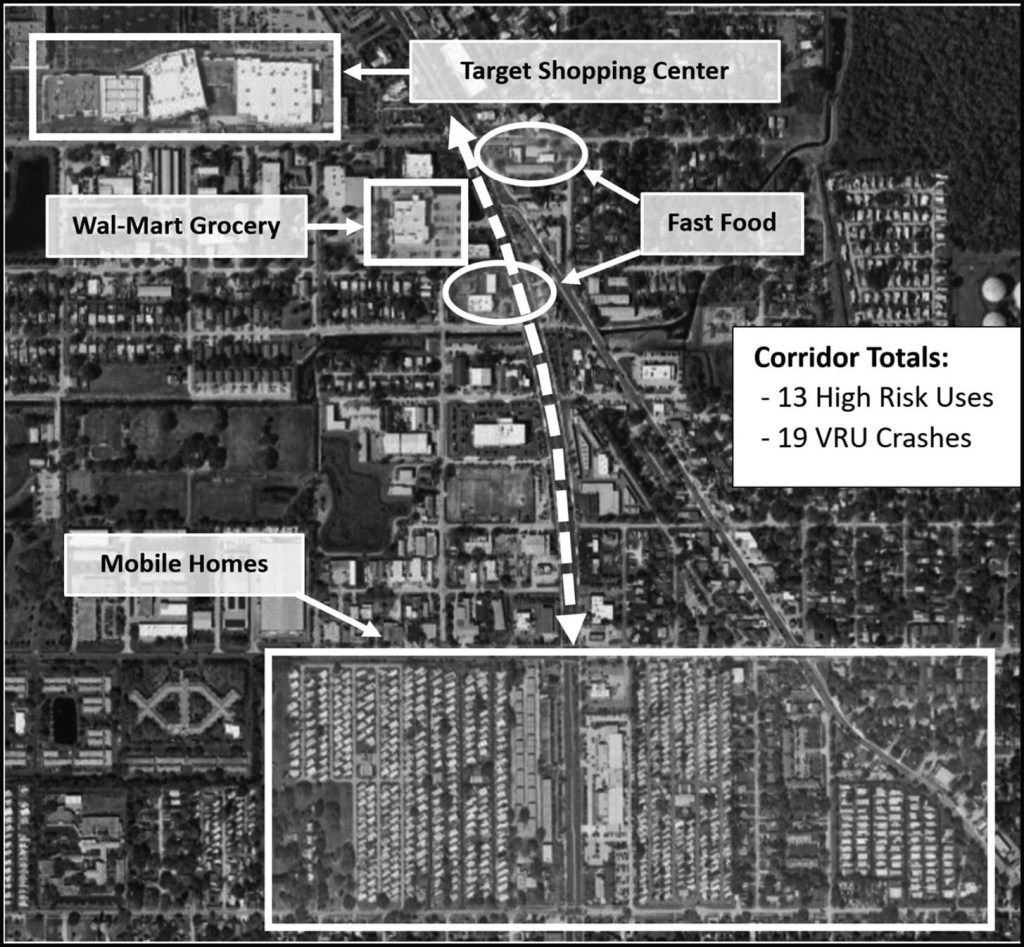
The traffic engineer was never tasked with city design The traffic engineer was tasked with moving traffic. That was part of the configuration that came about in the 1920s and ’30s. They go out and they build perfectly fine roads, rural roads, ex-urban roads that are indistinguishable from the European counterparts. The difference is our planners, our local economic development people, they get real excited about bringing in growth, and they’re experiencing growth, and they channel it over these roads.
So roads that are perfectly fine in an undeveloped context become developed. Think of them as a latent hazard, right? The speed is hazardous, but it’s only hazard if it’s activated. And when you put these land uses on there, when your local planner colors their land-use map red and says, “We’re gonna allow this development along here,” they’re activating that error.

Read More:
Streetsblog has migrated to a new comment system. New commenters can register directly in the comments section of any article. Returning commenters: your previous comments and display name have been preserved, but you'll need to reclaim your account by clicking "Forgot your password?" on the sign-in form, entering your email, and following the verification link to set a new password — this is required because passwords could not be carried over during the migration. For questions, contact tips@streetsblog.org.