Study: Highway Pollution Contributes to Higher COVID-19 Death Rates
A new nationwide study from Harvard’s T.H. Chan School of Public Health suggests that people living in neighborhoods with higher levels of fine particulate air pollution are more likely to die from COVID-19 infection than patients from areas with cleaner air.
That’s especially concerning for many of communities of color in Massachusetts, where the legacies of racist planning policies expose Asian, Latinx and black neighborhoods to higher levels of tailpipe pollution from highways and other major roads.
The Harvard study compares the nation’s county-level COVID-19 deaths (as of April 4) with each county’s corresponding long-term average concentrations of pollution particles smaller than 2.5 micrometers in diameter, also known as PM2.5 or “fine particulate” pollution.
The authors concluded that counties with just one more microgram per cubic meter in their average PM2.5 levels had, on average, a 15 percent higher mortality rate from COVID-19.
The results “underscore the importance of continuing to enforce existing air pollution regulations to protect human health both during and after the COVID-19 crisis,” write the study’s authors.
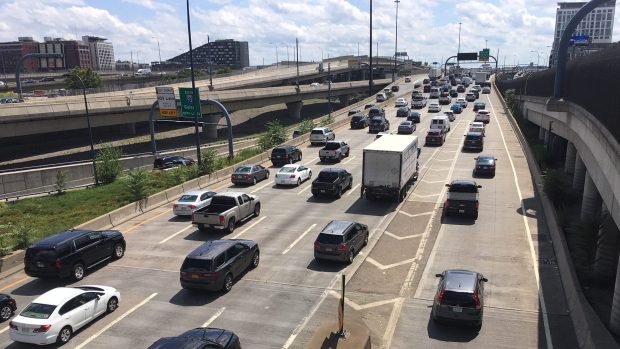
Dust from worn tires, brake linings, and tailpipe exhaust make major highways one of the primary sources of PM2.5 pollution in cities. Some of the Commonwealth’s worst ambient pollution levels are located in Boston’s Chinatown, home to chronically-congested entrances to the O’Neill tunnel and the I-90/I-93 interchange.
A 2019 study from the Union of Concerned Scientists found that Asian residents of Massachusetts generally breathe in 36 percent more PM2.5 pollution from traffic than the typical white Massachusetts resident; African American residents breathe about 34 percent more pollution, and Latinx resident breathe 26 percent more.

Read More:
Streetsblog has migrated to a new comment system. New commenters can register directly in the comments section of any article. Returning commenters: your previous comments and display name have been preserved, but you'll need to reclaim your account by clicking "Forgot your password?" on the sign-in form, entering your email, and following the verification link to set a new password — this is required because passwords could not be carried over during the migration. For questions, contact tips@streetsblog.org.