Beating Victim: Don’t Add Subway Police for Me!
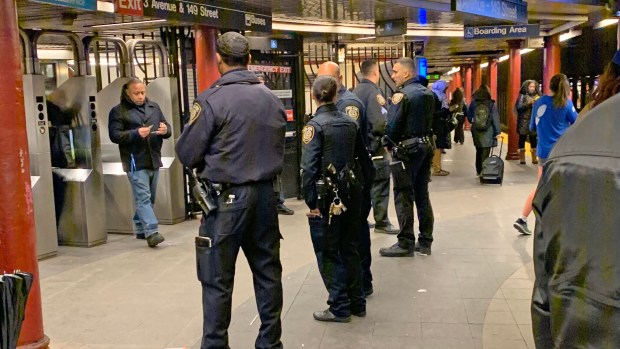

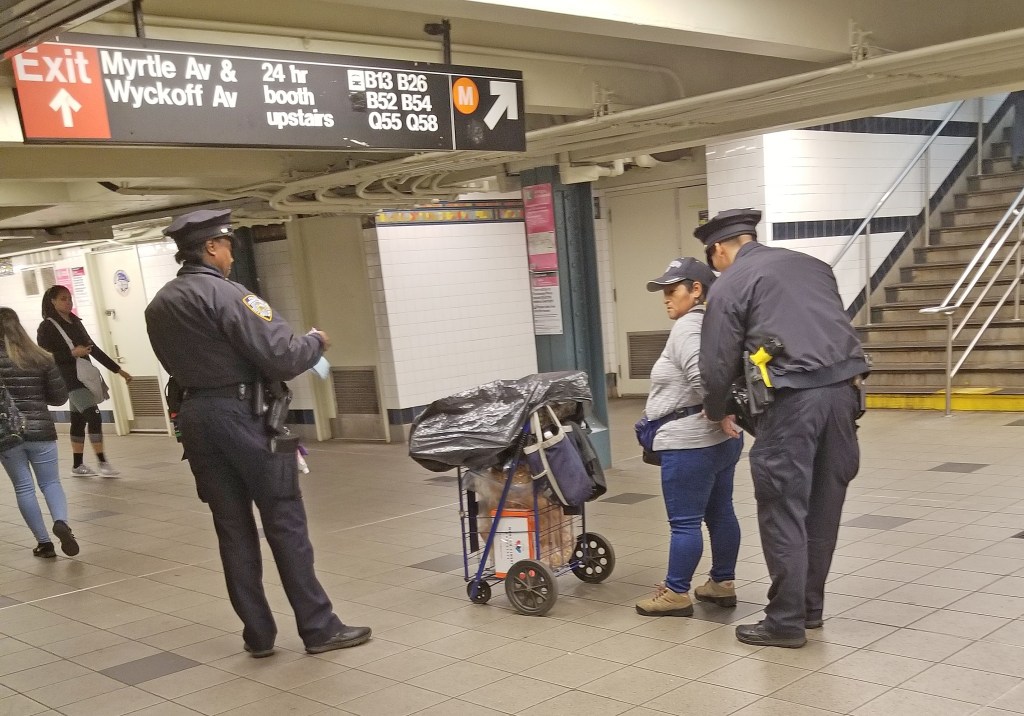
I was assaulted on a subway platform.
I was beaten so badly that I was taken to the hospital in a blur, diagnosed with a concussion.
But the last thing I want is for Gov. Cuomo to put 500 more cops in the subway. Here’s why.
I simply don’t believe the cops will improve safety, but, more important, I’m concerned over mounting evidence that more cops just mean more harassment and danger for people of color — used as an excuse to target marginalized people in the name of victims like me and others.
Here’s what happened: On Nov. 20, I was sitting on a bench at the 14th Street F train station when a man approached and started punching me in the head. The man fled, and an MTA worker who witnessed the attack called the police. The next few hours passed in a blur.
I was transported to Lenox Health Greenwich Village, where I was treated for a concussion. A police officer told me that I should file a police report, so that I could get my medical bills covered by New York State’s Office of Victim Services. I did, but only for that reason.
The MTA worker who witnessed the attack told me that the man who assaulted me is black, homeless and was often seen sleeping in the station. (I did not see my assailant.) The case remains open — making me concerned that the MTA police will use my assault as a reason to target black, homeless men they find in the subways. (Police often round up innocent people who, they claim, “fit the description” of suspects.)
It is not a crime to be homeless and seeking shelter in the subways. Nor is it a crime to be black, but violence by police officers is a leading cause of death for young black men, according to the National Academy of Sciences.
The de Blasio administration may indeed have ended the “stop and frisk” policy that so disproportionately affected blacks and Latinos under Mayor Bloomberg, but the practice is alive and well in new guises, as police beat up teens and crack down on churro vendors in the subways. Last week, a number of police officers in South Brooklyn stepped forward to sue the Police Department for racial discrimination, saying that their higher-ups had instructed them to ignore infractions by white and Asian people and instead urged them to instead go after blacks and Latinos for minor offenses like jumping the turnstile. Activists have held rallies protesting the fare-evasion crackdown.

Given this atmosphere, I question the effectiveness of having police officers in the MTA as a measure to improve subway safety. There is little evidence to support the claim that raising the number of police officers leads to a lessening of crime. No one should be physically assaulted, in the subways or anywhere else, but I do not think that more police officers in the subways would prevent violent crimes.
The other justification for more police — fare-beating — is a non-started because fare-beating is a non-violent crime. This kind of “broken-windows” policing — the targeting of minor offenses in hopes of reducing more serious crimes — leads to the disproportionate arrests of people of color, thanks to the same inherent bias that fueled the worst element of “stop and frisk.”
I feel morally conflicted about what might happen if the man who assaulted me is identified. My attacker may be mentally ill and needs treatment rather than punishment, but I am concerned that he may attack other people, including those who cannot pay for medical treatment. Rather than cops, social workers might be tasked with helping mentally ill homeless people in the subways.
I was the victim of a violent crime, and I am in a lot of pain, but I do not want homeless, black men to become victims of profiling because of my attack, either.
Julia Métraux is a writer and student who lives in Brooklyn.

Streetsblog has migrated to a new comment system. New commenters can register directly in the comments section of any article. Returning commenters: your previous comments and display name have been preserved, but you'll need to reclaim your account by clicking "Forgot your password?" on the sign-in form, entering your email, and following the verification link to set a new password — this is required because passwords could not be carried over during the migration. For questions, contact tips@streetsblog.org.