Atlanta Bans E-Scooters at Night After Drivers Kill Four Riders
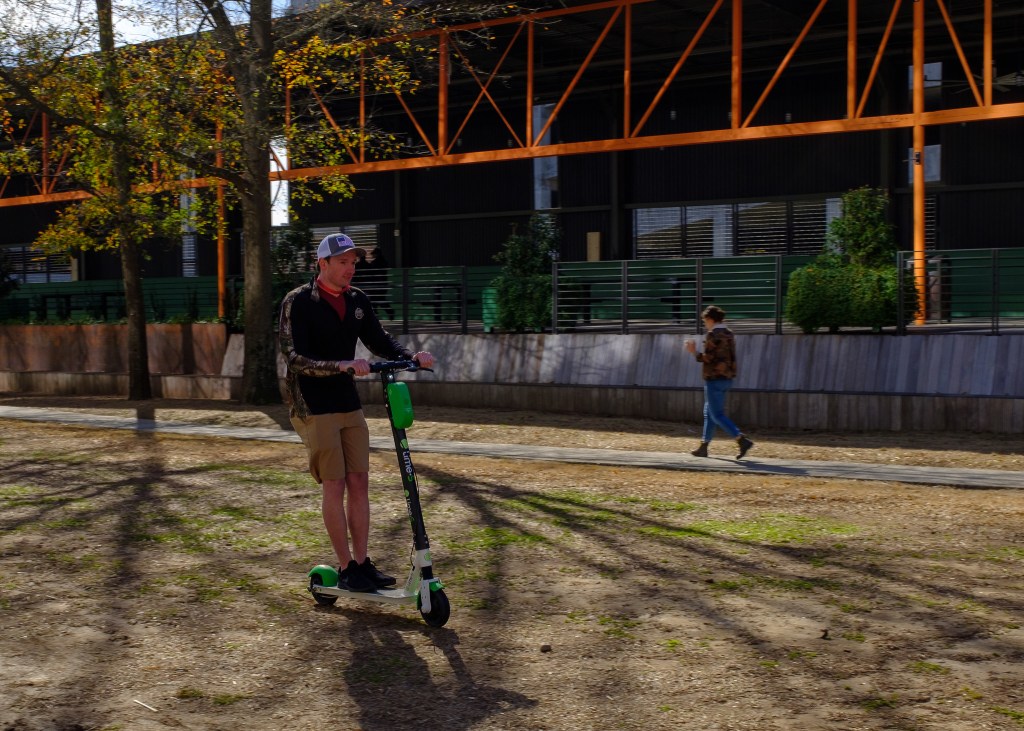
Atlanta has banned the use of electronic scooters and e-bikes on city streets during the overnight hours after four scooter riders were killed by drivers this year — a nonsensical curfew that penalizes micro-mobility users while letting the operators of 3,000-pound killing machines off scot-free.
Drivers still may use city streets at all hours — even though motor-vehicle crashes killed 115 people in Fulton County, which encompasses most of Atlanta, in 2017.
Mayor Keisha Lance Bottoms imposed the 9 p.m.-to-4 a.m. curfew on the micro-mobility devices starting last Friday, effectively unplugging them for seven hours a day. Bottoms argued that the move was necessary because “sadly, we have seen a pattern in the recent and tragic fatalities involving scooters — they all occurred after sunset. Having a variety of mobility options is critical to any city, but safety must be our top priority.
“It is evident that immediate action is necessary to keep Atlanta’s residents and visitors safe,” she said in a statement.
She did not address any of the disabilities affecting drivers a night, such as the impaired visibility and depth perception, fatigue, and alcohol use that make the risk of a fatal crash three times greater at night despite the fact that there are fewer cars — or scooters — on the road.
Atlanta transportation officials insisted the ban would be temporary while they seek to revise the application process for electric scooter and e-bike permits. They said the overnight ban would likely reduce the number of scooters on the streets by the time existing permits expire next February.
Scooters first arrived on Atlanta streets illegally in May 2018. The city started issuing permits in January 2019 and has since allowed eight transportation companies to deploy a maximum of 12,700 scooters, although riders only use an average of 5,500 scooters each day, an Atlanta Office of Transportation spokeswoman told Streetsblog.
The Bottoms administration already halted new permits with an executive order on July 24, following two scooter-related fatalities. The City Council is expected to finalize legislation next week constricting scooter permitting.
Bottoms told scooter companies operating in Atlanta metropolitan area — including Bird, Jump, Lime, Lyft, Bolt, and Wheels — to disable their devices during the overnight “No Ride Zone” period. Two other companies, Spin and Boav, have permits but have not launched their services yet. Customers who have tried to rent a dockless scooter or e-bike at night have received a text message that the scooter would not be available for use until 4 am the next morning.
So far, the companies have not fought the regulations.
“We think it’s a reasonable step as a temporary measure while the scooter program is re-examined,” Nima Daivari, Lime’s community affairs manager for Georgia, where Lime fields 1,800 scooters, told the Associated Press. “They see the value here, and Atlanta is a city that’s notorious for traffic congestion.”
The curfew went into effect four days after Quienterry McGriff was riding an e-scooter at 6:30 am when the driver of an oil truck struck and killed him at an intersection in Atlanta’s East Point neighborhood. The driver, who won’t face any charges for the death, told police he saw McGriff run a red light but couldn’t stop his rig from hitting him.
The other three scooter deaths occurred at night.
On May 16, the driver of a red Cadillac ran into 20-year old man Eric Amis Jr. near the West Lake MARTA station around midnight.
On July 14, Brad Alexander was heading home from an Atlanta United game when a CobbLinc bus driver turned onto 15th Street near the Arts Center MARTA station and ran over him as he banged on the side of it to warn the driver.
And on July 27, Alabama resident Amber Ford, 34, was riding her scooter on a date with her husband in Midtown when a driver struck and flung her into the air before leaving the scene. Ford was taken off life support a week later.
For comparison, there were 1,514 traffic deaths in Georgia last year, or about four a day.
Atlanta isn’t the only city wrestling with how to provide a zero-emission alternative to cars while ensuring that scooter users can navigate streets safely.
Chicago included a nighttime curfew from 10 p.m. to 5 a.m. when it launched its pilot program of 2,500 e-scooters in June.
Lawmakers on the Washington, D.C. City Council want to prohibit riders from using scooters between 10 p.m. and 4 a.m., limit the number of permits to 15,000 and enact speed limits of 15 miles per hour while on the road and six miles per hour on the sidewalk.
And Nashville Mayor David Briley tried to curtail the city’s e-scooter pilot program in June after a driver killed a scooter rider but the Metro Council was unwilling to ban the devices; it is now seeking to cut the fleet in half.
Atlantans don’t want scooters to disappear and say the city must figure out how they should co-exist with cars and bikes.
“As people ditch cars, I think you’re going to see more and more e-scooter usage,” Ben Felker told WSB-TV. “It seems to me that there’s not a good middle ground yet.”

Read More:
Streetsblog has migrated to a new comment system. New commenters can register directly in the comments section of any article. Returning commenters: your previous comments and display name have been preserved, but you'll need to reclaim your account by clicking "Forgot your password?" on the sign-in form, entering your email, and following the verification link to set a new password — this is required because passwords could not be carried over during the migration. For questions, contact tips@streetsblog.org.