D.C. Bill Would Make Protected Bike Lanes Mandatory
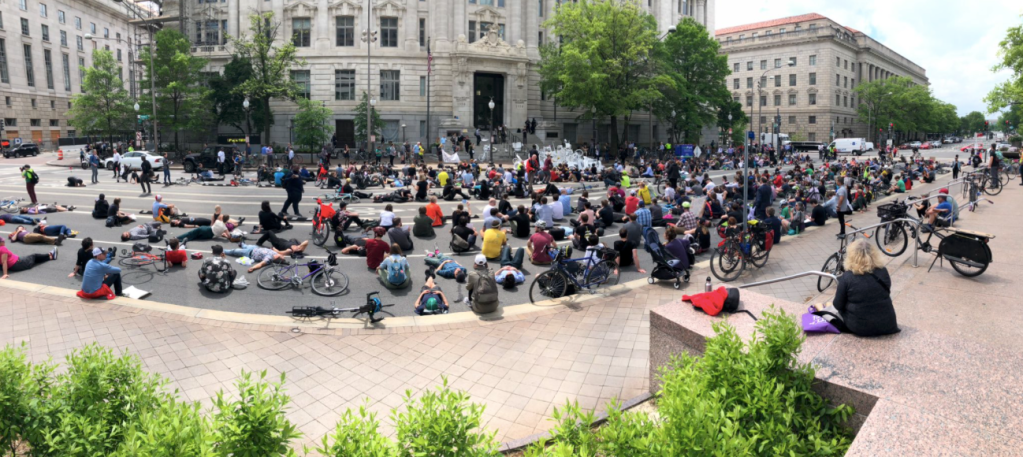
Activism works.
Just a week after D.C. residents took to the streets to protest the death of a local cyclist, a new measure is before City Council that would require the construction of protected bike lanes, ban right turn on red and even allow bicyclists to help enforce rules against parking in the bike lane.
The Vision Zero Omnibus Act [PDF], introduced by Councilman Charles Allen, is groundbreaking, featuring the best and most-cutting edge reforms in urban street safety — some of which have never been tried. It would:
Require protected bike lanes
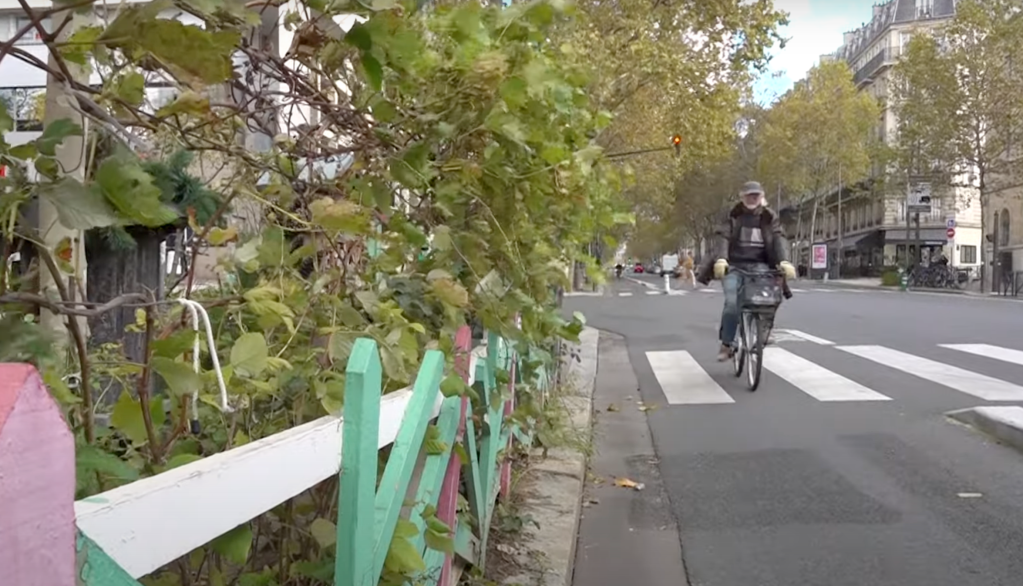
Just as the Massachusetts city of Cambridge did, the D.C. legislation would require the Department of Transportation to construct protected bike lanes anytime those streets need to be repaired — if those streets have already been identified as needing them. This would help avoid problems like where the city dragged its feet for two years on the construction of a bike lane through the Shaw neighborhood.
Will allow bike riders to help enforce bike lane or bus lane parkers
This revolutionary part of the bill would establish a Citizen Safety Enforcement Pilot Program, housed in the Department of Public Works. Specially trained regular residents would be given access to an app that lets them snap photos of vehicles parked in bike lanes, bus lanes or in crosswalks. The drivers who were caught with the violation would then receive a ticket.
Prohibit right turn on red
The bill would also ban right turns on red, which has proven dangerous in a dense urban setting. New York City bans right turn on red, but in the 1970s the federal government forced almost all other jurisdictions to adopt it, despite research showing it increases pedestrian crashes by 60 percent and bike crashes by 100 percent.
Towing and impounding vehicles that pose safety threats
The legislation would make it possible for the city to tow cars parked in bike lanes or on sidewalks. It would also allow the city to impound vehicles of drivers who have more than five outstanding citations for speeding at excess of 30 mph over the posted limit or for passing a vehicle that is stopped for a pedestrian — a super deadly maneuver.
Decrease speed limits on all types of streets
The bill calls for reducing speed limits on all types of streets. Allen says 20 mile per hour would be the recommended limit on residential areas. But the law doesn’t go into detail about what would be recommended on other streets.
Require additional testing for drivers
When renewing their license in the District, drivers would have to pass a “written test of local knowledge.” This, again, is pretty groundbreaking. In most jurisdictions, routine driver training and testing begins and ends at age 16.
Require developers to build sidewalks, safe drop-off zones
Any developer building more than 10 housing units would be required to provided a safe, dedicated drop-off zone — so Uber and Lyft and delivery vehicles aren’t constantly parking in bike lanes. It would also amend the city’s policy requiring developers to build sidewalks if their sites do not have them already and they are within one-tenth of a mile of a sidewalk. The new rules would require them to build sidewalks on both sides of the street instead of just one.
Developers who damage sidewalks or bike infrastructure would be fined for “each day that crosswalks and bike lanes are not returned to pre-construction condition.”
Automatic crosswalks, everywhere
When the DOT repairs a street, all the intersections that qualify as an unmarked crosswalk — basically almost every intersection — will get a marked crosswalk. And if it meets the city’s criteria for one, it will get a high visibility or raised crosswalk, the bill states.
Hold the city DOT accountable for traffic safety
The District Department of Transportation has been negligent in reporting some of the information the city’s Vision Zero policy requires. But this bill would hold the agency accountable.
Biannually, the department will have to submit reports on its progress toward Vision Zero goals. In addition, DDOT will be required to submit a report to City Council every time someone is seriously injured or killed on city streets. And every time the department submits a street plan, the agency will have to explain how it will reduce fatalities, slow car speeds and help the city meet its goal of 50 percent commuting trips by transit by 2032.
This measure comes weeks after the death of prominent D.C. bike activist Dave Salovesh, who was killed at a dangerous intersection by the driver of a stolen van. His death inspired an international campaign to promote protected bike lanes and helped long-simmering frustrations about the slow pace of change in D.C. bubble to the surface. They culminated in a major protest at City Hall last week.
Now those complaints appear to have been heard.
“Safe travel, especially without a car, shouldn’t be a perk of living in a given neighborhood,” Allen said in a statement. “It should be the standard in every part of the city that’s safe to walk or bike to school, to the bus stop, or to work.”
The bill is being co-sponsored by nine other council members, according to the DC Line.

Read More:
Streetsblog has migrated to a new comment system. New commenters can register directly in the comments section of any article. Returning commenters: your previous comments and display name have been preserved, but you'll need to reclaim your account by clicking "Forgot your password?" on the sign-in form, entering your email, and following the verification link to set a new password — this is required because passwords could not be carried over during the migration. For questions, contact tips@streetsblog.org.