Talking Headways Podcast: Technical Assistance for Equitable TOD
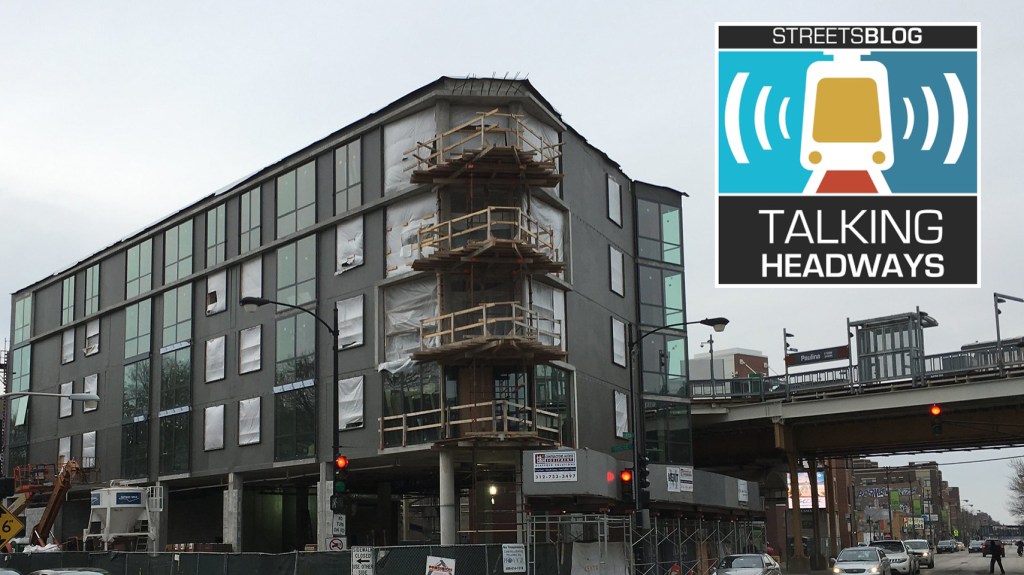
This week we’re joined by Emily LaFlamme of the Center for Neighborhood Technology in Chicago. Emily chats about the Elevated Works technical assistance program that helps developers bring equitable transit-oriented development to life.
Scroll past the audio player below for a partial edited transcript of the episode — or click here for a full, AI-generated (and typo-ridden) readout.
Jeff Wood: So let me hear more about the technical assistance program. ’cause I found that one of the most interesting things about what you all been doing.
Emily Laflamme: for the last two and a half years, we’ve been running a technical assistance program in partnership with the City of Chicago and the ETOD grants that I just mentioned.
To support developers throughout the development process working on their ETOD project. One of the criteria to participate in our program was that the development project needed to be near transit, and it needed to have one of the principles of equitable transit oriented development baked into their project.
And if they were selected to participate, they received a grant from the city and they were eligible to participate in our technical assistance program. Many of these developers, this was their first time ever doing a development and our TA program brought together 18 professionals with expertise in.
Real estate development, zoning, community engagement, architecture, urban design, transportation planning, communications, and we were able to work with these developers through [00:13:00] the last two years to. Address any challenges that came up and support with system navigation is kind of moving through Chicago’s development project process to ensure the success of these projects.
Jeff Wood: Why were these developers wanting to get in when they were newbies? I mean, that’s a hard thing to do, right? Getting in on the ground floor of development, it seems like something that’s very gate kept and hard to start, right?
Emily Laflamme: It’s a really complicated process. Maybe not everyone, but many of us I think, have walked down the street and seen a vacant lot or a vacant building and thought, oh, wouldn’t it be cool if something was there?
Or you’re a small business owner and you’ve operated out of your basement and you’re thinking, you know, it would really be great to have a physical location. And I think many people get to that point and many people stop at that point because. You just don’t have the connections or the resources to even know what your next step might be.
And so this program was really trying to be the support to help people jump over that hurdle and demystify the whole process and connect folks who may not have the connections to these various professionals.

Streetsblog has migrated to a new comment system. New commenters can register directly in the comments section of any article. Returning commenters: your previous comments and display name have been preserved, but you'll need to reclaim your account by clicking "Forgot your password?" on the sign-in form, entering your email, and following the verification link to set a new password — this is required because passwords could not be carried over during the migration. For questions, contact tips@streetsblog.org.