Op-Ed: Is There Really More ‘Freedom’ in a City That Depends on Cars?
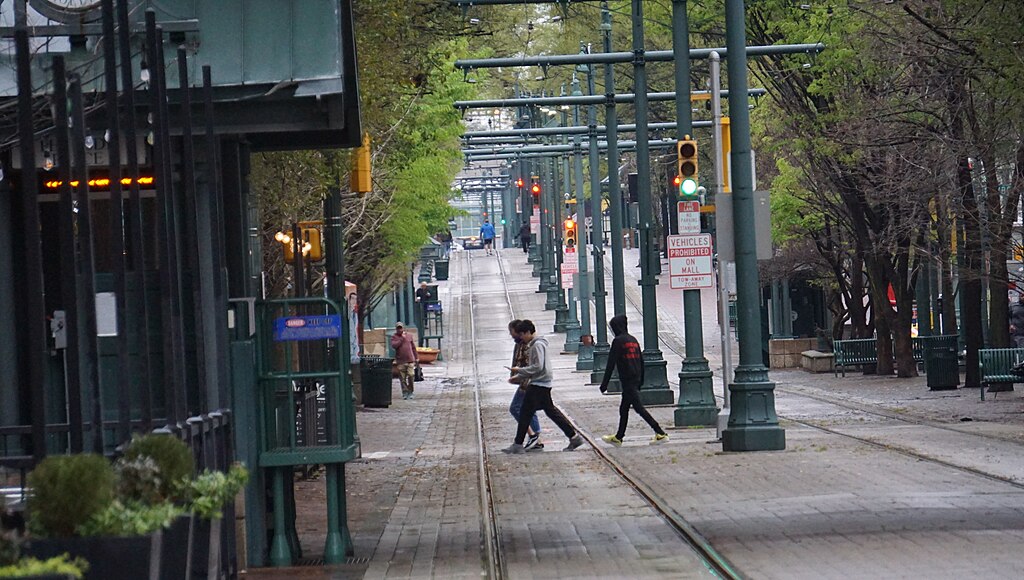
Growing up in the soulful but sprawling city of Memphis, Tennessee, I rarely viewed walking or public transit as legitimate options.
I recall one long summer afternoon when, as children, my siblings and I set out to explore beyond the boundaries of our suburban yard. We wanted to be somewhere exciting, where we might encounter new and strange people, and maybe even buy something — and we wanted to get there all on our own. Since my older brother was the babysitter, we secured permission easily and trekked the mile of (almost) complete sidewalk, exiting our residential district and entering the closest commercial real estate.
Suffice it to say, ogling the Kroger’s rotisserie chicken spinners was not worth the journey — nor the confused, critical glances we received from drivers on the busy thoroughfare along the way.
I came to believe, through experiences like this one, that cities are not supposed to be walkable. As I waited for the chronically unreliable local bus, I also came to believe that cities are not supposed to be accessible by transit. These things made me believe — like so many Americans believe — that cars are a necessary mode of transportation.
When I moved to New York City for college, of course, everything changed. I found thrilling places that were easily reached on foot, and I encountered a system of public transit that works as a legitimate option for transportation. After 18 years of avoiding public transit in favor of the car, it has been a perspective shift to spend the last six relying on it nearly every single day.
But which makes us more free: the car-dominated city or the transit-rich metropolis? Should we prefer the open road behind the wheel, or the lively street via train and foot? And more importantly: is this a false dichotomy?
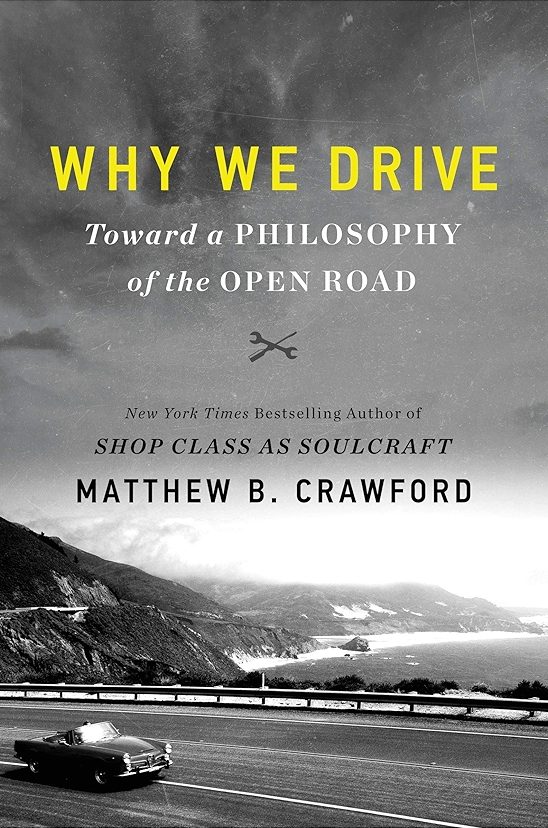
In his book “Why We Drive: Toward a Philosophy of the Open Road,” Matthew Crawford offers a defense of motoring as “one of the few remaining domains of skill, exploration, play — and freedom,” as his publisher wrote. Crawford argues that free movement — especially when it demands participation, risk, and attention, like when we get behind the wheel — is fundamental to how we grow, build confidence, encounter danger, and move through life.
He also offers a sharp critique of “passenger culture”, by which he means the abdication of active, direct engagement with the world in favor being passively conveyed through our communities — for example as vehicles become more automated.
Of course, driving isn’t the only way we move freely throughout our communities. Our first moments of successfully walking are tied to the beginning of our episodic memory and thus our identity; our first moments behind the wheel can ultimately feel just as liberating, though this does not make driving the only or best avenue of mobility, and there are definite drawbacks.
If the freedom of movement is a cornerstone of what it means to be human, that does play out when we are actively behind the wheel — and it’s especially tangible when we dash up an open rural highway, or traverse impossible distances on road trips. Driving is a compelling medium of transportation because it grants us a method of expressing, and even enhancing, our freedom of movement – even though it’s not always safe for everyone.
It is tempting, with such imagery in our minds, to cast a hypothetical vote for the car over public transit. After all, it typifies the American spirit of freedom, whereas public transit, by popular perception, does not.
For many people in car dependent communities like the one I lived in growing up, transit may seem at best a non-viable option — I recall a four hour crosstown ETA on the Memphis bus — while others may conclude that it is a waste of taxpayer dollars, another example of governments ineffectively injecting themselves into realms reserved for private enterprise. At worst, they may even consider it a ploy, a step towards removing the option of driving from free American citizens.
These sentiments, though, are really directed at the poor administration of a public transit system, rather than the concept of transit itself. When executed effectively, a subway system or bus route adds to the legitimate options a commuter has to choose from — and is thus inherently expansionary, not restrictive, to our liberty.
Ganesh Sitaraman and Anne Alstott, prominent legal scholars of Vanderbilt and Yale Law Schools respectively, study policy solutions known as “public options.” In their latest book on the subject, “Politics, Policy, and Public Options,” they define a public option as “a government-provided social good that exists alongside a similar, privately provided good.” The common example is in healthcare, but public options exist in everything from postal services to golf courses – and they exist in transportation too.
When we treat it as a public option, transit can function much like the US Postal Service. It is a legitimate, government-provided alternative to private industry, like FedEx or UPS, that maintains a useful, inexpensive place in the market. To occupy this space effectively, the Postal Service must do its job reliably; it is not a functioning alternative if it only delivers mail after a full year goes by. A bus that doesn’t come on time isn’t, either.
Matthew Crawford’s resonant “philosophy of the open road” does apply to free movement as expressed in driving. But I’d argue it also applies to the freedom to walk in vibrant places, to traverse a city surrounded by fellow commuters on the bus or train, or to interact with new places and people serendipitously outside a car.
To truly maximize our liberty, we must be careful about how we build our places. Eliminating the car — which no one is earnestly proposing to do — takes away one expression of movement; building a highway through Main Street, though, or failing to maintain an urban transit system, eliminates many others, and it’s happening all over America.
A functioning, reliable system of urban public transit is not unrelated to the great American spirit of freedom. Transit expands freedom — precisely because it grants us a unique option in the marketplace of movement.

Read More:
Streetsblog has migrated to a new comment system. New commenters can register directly in the comments section of any article. Returning commenters: your previous comments and display name have been preserved, but you'll need to reclaim your account by clicking "Forgot your password?" on the sign-in form, entering your email, and following the verification link to set a new password — this is required because passwords could not be carried over during the migration. For questions, contact tips@streetsblog.org.