Mayor Bowser Blasts U.S. DOT Talk of Eliminating Enforcement Cameras in DC
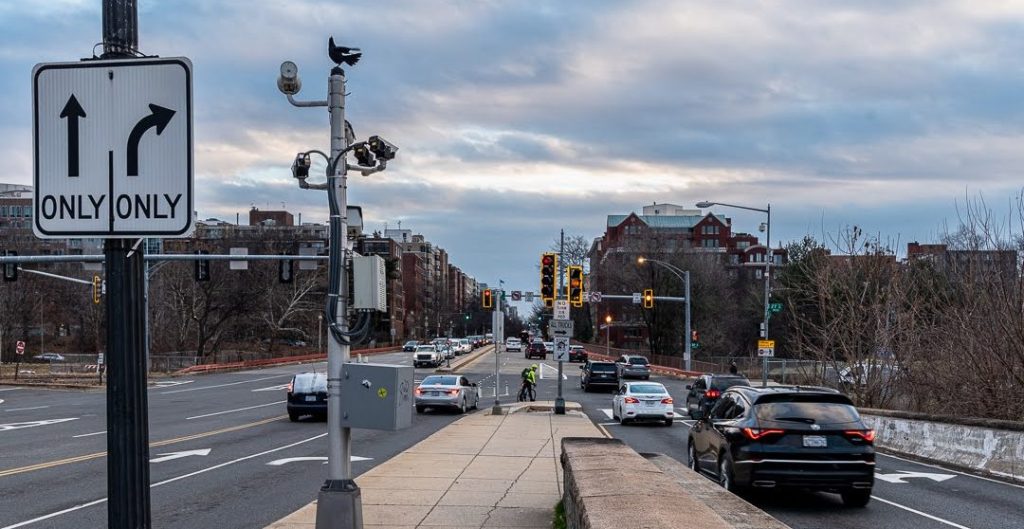

The mayor of the nation’s capital denounced an effort by the Trump administration to dismantle the city’s enforcement camera system as something that would “endanger” D.C. residents.
On Tuesday, after Politico reported that the U.S. DOT is seeking to “prohibit the operation of automated traffic camera enforcement in the District of Columbia,” Mayor Muriel Bowser called the cameras a “critical” safety tool that has saved lives.
“Last year, traffic fatalities in Washington, D.C. fell 52 percent, marking the lowest number of roadway fatalities since 2014,” she said in a statement to Streetsblog. “Traffic enforcement cameras are a critical tool in the work to save lives and make our streets safer. Removing [automated traffic enforcement] cameras would endanger people in our community.
“In addition to the public safety implications, removing the cameras would also create a $1-billion hole in D.C.’s financial plan, which would mean cuts to everyday city services,” she added. “We call on our federal partners to stand with us in prioritizing safety and respecting the District’s ability to govern our own streets.”
Bowser’s comment followed the Politico report by reporter Chris Marquette, who obtained a copy of a proposal sent by the U.S. DOT to the White House Office of Management and Budget to eliminate the 26-year-old camera program as part of the Surface Transportation reauthorization process. In D.C., automated enforcement is used to sanction drivers who blow through red lights and stop signs, disobey the speed limit, or block bus lanes.
D.C.’s network comprises nearly 500 cameras. Proponents of the program argue that it has largely succeeded at reducing the prevalence of dangerous speeding in the district on roads where cameras are installed; one 2018 study from the Fines and Fees Justice Center found that collisions and injuries fell 17 to 20 percent in the three years following installation.
That group has since pointed out, though, that traffic fatalities and serious injuries citywide have increased even as the cameras have proliferated, remaining higher today than they were in 2015 when D.C. first embraced Vision Zero. Moreover, the Center has noted that “of the currently available ATE technologies, only speed cameras have produced any evidence, though limited, of effectiveness for improving driving behavior,” taking aim at the red light and stop sign cameras that the Trump proposal would also shut down.
They also argue that drivers in neighborhoods of color have been disproportionately fined by the program, and that DC has come to over-rely on camera revenue to meet general budget needs, rather than redirecting the money back towards safety projects that could slow down motorists without relying on financial penalties.
The Trump administration, though, cited none of those concerns in a statement sent over to Streetsblog by an unidentified spokesperson.
“U.S. DOT is constantly examining a broad set of preliminary policy options on transportation matters,” the statement said. “Many policy options are currently under internal review.”
Some advocates argue that more likely, the Trump administration is motivated by ideological opposition to street safety projects in general — and camera enforcement in particular.
Republicans have tried multiple times to terminate D.C.’s traffic camera program, including in 2025, 2023, and 2014. Under the Constitution, the U.S. Congress has broad oversight over Washington, D.C., and the president can evoke emergency powers to seize control of the D.C. police.
With additional regulation In other contexts, of course, automated enforcement programs can save lives — without drawing the same controversy as D.C.’s program. In New York, which has the largest camera program in the country, cameras have led to “persistent and sustained reductions in crashes, according a report by the National Academy of Sciences.
Over the seven months following the introduction of a camera, collisions declined by 30 percent and injuries by 16 percent, the report added. That could explain why reported crashes dropped from 88,613 over the first 11 months of 2023 to 77,855 over the same period this year. And injuries are down from 49,747 to 45,421.
In 2024, the news outlet Greater Greater Washington said the District’s cameras also had a positive impact in the immediate vicinity where they were installed — but cautioned against their far-reaching side effects, at least when policymakers don’t sweat the details of how they’re deployed. And if Trump persuades Congress to shut the program down, they may never get the chance.
“ATE cameras .. likely prevent some drivers from hitting or killing other people,” the outlet wrote. “But cameras alone will not refashion badly designed stroads into more humane, livable streets. They will not prevent the many crashes that occur within posted speed limits. And without a thoughtful approach, which the District has yet to develop, automated traffic enforcement risks punishing Black and low-income drivers for the sins of traffic engineers.”

Streetsblog has migrated to a new comment system. New commenters can register directly in the comments section of any article. Returning commenters: your previous comments and display name have been preserved, but you'll need to reclaim your account by clicking "Forgot your password?" on the sign-in form, entering your email, and following the verification link to set a new password — this is required because passwords could not be carried over during the migration. For questions, contact tips@streetsblog.org.