Is the U.S. Ready for Seniors Who Want to Stop Driving?
A recent New York Times article urged baby boomers preparing for retirement to consider their future transportation needs. The average American woman is living 10 years beyond the point when she is physically able to drive, and the average man is living seven years longer, the Times reported.

But as important and practical as it is for older Americans to seek housing in walkable, transit friendly locations, it’s not always easy. The article featured a couple in San Diego who were considering a cross-country move to find the right mix of amenities.
Dave Alden has been digging into walkable senior housing at Network blog Vibrant Bay Area. Today he offers an example of one development that fell through. The 200-unit project, planned for “an attractive parcel of land, near a viable and active downtown,” was to include a walkable boulevard, with development costs shared by the local government.
I thought the proposal was exceptional. The city appeared to agree and offered to help facilitate the project. First, they agreed to help secure the land rights for the boulevard, some of which were still privately held. Second, in exchange for a concession by the developer on a related land-use issue, they agreed to an expedited entitlement process as permitted under state law.
And then, it all came unwound. After a year of delay, and long after the developer’s concession had been banked, the city withdrew their promise of expedited entitlement.
After an unexpected staff shakeup, the city ceased assisting with land acquisition for the boulevard. Relieved of the city’s jawboning, one property owner promptly increased his asking price by a factor of fifty. The land was never acquired.
Lastly, the economy softened, further undermining finances that were already precarious. Eventually the project faltered and then failed. The developer had funded his entitlement expenses by mortgaging the property, so the bank assumed ownership.
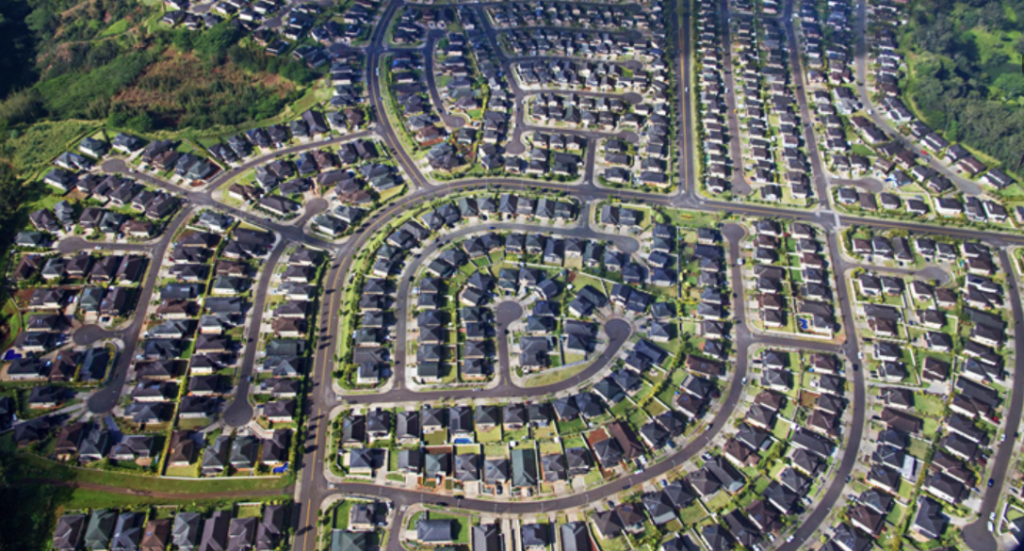
In the years since the foreclosure, several buyers have approached the bank. But none have wanted to resurrect the previous project. Instead, they approached the city with various alternatives for eliminating the boulevard, dropping the transit, and converting the entire project into senior housing without the sidewalk retail, effectively transforming the site into a standard drivable suburban senior facility that happened to be a few blocks from downtown, but without a real connection to downtown.
To their credit, the city has thus far refused to consider the changes. But the only result is that the property remains vacant, a reminder of a failed plan to strengthen the urban core and to bring seniors into a walkable setting.
Elsewhere on the Network today: Urban Cincy has an interview with parking guru Donald Shoup. The Bike League explains its stance on the case of Cherokee Schill, a Kentucky woman who was arrested for biking in the street. And Urban ATL explains what’s at stake for Atlanta’s transit system, MARTA, on November 4.

Read More:
Streetsblog has migrated to a new comment system. New commenters can register directly in the comments section of any article. Returning commenters: your previous comments and display name have been preserved, but you'll need to reclaim your account by clicking "Forgot your password?" on the sign-in form, entering your email, and following the verification link to set a new password — this is required because passwords could not be carried over during the migration. For questions, contact tips@streetsblog.org.