Advocates: Mobilizing Transit Riders a Challenge, Even in Transit-Rich Cities

With fewer Americans driving and transit ridership breaking records, you might think transit has plenty of muscle behind it. But while the numbers speak for themselves, the riders often don’t.
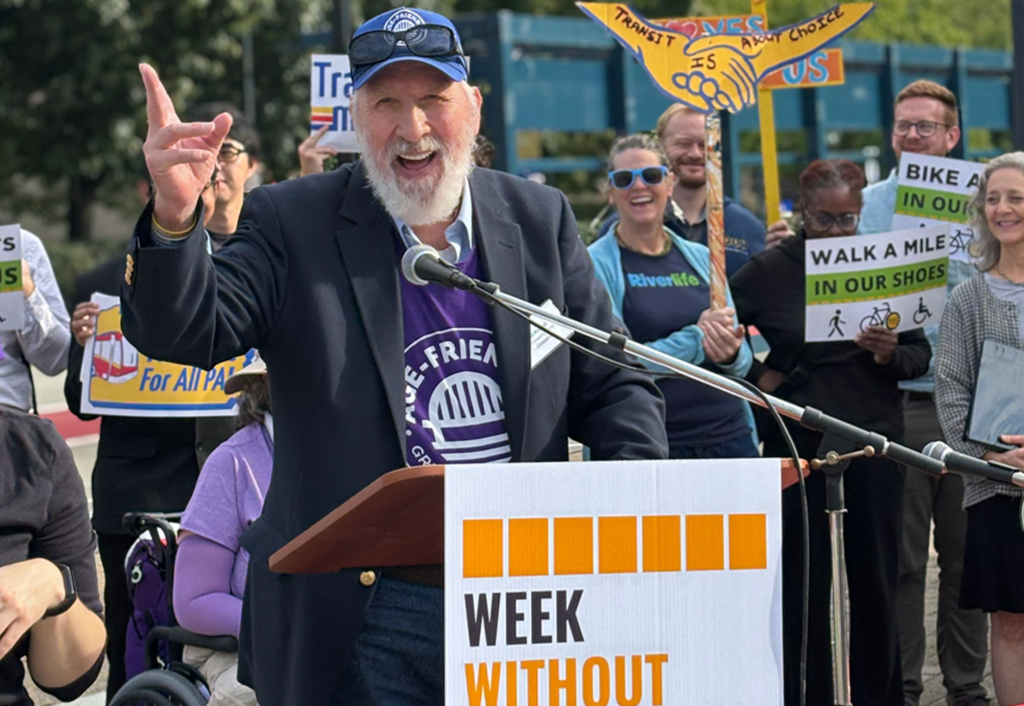
That’s why local efforts to establish grassroots transit advocacy organizations are so important, said a panel of experts convened by the Center for Transportation Excellence this Wednesday. The presenters described successes and failures in engaging different segments of the transit universe, including riders, labor unions and students.
Greg LeRoy, head of economic development watchdog Good Jobs First, said that in many cities — even transit-rich ones — there’s not always a long history of rider groups organizing themselves, and of those, some have little capacity to advocate.
“Certainly large systems like SEPTA [in Philadelphia] have so many riders there is raw community-organizing capacity, but that doesn’t mean there is any sustained organizing,” said LeRoy.
Enter Americans for Transit, a partnership that combines the organizing power of the labor movement with the number-crunching expertise of economic development wonks. LeRoy said Americans for Transit aims to create a “four-legged stool” of transit riders, labor, manufacturers, and pro-transit employers who can craft and target an advocacy message that’s currently lacking in many cities.
Giving a sudden jolt to the movement is ATU president Larry Hanley, who LeRoy says is sending strong signals to his local presidents to take on a more vocal role.
Not that broad-based transit advocacy is unheard of. When the House looked like it was about to hang transit out to dry a few months ago, a coalition of organizations rose up to defend it. But while Congress’s plan to pull the plug on transit galvanized people around the country to help avert a high-profile national crisis, Americans for Transit aims to strengthen and sustain transit advocacy over the long term, starting at the local level.
One common obstacle to engaging people is that many of the public’s most frequent complaints about transit — timeliness, reliability — boil down to a shortage of operations and maintenance funds. But the riding public often doesn’t know why these problems exist, or who can actually do something about it. So Americans for Transit and similar groups would create and educate a nationwide network of advocates who could put pressure on any level of government — city, region, state, or federal — no matter how low down or high up the funding tree.
Of course, sometimes that tree will lead all the way back to Congress. And while there are plenty of advocacy groups — including the National Association of Public Transportation Advocates, the webinar’s co-host — who do talk fairly regularly to the politicos holding the purse strings, the consensus among the speakers was that members of Congress would rather hear it straight from their constituents. Constituents, meanwhile, just want their bus to show up on time.
“Funding is what we need, but it’s not a crowd-pleaser,” explained Jen Henry from the Natural Resources Defense Council, currently partnering with the Active Transportation Alliance to create a groundswell of public support for transit in greater Chicago. “Sometimes people think transit agencies are wasting the money, and they don’t want to pay any more in taxes.”
In cases like that, it does come in handy to have a wildly ineffectual Congress for people to rally against. “We don’t like crises, but they do help build support,” Henry said.
The hope is that once a national advocacy network is in place, it won’t take another crisis to rally the troops.

Streetsblog has migrated to a new comment system. New commenters can register directly in the comments section of any article. Returning commenters: your previous comments and display name have been preserved, but you'll need to reclaim your account by clicking "Forgot your password?" on the sign-in form, entering your email, and following the verification link to set a new password — this is required because passwords could not be carried over during the migration. For questions, contact tips@streetsblog.org.