Looking to Root Out Transportation Waste? Try Highways to Nowhere
For those who value the freedom to occasionally venture outside their own property on foot and maybe even do a little back-and-forth on their bike, this week Senator Tom Coburn is public enemy number one.

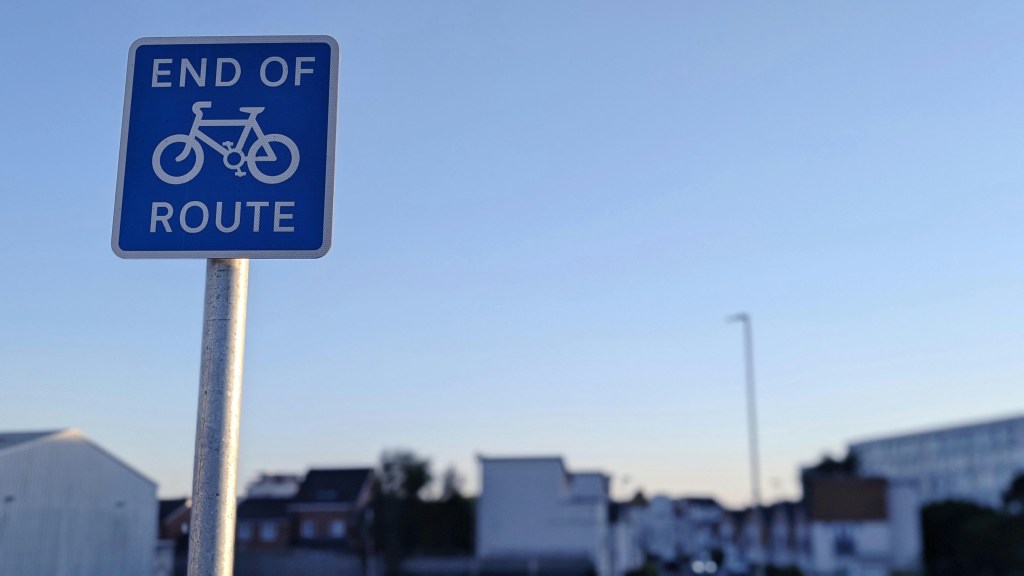
Coburn is the hold-out preventing a clean, six-month extension of the transportation bill. The Republican from Oklahoma has zeroed in on the 1.5 percent of transportation spending that funds bike and pedestrian programs, threatening to hold up the whole bill unless that portion is stripped out.
Why is Coburn grandstanding over such a small portion of the bill, even as the lack of an extension threatens to put thousands out of work? He claims to be acting under the auspices of states’ rights and waste reduction. Except — and it’s starting to get a little repetitive pointing this out — it’s clearly not bike and ped programs that are breaking the bank in states or at the federal level.
Deron Lovaas at the Natural Resources Defense Council’s Switchboard blog weighs in:
The Transportation Enhancements program is one of the most cost-effective policies in the federal transportation toolbox. Moving Cooler, for example, found that while pollution reduction from such investments is modest, they are inexpensive and provide ample benefits to consumers vis-à-vis lower vehicle operating costs and public health. These projects also support public transportation, increasing ridership and making it more cost-effective too. So this is money well spent, which is more than can be said of much larger programs such which fund highway projects. You can verify that yourself by looking at the databases of projects.
Oh, wait. You actually can’t compare them. Transportation, as with other federal spending, seems to suffer from a bizarre rule: The larger the program, the more opaque it is. There is a national transportation enhancements database where you can research and analyze investments for this small program. There’s even a National Transit Database for the much larger transit account. What about the highway programs, which all-together are several times larger than the transit and enhancements programs combined? There should be a unified, searchable database, yes? Yet there is … nada. Zippo.
If Senator Coburn is really interested in cutting waste, why not target this largest portion of the transportation budget, the source of the infamous “bridge to nowhere”? Or at least mandate that information about investments be listed and detailed so taxpayers can track and compare projects to others in the federal portfolio?
It’s almost like Senator Coburn could care less about federal spending and is really just trying to make a political point, meanwhile gambling with so many people’s job security and safety. It’s sad that that seems to be all we can expect from our elected representatives during this difficult period in our country’s history.
Elsewhere on the Network today: The Seattle Bike Blog looks at a rash of local cycling deaths as a consequence of limited government commitment to safe cycling infrastructure. Pedestrian Observations critiques FHWA policy through the prism of Smeed’s Law, which implies that the only way to reduce traffic deaths is to reduce driving. And Twin Cities Streets for People looks at Mackinac Island, Michigan as a case study in good urban design by virtue of its car-freeness.

Read More:
Streetsblog has migrated to a new comment system. New commenters can register directly in the comments section of any article. Returning commenters: your previous comments and display name have been preserved, but you'll need to reclaim your account by clicking "Forgot your password?" on the sign-in form, entering your email, and following the verification link to set a new password — this is required because passwords could not be carried over during the migration. For questions, contact tips@streetsblog.org.