The Races Transportation Reformers Are Watching This Midterms
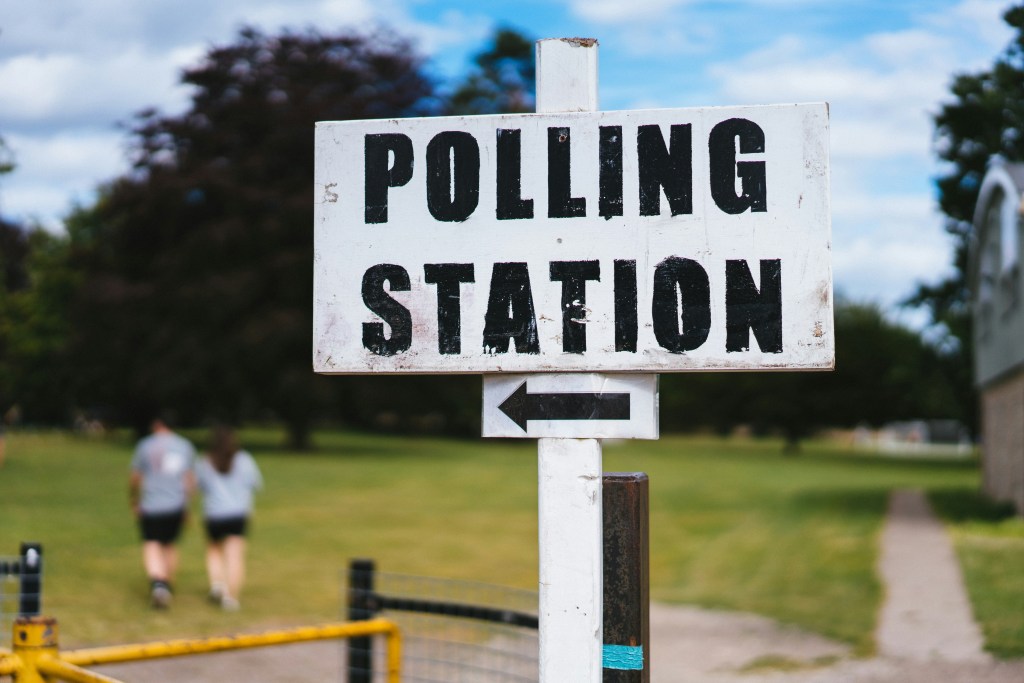
The midterms have finally arrived — could they help usher in a new mobility future for our relentlessly car-dependent country?
Here are a few key races to watch, starting with the top of the ballot.
The federal lawmakers who will write America’s next infrastructure law
With 33 Senate seats and all 435 districts in the House up for re-election, literally every US community will have a massive chance to shape its mobility future at the polls today — if only because of the key role those officials will play in writing our next federal transportation law.
The Infrastructure Investment and Jobs Act is set to expire in December, and the next Congress will almost certainly have to negotiate its replacement if the current lawmakers don’t act fast — which experts agree they almost certainly won’t.
And while Beth Osborne of Transportation for America has warned that progressives don’t always deliver on good federal transportation policy, at least a few Democrat candidates have made some big transit promises on the campaign trail … or at least staged some big photo ops.
The favored candidate for Michigan’s Senate seat, Democrat Abdul El-Sayed, got some attention a few months ago for biking to campaign events as a commentary on the surging price of gas, though transportation hasn’t otherwise been a big part of his platform.
In fact, as EnoTrans pointed out, much like Iowa Democrat Josh Turek, both El-Sayed and his Republican opponent Mike Rogers support suspending the gas tax, which many advocates argue is bad policy — especially compared to supporting the kind of active mobility alternatives that got El-Sayed into Lycra for his campaign video. Still: always nice to see a candidate who’s not afraid to step outside the motorcade and get in the saddle.
EnoTrans also called out the Nebraska Senate race as one to watch, particularly the re-election of Republican Pete Ricketts, who is “leading the effort to repeal California’s waiver for their clean cars rule and pledging support for eliminating CAFE standards.” If he wins, it could stamp out all hope of other states replicating that policy as federal emission standards get weaker.
Maine Democrat Troy Jackson, meanwhile, once memorably pledged to fight for federal funds for rail on stage at an event with Rep. Alexandria Ocasio-Cortez (D-NY). And ousted Ohio Democrat Sherrod Brown is attempting to re-claim his Senate seat — and perhaps help write the public transportation title on the critical Senate Urban Affairs committee he once chaired.
And those are just some of the big names in the Senate race. Be sure to scrutinize the transportation platforms of your potential Congresspeople, too — and if your pick is conspicuously silent on this essential topic, start challenging them to support good multimodal policy long before they’re sworn in.
A whole new class of governors
With a staggering 36 gubernatorial seats up for grabs this year, state-level politics could be in for a serious shake-up this election cycle — and considering the massive power wielded by the state DOT heads and transportation boards that governors usually appoint, these races deserve advocates’ attention, particularly for freeway-fighters.
EnoTrans called out the race in Illinois, where Republican challenger Darren Bailey is promising to eliminate road tolls and gut incumbent Democrat J.B. Pritzker’s plan to use part of that money to fund public transportation.
It’s a disturbing proposal that has echoes in states like New York, where the Republican challenger has pledged to end New York City’s transformative congestion pricing program.
Cook Political Report rates both those races as “solid Democrat” — but its pollsters weren’t so sure about Georgia, where Democrat Keisha Lance Bottoms has publicly condemned her state breaking with most communities across the country to withhold operations funding to transit agencies. Her opponent Rick Johnson has remained silent on the issue, and the result remains a toss-up.
However your state’s gubernatorial race shakes out, it’s critical to make your support for mobility alternatives known at this level of government, both by voting out candidates who push for bad transportation policy and organizing to influence whoever makes their way into office. And if reformers really can’t move the statehouse, we can at least support federal policy to send more money directly to city and regional governments who might be more responsive to local demands about local transportation priorities.
Local and regional measures that could make a splash
With a staggering 114 transit-related ballot measures up for a vote today, we couldn’t possibly catalogue all of the races today. But the Rail Passengers Association and Smart Cities Dive highlighted these key contests that deserve all of our attention:
- According to our sister site SBCAL, the state of California is considering not one, but five separate funding measures for public transit, three of which won a Streetsblog endorsement — and two which didn’t because they weren’t ambitious enough.
- Of those five, the Bay Area’s regional sales tax is considered particularly important for its potential to stave off drastic service cuts, especially when paired with a parcel tax to fund operation’s on San Francisco’s network, specifically.
- Thirteen counties in Colorado will weigh in on a massive ballot measure to create a dedicated funding source for a new train line linking Denver, Colorado Springs, Pueblo, and more, which the Association called “one of the nation’s most significant intercity passenger rail expansion opportunities.”
- Seattle could increase its already-whopping local funding for transit, “primarily supporting bus operations and service expansion” …
- … and nearby Pierce County, Washington could pass a sales tax of its own to expand service by 40 percent.
- Even the car-dominated Phoenix suburb of Tempe, Arizona could get more money for transit, bike, and pedestrian improvements if it passes a 0.5 percent sales tax.
- The Association is “leaning yes” on one South Carolina measure to generate new transportation funding in Charleston County, 20 percent of which would go towards transit…but say it needs more oversight of spending priorities, particularly on the other 80 percent. Greenville county also has a similar measure on the ballot.
- Up in Charlotte, North Carolina, meanwhile, the group is advising against a transportation bond that they say would include “only marginal investments in bike/ped infrastructure.”
- Because smaller cities rely on transit too, the Association also praised Stark County, Ohio’s measure to renew the transit authority’s existing funding without raising taxes, helping the high share of residents in cities like Canton who can’t rely on cars to get around.
- College town Lawrence, Kansas, meanwhile, could expand sales taxes in order to expand public transit, including maintaining its fare-free bus service.
- Two Georgia counties (Cobb and Douglas) are both mulling one percent tax increases to fund a raft of transportation priories…though Smart Cities Dive warns that at least one of them could fund road widening.
- Michigan, meanwhile, has three county-wide ballot measures to fund transit through property taxes, though one would reduce funding below previous baselines.
- The small Texas city of Converse could vote itself out of the regional transit system, to which the Dive says they’re indebted to the tune of $14 million.