Philadelphia Figured Out to Stop Double Parking — Will Other Cities Follow Suit?
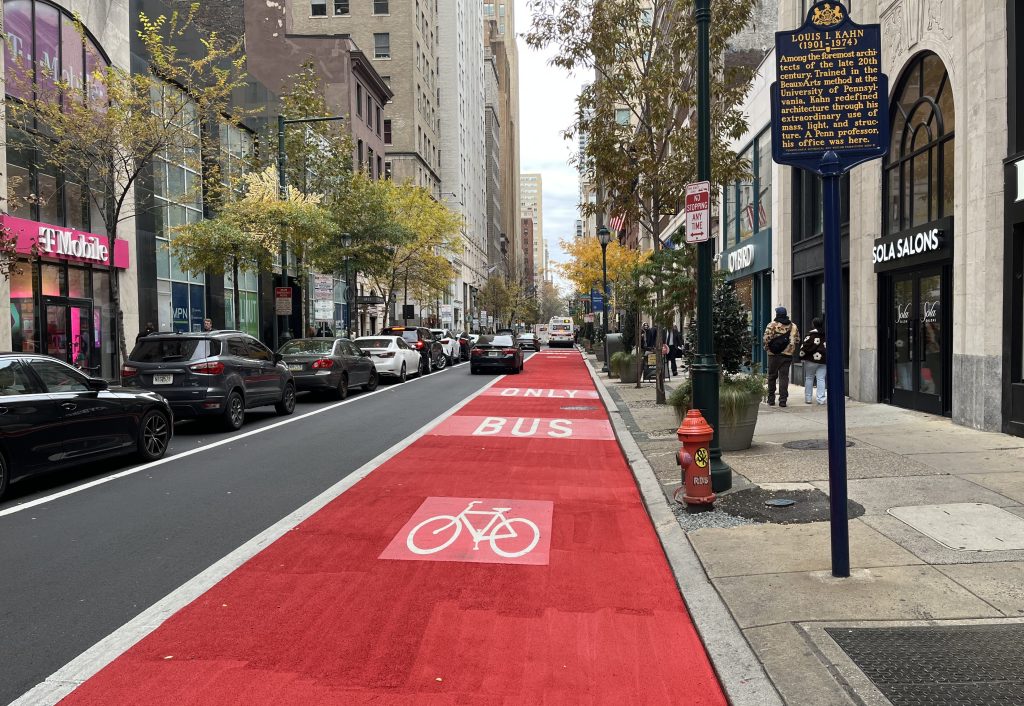
Double parking and loading zone violations are down in Center City Philadelphia after local officials implemented automated enforcement and payment cameras — offering inspiration to other cities struggling to enforce parking rules.
In the 15 months since the state-run Philadelphia Parking Authority introduced automated enforcement and payment for loading zones in Center City, traffic speeds increased from 7 to 10 miles per hour, the Inquirer reported earlier this month.
At the same time, the new enforcement has kept private vehicles out of commercial loading deliveries, and the number of freight vehicles using those dedicated spots increased 97 percent, parking authority officials said.
The parking authority now plans to expand the program to more locations in Center City.
“We are making substantial progress in our effort to reduce congestion on Center City streets, which in turn improves public safety and the quality of life in Philadelphia,” said Acting Philadelphia Parking Authority executive director Gabe Roberts in a press release.
Rather than deploying police to catch violators in the act, the camera-based program reduces illegal parking by making it easier to follow the law. Curb users complete a one-time enrollment that links their license plate to an online account, where they are automatically charged 10 cents per minute parked. In other words, the city isn’t asking drivers to follow the law — drivers follow it by design.
That ease of compliance, experts said, can exponentially improve the quality of cities’ streetscapes.
“Loading compliance typically goes from single digits to the 90s because the rules are easy to follow,” said Gabe Klein, the Head of the Joint Office of Energy and Transportation under the Biden Administration.
City crash data isn’t up-to-date enough to show safety impacts, but locals say they’ve observed an increase in safety since the automated enforcement program started getting illegally parked cars out of the way of cyclists and crosswalks.
“These changes have probably shown a lot of safety improvements,” said Cody Cowper, who chairs the Complete Streets Committee for the Washington Square West Civic Association, which represents an area included in the program. “You don’t have somebody … swerving around a car and they can’t see the pedestrians in the intersection.”
Of course, dangerous illegal parking nuisances isn’t limited to Center City, or even to Philadelphia.
The quick rise of e-commerce has handily outpaced expansions of curb capacity across the nation. Cities aren’t able to handle the influx of Amazon and Doordash drivers and trucks, who also compete for space with traditional freight. The Philadelphia Parking Authority’s approach may be the closest yet to a practical solution.
“It’s really exciting,” said Giacomo Dalla Chiara, an urban freight management researcher at the University of Washington. “[Philadelphia is] really trying something new.”
Dalla Chiara worked on a recent study analyzing loading zone management systems across 13 different US cities. Few control commercial loading at all, or call it a day after painting a curb yellow. But the key is to integrate three strategies in tandem, Dalla Chiara said: infrastructure, including painted loading curbs; policy, such as time limits in loading zones; and regulation through pricing and enforcement.
That third element, Dalla Chiara said, is where Philadelphia stands out and others fall short.
“A lot of cities are scared of changing regulations,” he said.
Philadelphia’s program includes more than 50 cameras, and more on the way, which scan the license plates of vehicles in loading zones. The cameras do not track faces or any other identifying features, according to parking authority officials. Parking enforcement officers review each filmed violation before the authority issues a ticket.
Drivers do not have to operate a commercial vehicle to use the zones, but are required to register with the CurbPass app. The first three minutes of parking are free, and drivers pay 10 cents each minute thereafter. Drivers are fined $51 if they stay in the spot for over an hour or do not register on the app. Drivers who double park must pay a heftier $76 fine.
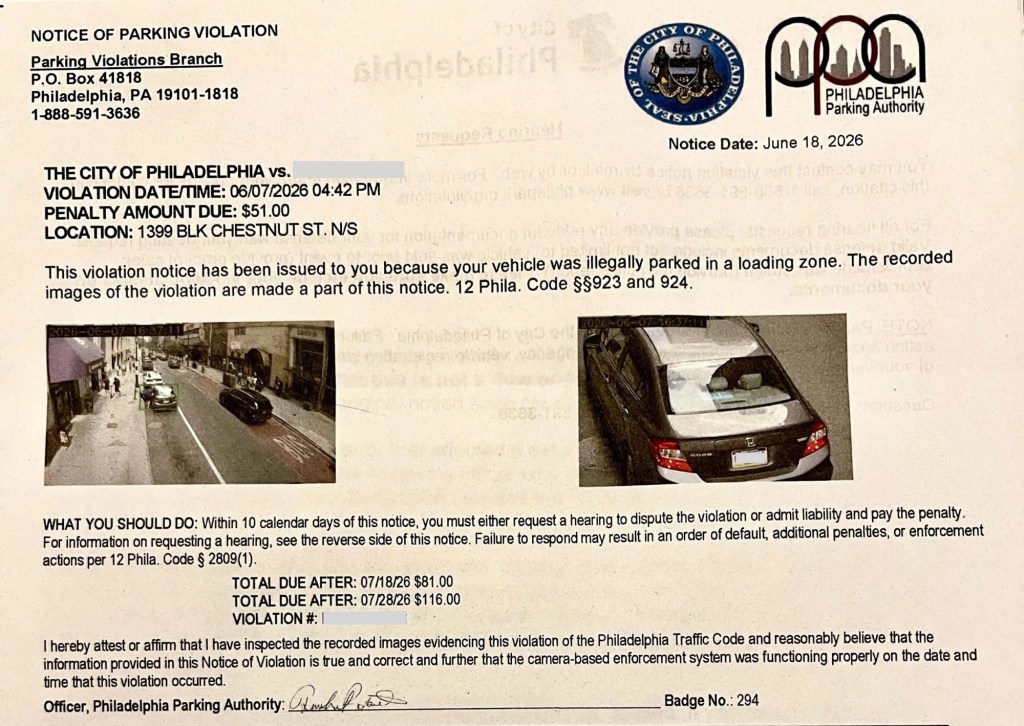
Automating enforcement helps to distribute penalties evenly and promote fairness, according to supporters.
“Our enforcement shouldn’t be selective,” Cowper said. “The things that people are being ticketed for were always illegal. We just didn’t have a good means of enforcing it.”
But Dalla Chiara warned that it’s too early to call the program an unmitigated success, since it only launched in May 2025 and continues to grow.
Curb management data is fairly limited in the US, making it hard to draw conclusions about a single city’s pilot program limited to a few blocks.
“We know very little about curb behaviors,” he said.
Still, Philadelphia officials are nonetheless motivated by the results.
Several US cities already implement some form of automated street enforcement. Los Angeles, New York, Washington, DC and Oakland all join Philadelphia in using bus and trolley-mounted, AI-assisted cameras to issue tickets to cars parked in bus lanes.
Several more use automated cameras to catch speeders and red light-runners with lifesaving outcomes.
Loading zone enforcement could revolutionize street safety on the nation’s busiest commercial corridors, but Philly officials advise other cities to take it slow.
“Any city looking to implement the program, should do a strong public outreach, it will take a while for the public to be aware,” a Philadelphia Parking Authority spokesperson advised other cities’ offficials in an email to Streetsblog. “Build in a warning period, so drivers have a chance to change behavior. You should also build in a grace period for those dropping off passengers, have an internal team review all images before a violation is created to make sure all violations being mailed out are accurate and clear.”

Read More:
Streetsblog has migrated to a new comment system. New commenters can register directly in the comments section of any article. Returning commenters: your previous comments and display name have been preserved, but you'll need to reclaim your account by clicking "Forgot your password?" on the sign-in form, entering your email, and following the verification link to set a new password — this is required because passwords could not be carried over during the migration. For questions, contact tips@streetsblog.org.