Talking Headways Podcast: Dig It! (No, Really)
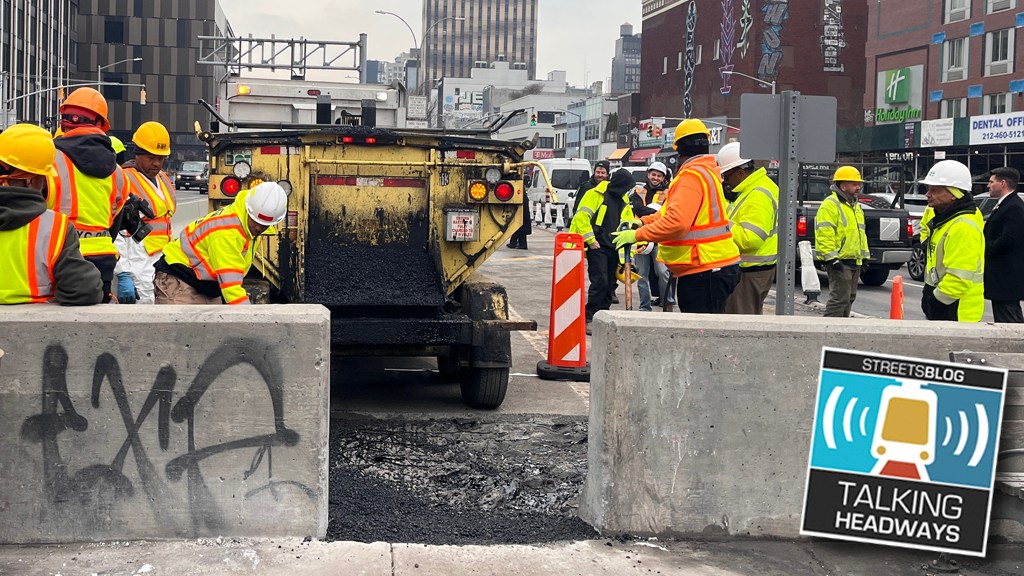
This week on the podcast, we’re joined by Josh Mackanic, founder of CivilGrid, a company that helps construction teams locate underground infrastructure and utilities for quicker project delivery. We chat about the difficulty of building infrastructure, public utilities, and facilitating connections between all the possible companies that might be digging up streets.
Now, you know the Talking Headways drill:
- Listen to the podcast by clicking on the player below.
- Read the full transcript by clicking here.
- Or read an edited excerpt below the player to get the gist.
Edited section
Jeff Wood: All the things that are underground are water pipes, electrical infrastructure, telecommunications, wastewater infrastructure, all that stuff that we can’t see. It’s not easy to know where it is, so you all are trying to make that legible.
Josh Mackanic: Yeah, so I think one of the shorthands for CivilGrid is “Google Maps for the underground.” I think it’s evocative in that one of the first things we’ve started doing with CivilGrid is consolidate what do we know about the built world, and/or what constraints need to inform how we build in the built world.
And I think a big piece of that is underground utilities. I tell folks, “If you want to know where the gas, water, sewer line on the street in front of your house, there’s no one place you can go for that.” And people are like, “What?” I’m like, “Yeah.” You know, it’s scattered into, like, six different databases, and it’s not obvious which database it’s held in.
Throw a dart at the United States; nobody can tell you what utilities operate there. Some really basic things that we would think in 21st century would be very clearly solved are not necessarily solved. But it is more than just utilities. In order for us to build things effectively — like the Second Avenue Subway — we need to know what infrastructure needs to move out of the way for this new tunnel.
But also what about soil? How easy will it be to dig through? What types of tools will I need? And what about the land rights? Who owns what property? If I’m going to build, I need to understand the easements on a given property that would affect where, say, I can put the structure, where I can put potentially EV chargers, etc.