Talking Headways Podcast: So What Is ‘Urban Disorder’ In A Post-Covid U.S.
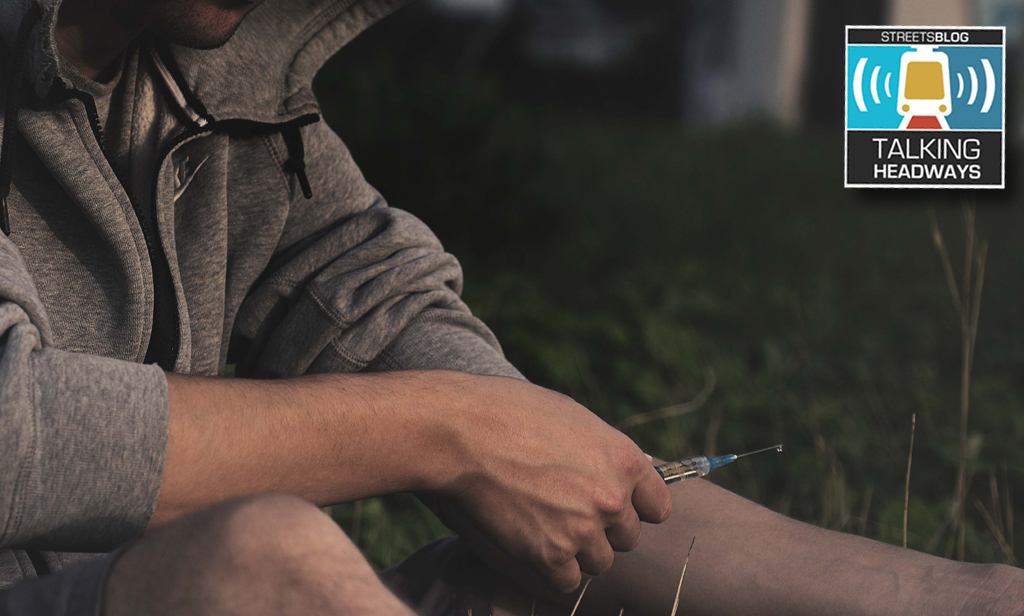
This week we’re joined by Ryan Puzycki, who writes at The City of Yes, for a discussion on “urban disorder,” how it manifests, and how to address the upstream impacts instead of when it’s too late. We also talk about enforcing norms and the impacts of media on our perceptions.
And, as always, let’s review all the ways you can enjoy this spirited content:
- Click here for a full transcript, albeit with some AI typos.
- Click the player above to listen.
- Or check out the lightly edited excerpt below the player.
Partial edited section:
Jeff Wood: You recently wrote a piece about urban disorder, and this is a topic that I’ve long avoided actually talking about — especially here in San Francisco — because I feel you can really put your foot in your mouth pretty easily.
Ryan Puzycki: If you’ve been living in any of the quote-unquote “high opportunity cities” in the past 10, 20 years, you can’t but help think about disorder because it is visible in many, many places. I’d say certainly since the pandemic, that’s become more true. You know, in that piece and others I’ve written about, I’ve talked about living in San Francisco’s Mission District, just pre-pandemic and then while the pandemic was happening and, you know, homelessness, people shooting up was just part of life.
We’d be taking the dog for a walk, and she’d be sniffing something, then we’d realize it’s a used needle and immediately trying to tug her back.
I was crossing the intersection at Van Ness and Market at one point, and there was just, like, a pile of hundreds of needles on the street, and I was like, “Did these fall off of the back of a truck or something?”
Like, what was this? So, you know, it was always kind of there. I kind of was like, “This is what it is to live here in San Francisco.” But I did have an experience living in Manhattan for 10 years before that, and Manhattan didn’t have that. Like, you know, there was certainly a lot of homeless people in New York, but New York had homeless shelters.
You didn’t really see the flagrant drug abuse and things like that. So I at least had an inkling that there’s another way to go about this, not necessarily that New York has solved its problems or maintained the level that it had achieved. But certainly compared to San Francisco, at least there was a difference.
And then I came to Austin, and Austin is somewhere in between those two. We do have a lot of visible homelessness. We do have a large total homeless population. You don’t see the drugs so much, but you do see mentally ill people walking into the street.
I have to pass through the east side of downtown Austin, which is where we have our homeless shelter for men as well as one for women, but you see people who don’t really have anywhere to go during the day or anything to do. Some of them seem like they need treatment or help, but they’re standing in the middle of traffic or wandering into traffic, and they don’t seem to be aware that they’re there. And that’s dangerous not only for those people but also for the people who are driving when somebody erratic enters the right of way.
And so, it’s a long way of saying that I think if we live in cities like this, we all kind of live with it in a certain way, and I just had a sense that maybe that we shouldn’t have to.
Now, why I wrote this particular piece was because I often see from certain center-right people or conservative-identifying people this idea, “Oh, you know, disorder is a function of American individualism.” And, you know, that just didn’t sit quite right with me. And so what I was trying to explore in this piece is this perceived tension between individualism or liberalism, or whatever you want call it, and public order.
Jeff Wood: [Substack writer] Chris Arnade’s perspective is basically we’re too individualistic as a society, and Addison Del Mastro’s was that we believe too much in an American-specific folk libertarianism, or you-can’t-tell-me-what-to-do-ism kind of feeling. And I’m wondering what you took from those arguments, and specifically about this kind of idea of individualism, and specifically I’m interested in the folk libertarianism aspect of it.
Ryan Puzycki: So one of the things I wanted to do in that piece was to distinguish between various ways that we throw around this word individualism. I think we misuse, or abuse, the phrase sometimes to mean a whole bunch of things. So I was trying to separate political individualism, which I think is kind of the system of American rights, constitutionalism, institutional governance, from this idea of just basic individuality or, you know, flying your freak flag or whatever.
These things do interact. They are related, but they are not quite the same thing. And I think what Addison was doing in this idea of folk libertarianism was identifying this kind of like “mind your own business, don’t tell me what to do,” thing that definitely exists in the American spirit, I guess, in American culture.
But it is not quite the same thing, or not necessitated by the underlying political philosophy aspect of it. So I was pushing back, I guess, on saying that that guarantees or defines this kind of realm of disorder that we inhabit.

Read More:
Streetsblog has migrated to a new comment system. New commenters can register directly in the comments section of any article. Returning commenters: your previous comments and display name have been preserved, but you'll need to reclaim your account by clicking "Forgot your password?" on the sign-in form, entering your email, and following the verification link to set a new password — this is required because passwords could not be carried over during the migration. For questions, contact tips@streetsblog.org.