Speed Ills! Reckless Driving on the Rise in Car Ads, Study Shows
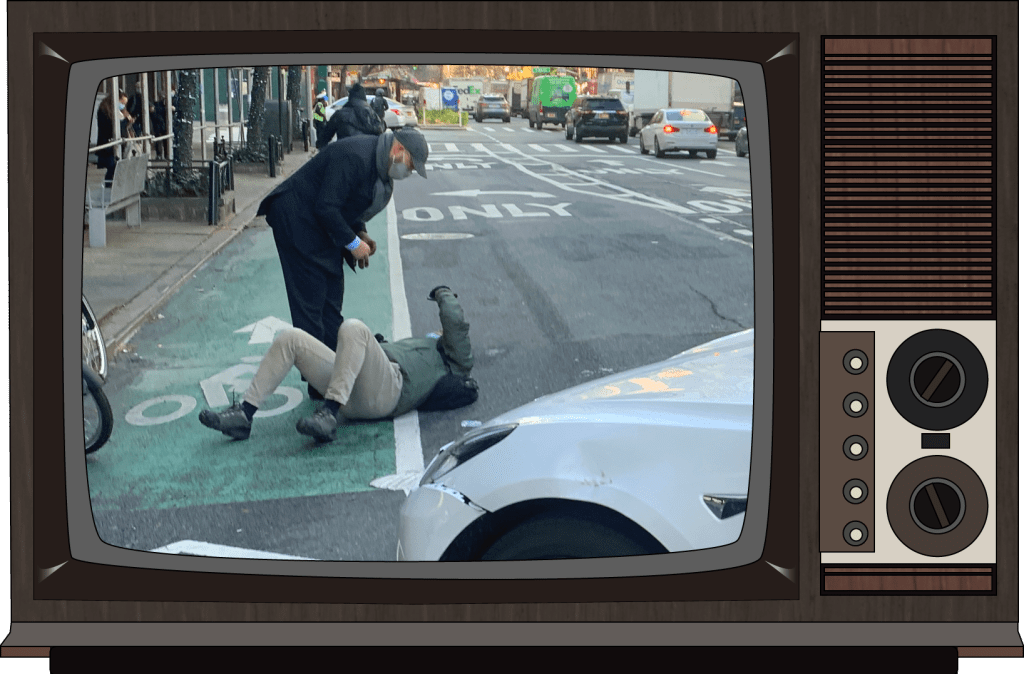
Ad nauseum.
The percentage of car commercials that depict vehicles being used in an unsafe manner such as speeding is rising — and corresponds to a rise in crash fatalities linked to speeding, a new report shows.
In a review of hundreds of car ads aired in 2018, 2020 and 2022, the Insurance Industry for Highway Safety found that 43 percent of the ads emphasized speed or speeding; maneuverability; power; stopping; or traction. In the subset of these “performance ads,” 16 percent included speed or speeding and 28 percent emphasized traction.
By comparison, only 8 percent of all ads highlighted safety.
And even though “traction” might sound innocuous, only one of 10 of those “traction” ads were also categorized as a “safety” ad, meaning the car’s allegedly great traction was not mentioned to demonstrate its capability for avoiding a crash, but, instead, to depict or evoke vehicles “kicking up clouds of dust on remote dirt tracks, zooming down the beach or rumbling over boulders in the mountains,” the report states.
IIHS President David Harkey acknowledged that the ads all have fine print reminding viewers that the action is confined to a closed course with a professional driver, “but the message they convey is that you can drive this way too.
“Showing a stunt driver zooming around a tight turn in the rain might seem harmless, but these ads reinforce our cultural obsession with speed,” he added.
IIHS Research Scientist Amber Woods, the lead author of the study, pointed out that TV and social media tend to normalize fringe behavior like reckless driving.
“Advertising like this has helped normalize speeding, masking how dangerous it is,” Woods said. “Just think about how different attitudes are toward speeding versus impaired
driving.
“The vast majority of viewers are never going to take their vehicle through a mountain stream or up a sand dune, but this kind of ad could influence the way they drive in risky on-road conditions — in rainy or snowy weather, for instance,” Woods added.
The Insurance Institute has long monitored Big Car messaging. Depictions of reckless driving have also been a longtime staple of the movies, dating back from the Silent Era (looking at you, “The Speed Kings“) through to the “Fast and Furious” franchise. But TV and movies offer vicarious thrills, while ads are specifically about persuasion.
“Many of them present high-performance driving as something consumers can purchase and experience,” the IIHS said in a statement.
The breakdown
The study looked at 2,500 ads that aired in the three years in question.
One possible reason for the ads’ increased emphasis on machismo could simply be Detroit’s desperation to convince car buyers that bulky, utilitarian SUVs are high-performance vehicles or even sports cars. SUV ads that emphasized performance rose from 28 percent in 2018 to 45 percent in 2022 — an increase of 60 percent.
Over the same period, the share of ads focused specifically on speed rose from 14 percent to 19 percent while the share of ads highlighting safety fell from 11 percent to 3 percent — a decline of 72 percent.
Meanwhile, 11,288 lives were lost in speed-related crashes, comprising 29 percent of all road deaths, the IIHS reported. Harkey put two and two together.
“This study highlights the cultural dimension of our road safety crisis,” he said. “Automakers and broadcasters need to start treating unsafe speed the same way they would drunk driving or failure to use a seat belt.”
(Perhaps car ads reached a nadir during the period in question, given that it overlaps with the period when Streetsblog was running its “America’s Most Toxic Car Ad” contest, which eventually crowned a Chevy pickup truck.)
The unshakeable conclusion is that more regulation is needed to reduce how much recklessness car makers can show — regulation that is widespread in other countries that, predictably, have lower rates of crashes and injuries.
Advert standards in the United Kingdom, for example, prohibit ads that encourage dangerous driving by restricting messages about power, acceleration or handling (unless the context clearly relates to safety, such as swerving to avoid a crash).
And in France, car makers’ ads must also emphasize walking and safety and encourage less driving.

Read More:
Streetsblog has migrated to a new comment system. New commenters can register directly in the comments section of any article. Returning commenters: your previous comments and display name have been preserved, but you'll need to reclaim your account by clicking "Forgot your password?" on the sign-in form, entering your email, and following the verification link to set a new password — this is required because passwords could not be carried over during the migration. For questions, contact tips@streetsblog.org.