How the ‘Little Free Pantry’ Can Help Feed the Hungry Without Requiring Them to Drive
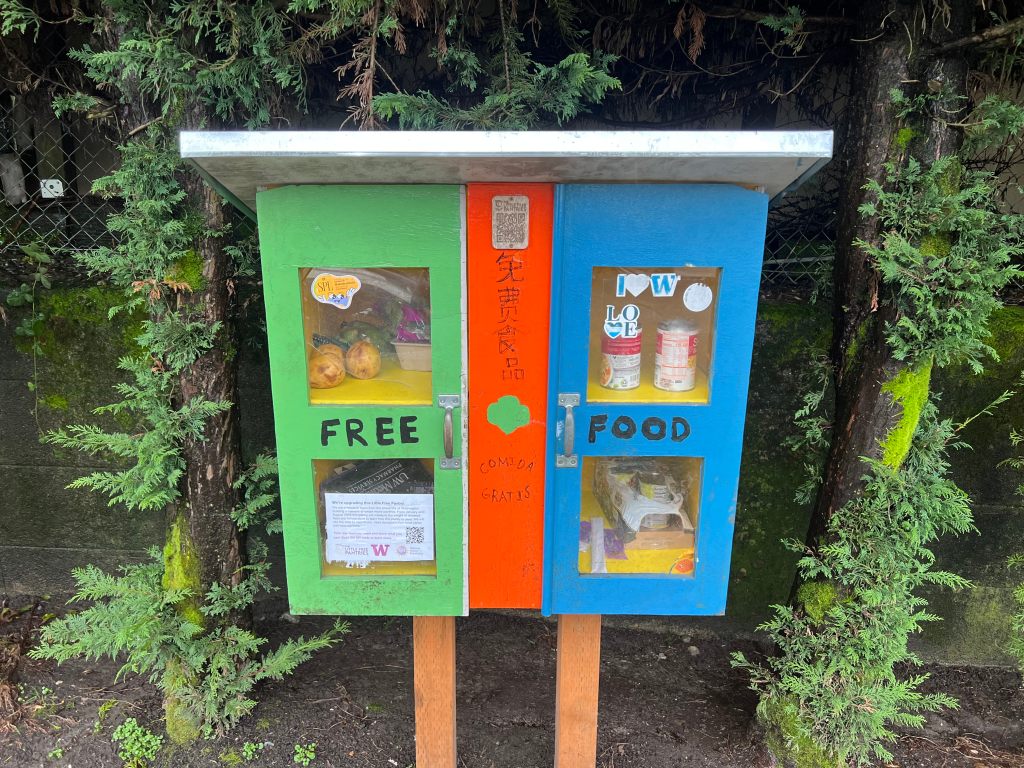
A group of researchers is outlining a new strategy to put more “micro-pantries” in American communities, in hopes of tackling the challenge of feeding hungry people who struggle to access traditional centralized food banks — especially if they don’t drive.
At its simplest, a micro-pantry is a small, unattended compartment for food items that can be built just abut anywhere, like curbs and front yards outside homes, places of worship, and other community destinations. Once in place, they are maintained by the community under the “take what you need, leave what you can” model: neighbors donate food to the pantry, then community members in need simply pick it up.
Since the first micro-pantry went up in Arkansas in 2016, there are now nearly 4,400 of them around the world, mostly in the United States. That’s largely been driven by the rise of hunger itself, especially as grocery prices rise, food banks struggle to feed the hungry, and long lines stretch outside food banks — especially during last year’s government shutdown, which jeopardized SNAP benefits.
But it’s also been driven by the rise of car dependency, which puts all kinds of food out of reach for Americans without cars.
A 2012 study found that it takes the average U.S. resident 15 minutes to get to the grocery store alone — not counting the return trip — and that it takes even longer in low-income food deserts, or for those without access to a private vehicle. By contrast, micro-pantries are embedded directly within communities and are often easy to access on foot, bike, or wheelchair.
While micro-pantries are often grassroots and decentralized, researchers at the University of Washington’s Urban Freight Lab are studying how they can tie into a larger network of food banks and mutual food aid. These researchers were inspired by a pandemic-era project in which volunteers on bikes delivered meals directly to homes.
“I noticed that [if] some of those volunteers [had leftover food] at the end of their route, they would go to a micro-pantry [and] just leave it there,” said research engineer Giacomo Dalla Chiara. “Some of the food banks were interested in this model of having these satellite [pantries], but they didn’t have any data on whether it’s useful to put food there, who uses them, and their behaviors.”
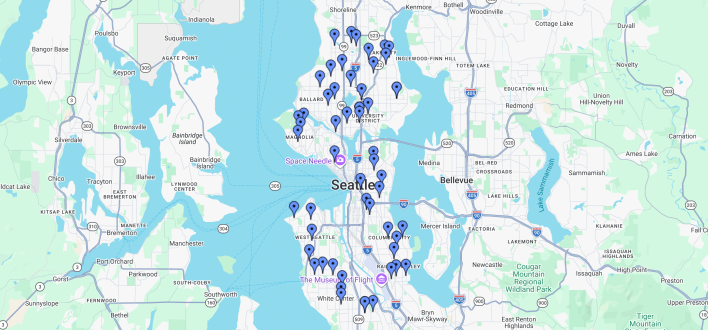
Photo: Little Free Pantry
Dalla Chiara and his fellow researchers wanted to make micro-pantries an even more powerful community solution. Supported by a federal civic innovation grant, they installed sensors inside micro-pantries across Seattle, enabling them to better communicate with food banks and community donors when supplies inside them needed a restock.
“A lot of the stakeholders involved with micro-pantries just lack information [about what is in them],” notes Dalla Chiara. “If [someone] donates food to [a micro-pantry]…the sensors [can now] detect that there are some pounds of food so then [others can] come and pick it up.”
These sensors can also help make micro-pantries a more reliable for the hungry, allowing people to check the local inventory before they go check for a meal.
“One of the biggest hurdles when you want to look for food is access and transportation,” says Dalla Chiara. “[If] I have to travel maybe 30-40 minutes to go to a food bank, let me check the micro-pantry nearby, if there is any food available [to pick up].”
Centering micro-pantries as local initiatives while connecting them to the larger food assistance network is paying off. In the next six months alone, the researchers estimate that 40,000 pounds of food will move through Seattle area micro-pantries. And they also say this success should challenge communities to help people access necessities like food without hopping into the driver’s seat.
“Integrating food in our urban planning system and our transportation system [is] very important because food is such a necessity,” Dalla Chiara argues.

Read More:
Streetsblog has migrated to a new comment system. New commenters can register directly in the comments section of any article. Returning commenters: your previous comments and display name have been preserved, but you'll need to reclaim your account by clicking "Forgot your password?" on the sign-in form, entering your email, and following the verification link to set a new password — this is required because passwords could not be carried over during the migration. For questions, contact tips@streetsblog.org.