Friday Video: The Utopia of London’s Low-Traffic Neighborhoods
The Old Smoke looks brand new.
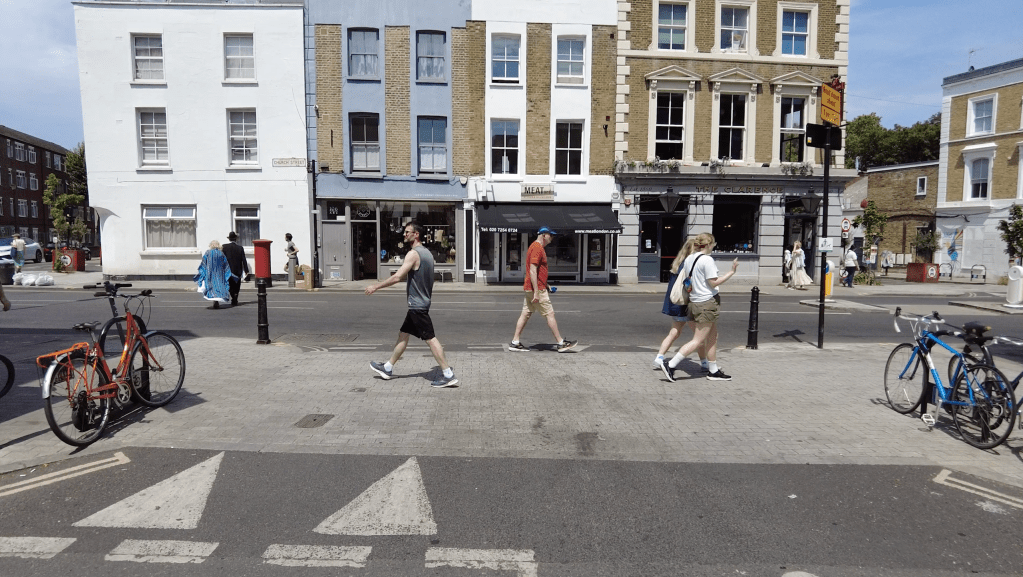
“Low-traffic neighborhoods,” as the Brits call them, deploy low-cost interventions to steer traffic away from certain streets to make space for pedestrians and cyclists.
In this week’s Friday video,UN-award-winning Streetfilms auteur Clarence Eckerson Jr.’s travels around leafy Londonwith urban planner Solomon Green-Eames. Their sunny jaunt should inspire deep envy in every New York urbanist.
The key to these neighborhoods, which have no exact equivalent in America’s biggest city, are “modal filters” that divert car traffic while allowing bicycles and pedestrians to roll and walk freely. Green-Eames shows off two types: The first employs bollards to physically block automobiles, and the second uses cameras that allow certain cars and buses to pass through without paying a fine.
These interventions should depress every American urban planner because they are so easy to implement. You just need to drive a few bollards into the street or put up a few cameras. You do not need to completely reimagine a street network to make it safe for pedestrians and cyclists.
Is there anything like this in Gotham? Paseo Park in Jackson Heights comes to mind, followed (distantly) by 31st Avenue in Astoria, Berry Street in Williamsburg, portions of Battery Park City and Roosevelt Island, and Stuyvesant Town and Peter Cooper Village. There are have been murmurs about Avenue B in Alphabet City, too. And that’s about it. By contrast, low-traffic neighborhoods are sufficiently ubiquitous in London that nobody seems to know their exact number. We should open a London bureau!
Watch the video below:

Streetsblog has migrated to a new comment system. New commenters can register directly in the comments section of any article. Returning commenters: your previous comments and display name have been preserved, but you'll need to reclaim your account by clicking "Forgot your password?" on the sign-in form, entering your email, and following the verification link to set a new password — this is required because passwords could not be carried over during the migration. For questions, contact tips@streetsblog.org.