This Bill Would Help America Build More Housing Near Transit
A new bill could finally make building homes near transit a national priority — if Congress follows the Senate’s lead and makes it law.
Even as the government shutdown rages on, the Senate recently passed a sweeping bill that contains elements of the Build More Housing Near Transit Act, which would prioritize applications for competitively-awarded federal transit funding if they are accompanied by pro-housing plans along transit corridors.
Along with the other elements in the ROAD to Housing Act — which is itself a part of the National Defense Authorization Act — the law would help maximize the impact of limited housing dollars by simultaneously (and crucially) building a transit ridership base nearby new federal housing investments.
The Build More Housing Near Transit Act was introduced by by Rep. Scott Peters (D-California) in July, but quickly gained bipartisan support in both chambers of Congress — proving that the need for housing and transit reform can transcend “red” versus “blue” and “urban” versus “suburban” dichotomies.
“The clearest way out of our national housing shortage is by building more housing,” said Sen. Brian Schatz (D-Hawaii), a cosponsor, in a release. “Our bipartisan bill incentivizes cities and towns to build housing when they expand or redevelop their public transit systems. This will help put more families in homes, grow local economies, and cut carbon pollution. It’s a win for everyone.”
While this law would encourage housing construction across the nation, it would preserve state and local flexibility by allowing communities to define what “transit-oriented development” means to them. In one state, for instance, that might mean building affordable units, while in another, it might mean converting public property to housing, eliminating or reducing parking and lot size minimums, eliminating or raising building height limits, or making development approvals that meet requirements as by-right.

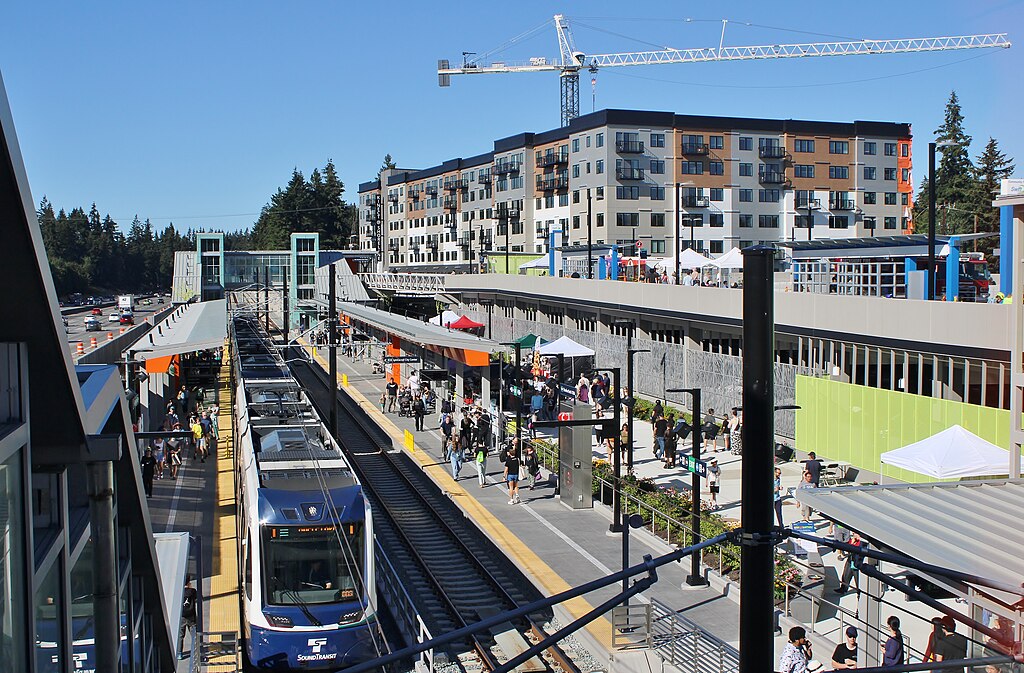
Photo: Montgomery County Planning Commission via Flickr
Even without federal stimulus, many state and local governments are already leading on transit-oriented development — begging the question what more they could do with support from Washington.
Governor Gavin Newsom, for instance, just signed a similar law in California; Utah’s Housing and Transit Reinvestment Zones, meanwhile, help finance housing near transit stations with the growth in tax revenue after development. Its success in easing the state’s housing crisis while bolstering transit service inspired one Republican congressman’s support for this legislation.
“I’m proud to introduce legislation that will condition federal transit grants on whether states are reducing zoning barriers for housing near new bus or rapid transit lines, something that Utah has already been doing for years,” said Rep. Blake Moore (R-Utah). “The end result will bring more of Utah’s common-sense policies to Washington and help more families find affordable and accessible homes.”
Common sense as it may be, some advocates are concerned about the bill’s prospects given Washington politics. But its lead sponsor remains confident.
“[The] housing crisis [is] forcing people to make longer commutes and worsening air pollution,” Rep. Peters wrote in an email to Streetsblog. “Our bipartisan bill would maximize federal transit funding, tackle rising rents, and get more cars off the road. I’m glad it was included within the [ROAD to Housing Act of 2025] in the Senate and look forward to getting this commonsense legislation across the finish line.”
By passing the ROAD to Housing Act, senators are acknowledging that the American public deserves affordable housing and reliable transit located in their communities, and that federal policy is key to making that happen.
Contact your representative today to urge them to follow the Senate’s lead and help America build more housing near transit.

Streetsblog has migrated to a new comment system. New commenters can register directly in the comments section of any article. Returning commenters: your previous comments and display name have been preserved, but you'll need to reclaim your account by clicking "Forgot your password?" on the sign-in form, entering your email, and following the verification link to set a new password — this is required because passwords could not be carried over during the migration. For questions, contact tips@streetsblog.org.