This Holiday Season, Buy Your Kid a Bike With Your Pre-Tax Healthcare Money
Got an FSA account that's about to expire, or an HSA fund gathering dust? Now is a great time to invest in your child's health by getting them a bike — with a little help from your fellow taxpayers.
Streetsblog provides high-quality journalism and analysis for free — which is something to be celebrated in an era of paywalls. Once a year, we ask for your tax-deductible donations to support our reporters and editors as they advance the movement to end car dependency and strengthen our communities.
If you already support our work, thank you! If not, can we ask for your help?
Together, we can create a walkable, bikeable, equitable and enjoyable USA for all. Happy holidays from the Streetsblog team!
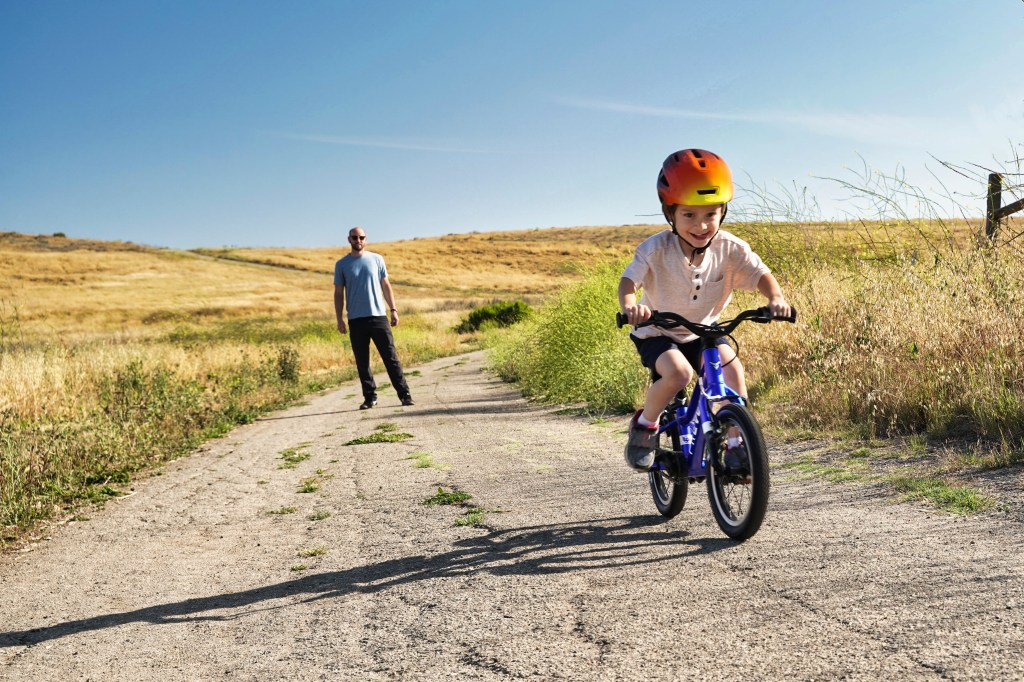
As holiday shopping season gets into high gear, some parents are giving their children the gift of biking and all the health benefits that come with it — with a little help from their fellow taxpayers.
High-end kids bike manufacturer Prevelo announced a new partnership last month with Truemed, a company which helps qualified patients prove to insurers that they’re eligible to spend pre-tax healthcare funds on specific purchases designed to boost their family’s wellness — including bicycles for their children.
Though many Americans spend their Health Savings Account and Flexible Spending Accounts on insurance deductibles and prescription costs — or forget to spend them entirely — HSAs and FSAs, as they’re typically called, can also be spent on preventative medicine musts like exercise equipment that can help would-be patients avoid visits to the doctor’s office in the first place.
Buyers must get a “letter of medical necessity” to prove they need the equipment before purchase — but considering that less than 7 percent of the U.S. adult population has adequate cardiometabolic health, a lot of people likely qualify to buy a bike with tax-free money, even if they don’t realize it.
Meanwhile, even fewer Americans know that many brands of outdoor bikes are often HSA- and FSA-eligible, much like stationary bikes designed for indoor use — and that they can use those same dollars to buy bikes for their children, too. Again, kids have to qualify, but fewer than one-in-five U.S. children get the recommended amount of daily physical activity needed for heart health — which means most of them could likely benefit from that benefit.
If enough of the tens of millions of HSA and FSA holders in America took advantage of it, that could make a serious impact on public health, Prevelo founder Jacob Rheuban argues.
“We have an epidemic of kids in the United States spending too much time sitting down behind screens,” Rheuban said. “Anything that gets kids out riding bikes is good for a variety of reasons … And if we think about the long term health costs of all of the adverse health effects of a sedentary lifestyle? If buying a kid a bike can reduce the risk that a kid is going to have cardiovascular health problems, obesity-related health problems, even some mental health issues — I think that the cost of the bike is like a pretty small price to pay.”
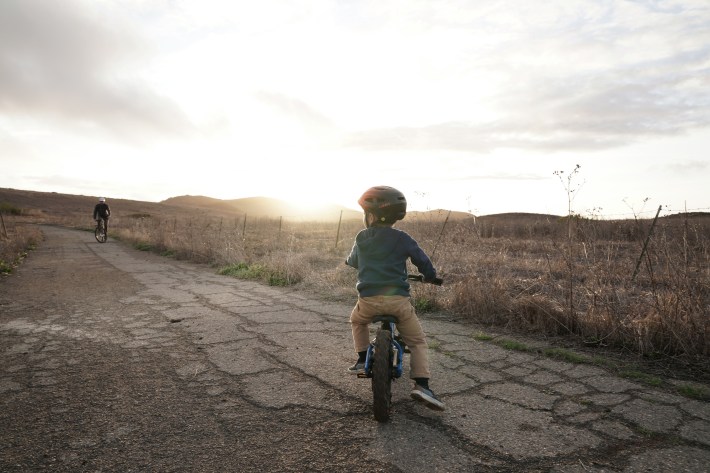
Inspired by a search for a great bike for their own children, Rheuban and his wife started Prevelo in 2017 with the goal of winning over young riders in a hyper-stimulating world where omnipresent screens constantly compete for their attention.
The bikes on the market at the time, though, were largely inexpensive, miniature versions of bikes for adults, which weren’t purpose-built for little bodies and or designed to be ridden beyond the end of the block — or passed down to a younger sibling once their original rider outgrew them. That meant too often, kids got out of the saddle long before cycling became a lifetime habit.
“The problem with those bikes is they made them so cheap that kids don’t want to ride them,” Rheuban added. “So we started going in the other direction.”
Photo courtesy Prevelo
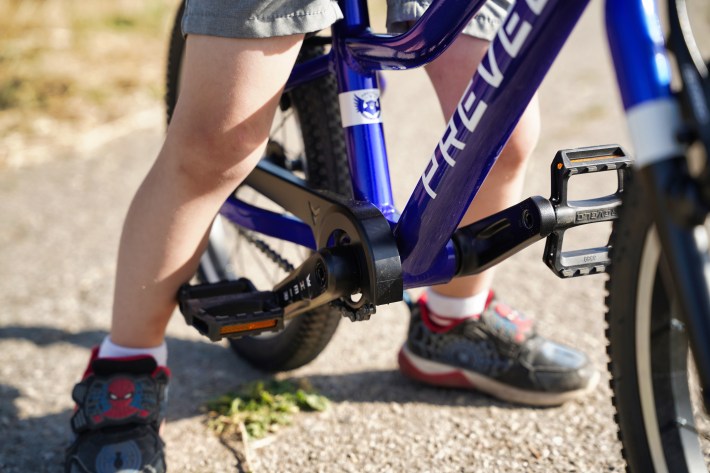
That direction took Rheuban deep into research mode, scouting out the perfect short-reach brake levers suitable for little arms, narrow handlebars for little shoulders, smaller saddles for little butts, and lower bottom brackets that make it easy for little feet to touch the ground, so the kids they belong to feel comfortable from the moment they start riding.
While Prevelo bikes don’t come cheap — a bike for a 9-year-old will run parents a cool $759 before holiday discounts — buying that bike with pre-tax money like an HSA can functionally save a parent up to 30 percent, or save an FSA-holder from sacrificing their “use-it-or-lose-it” funds that expire at the end of the plan year.
For Rheuban, however, the list price is still a solid investment into a child’s overall health — especially compared to a cheap bike that gets immediately abandoned in favor of an iPad.
Beyond the overall benefits of cardiovascular exercise, early access to regular biking can boost kids’ sensory-motor, social and emotional development, researchers have found. One Danish study even found that kids who biked or walked to school were better able to concentrate in class.
Aggregated across all of America, those benefits could add up to big health and educational savings for society at large, in addition to saved time for parents whose kids can now bike independently to the neighborhood school.
Of course, Rheuban acknowledges that access to great bikes is far from the only barrier to getting kids in the saddle. Much of America’s auto-centric neighborhoods don’t even have a neighborhood school, and the roads aren’t exactly designed for ages eight to 80, never mind for the countless toddlers on balance bikes rolling onto U.S. roads as the bike industry evolves to court ever-younger riders. Regulations to limit large cars that are more likely to kill children on impact, funding for bike education in elementary schools, and bike lending programs for kids who can’t afford top-of-the-line cycles of their own could all go a long way towards making sure more children are actually pedaling.
Still, as we work to retrofit our country around the needs of cyclists of all sizes, Rheuban argues that getting kids on bikes they actually love is a great first step — and once they get rolling, they can become a powerful (and adorable) catalyst for change.
“When we have more kids riding bikes in neighborhoods, it makes it easier for cities to justify bicycle infrastructure,” he said. “It makes it easier for cities to justify having crossing guards at strategic intersections to make it safer for kids to ride bikes to school. There’s safety in numbers — and once you get a certain number of kids riding bikes, it makes other kids want to ride bikes more.”
Kea Wilson is Senior Editor for Streetsblog USA. She has more than a dozen years experience as a writer telling emotional, urgent and actionable stories that motivate average Americans to get involved in making their cities better places. She is also a novelist, cyclist, and affordable housing advocate. She lives in St. Louis, MO. For tips, submissions, and general questions, reach out to her at kea@streetsblog.org, or on Bluesky @keawilson.bsky.social.
Streetsblog has migrated to a new comment system. New commenters can register directly in the comments section of any article. Returning commenters: your previous comments and display name have been preserved, but you'll need to reclaim your account by clicking "Forgot your password?" on the sign-in form, entering your email, and following the verification link to set a new password — this is required because passwords could not be carried over during the migration. For questions, contact tips@streetsblog.org.