Streetsblog provides high-quality journalism and analysis for free — which is something to be celebrated in an era of paywalls. Once a year, we ask for your tax-deductible donations to support our reporters and editors as they advance the movement to end car dependency and strengthen our communities.
If you already support our work, thank you! If not, can we ask for your help?
Together, we can create a walkable, bikeable, equitable and enjoyable USA for all. Happy holidays from the Streetsblog team!
The Trump Administration continues to dismantle federal climate policy, and Biden-era goals are drifting increasingly out of reach. As the federal government of the world’s second-biggest polluter abdicates responsibility, state and local governments must accelerate the decarbonization efforts. This is especially true for the transportation sector, the country’s biggest emissions source, as state and local governments are key decision makers on highway and transit spending.
Unfortunately, even states that have pledged to take climate seriously are failing to reduce transportation emissions at the rapid pace that is needed. At the root of this failure is an unwillingness by policy makers to inconvenience drivers and meaningfully depart from a car-dominated transport system. As progress on climate goals falters, it is time for state transportation leaders to come to terms with an inconvenient truth: climate goals are not feasible without a swift and methodical reallocation of road space away from cars.
States have overprioritized electrification
States like California, Colorado, and Minnesota are among the recognized leaders who have adopted time-bounded policy plans to achieve net zero emissions. The transportation-related action steps can broadly be categorized into two groups: actions to electrify cars, and actions to reduce driving, as measured by vehicles miles traveled or VMT. All state climate action plans have prioritized the former, banking on electric vehicle incentives, clean fuel standards, and expanded charging infrastructure to accelerate EV adoption and reduce emissions without necessitating a rapid shift away from driving.
It was already statistically dubious that achieving climate goals would be possible without rapidly reducing vehicles miles traveled. Now, as federal electric vehicle incentives disappear, automakers abandon EV plans, and forecasted EV sales plummet in the U.S., it is nearly impossible for states to achieve emissions reduction targets without adjusting their policies to rely less on EV adoption and focus more on reducing overall driving.
To their credit, the aforementioned states are slowly coming to terms with this reality. California adopted a goal to reduce per-capita vehicles miles traveled 25 percent below 2019 levels by 2030. Minnesota aims to reduce per capita vehicles miles traveled 14 percent by 2040. Last year, Colorado adopted a policy directive to reduce per-capita vehicles miles traveled 1 percent per year.
Supporting policy actions have focused on improving multimodal transportation options and promoting denser, walkable, urban land use. Projects that significantly impact cost and convenience for car drivers have been largely off-limits. Despite the stated goals, actual VMT reduction has been limited, and driving continues to increase in all three states and across the country. Thus it bears asking: what must change in order to reduce vehicles miles traveled at the pace and scale that is needed to avert climate disaster?
The importance of reducing space for cars
Two recent studies sought to explore this question and produced some sobering results:
A February 2025 study by Dr. Adam Millard Ball of the UCLA Institute of Transportation Studies analyzed changes in road capacity and U.S. driving trends. The report found that a simple model that uses just two variables; highway lane miles and population, could predict VMT levels with similar or better accuracy than the complex and expensive models often used by transportation departments. The policy brief states that “overall, the results suggest that road capacity is the fundamental force that shapes transportation systems, land use patterns, and household travel decisions.”
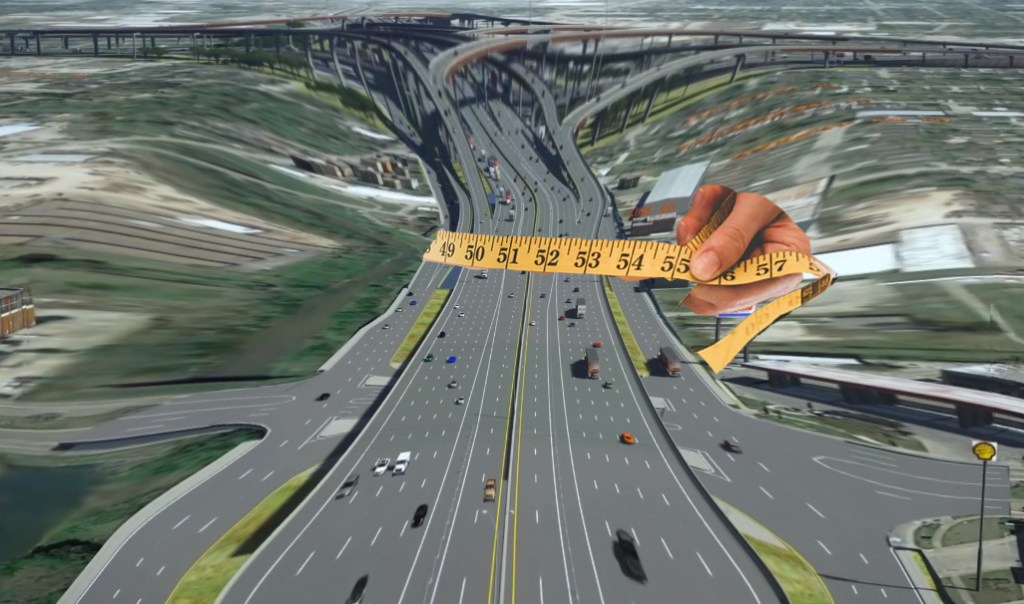
The report discussed the implications for California’s VMT reduction goal, arguing that it will be difficult to achieve substantial reductions in vehicles miles traveled by relying solely on public transit, walking and cycling infrastructure, and land use planning. Its findings underscore the importance of not only limiting highway expansion, but also significantly reducing road capacity in urban areas. The report notes that reducing road space in California creates the opportunity to repurpose traffic lanes into new uses that address the intersectional issues facing the state. Urban highways should be treated like stranded assets. “If California is to achieve its climate goals, it may need to repurpose highways and narrow arterials to create space for housing, transit lanes, and public open space.”
The second study is a recently published literature review by Maria Börjesson and Jonas Eliasson at Linköping University in Sweden. The authors analyzed empirical evidence from across Europe to determine the effectiveness of “carrot” policies at reducing overall traffic volumes. Such measures include multimodal transportation improvements, zoning reforms, and “soft measures” that aim to affect behavior by changing cultural norms and attitudes. The study found that by and large, carrot policies alone are ineffective at reducing vehicles miles traveled at the pace and scale that is needed.
“Our general conclusion is that their effects on aggregate traffic volumes appear small, especially from a climate policy perspective where emissions need to be cut radically and rapidly,” the pair wrote.
Reducing road capacity must be a policy pillar
The takeaways from this research is clear: the VMT-reduction policies currently being pursued, even in states recognized as climate leaders, are destined to fail unless they are accompanied by targeted reductions of roadway capacity. This is not to say that there aren’t major societal benefits that result from improving transit options, promoting denser land use, and electrifying vehicle fleets. However, from a climate standpoint, these actions alone are inadequate, and every year that passes will make the necessary path of action more disruptive.
As states update future climate action plans, VMT-reduction strategies must be strengthened to better account for the limited success of existing policies and place a greater priority on repurposing road space. Potential action steps include:
Adopt road capacity reduction targets in addition to VMT-reduction goals, which can be more reliably measured;
Utilize more conservative electric vehicle adoption rates in emissions forecasting;
Invest in public outreach and education programs about the importance of reducing car dependency;
Create pathways for communities to propose, design, and implement grassroots solutions to reimagine streets and highway corridors;
Fund expanded research on the effectiveness of VMT-reduction strategies, including the effects of transit backfilling and traffic evaporation, and update travel demand models to account for new findings;
Create policy guidance to prioritize transit funding for projects that reduce general purpose traffic lanes;
Enact a moratorium on new urban highway capacity expansion.
Alarmingly, transportation policy makers and even some climate advocates refuse to publicly acknowledge that reducing road capacity is a necessary pursuit. Instead, they perpetuate the delusion that decarbonization can be achieved without impacting convenience for cars. This is likely due to fear of public blowback and political consequences. While tactful messaging is important, policy makers must have honest dialogue with their constituents about the global crisis that we are tasked with solving. Great leaders embrace tough conversations.
Some will certainly attempt to associate efforts to reduce lanes with reduced quality of life, however the reality is the exact opposite. Highway removal and road diet projects can unlock the potential of the public right-of-way to better serve surrounding communities with cleaner air, cheaper and faster mobility, reconnected neighborhoods, and abundant local businesses, access to nature, and housing options. As a proof of concept is established, these local benefits can become a political asset. Ultimately, reduced car convenience is a small price to pay for a healthier, more just world that we can feel proud to pass on to future generations.
Alex Burns is an experienced environmental justice organizer, activist, and policy expert. Alex draws on his varied work background, including working on electoral campaigns, as a national park ranger, and coordinating bus rapid transit projects, to advance equitable transportation outcomes in Colorado. In his free time, Alex enjoys hiking, biking, and walking his cat.
Streetsblog has migrated to a new comment system. New commenters can register directly in the comments section of any article. Returning commenters: your previous comments and display name have been preserved, but you'll need to reclaim your account by clicking "Forgot your password?" on the sign-in form, entering your email, and following the verification link to set a new password — this is required because passwords could not be carried over during the migration. For questions, contact tips@streetsblog.org.
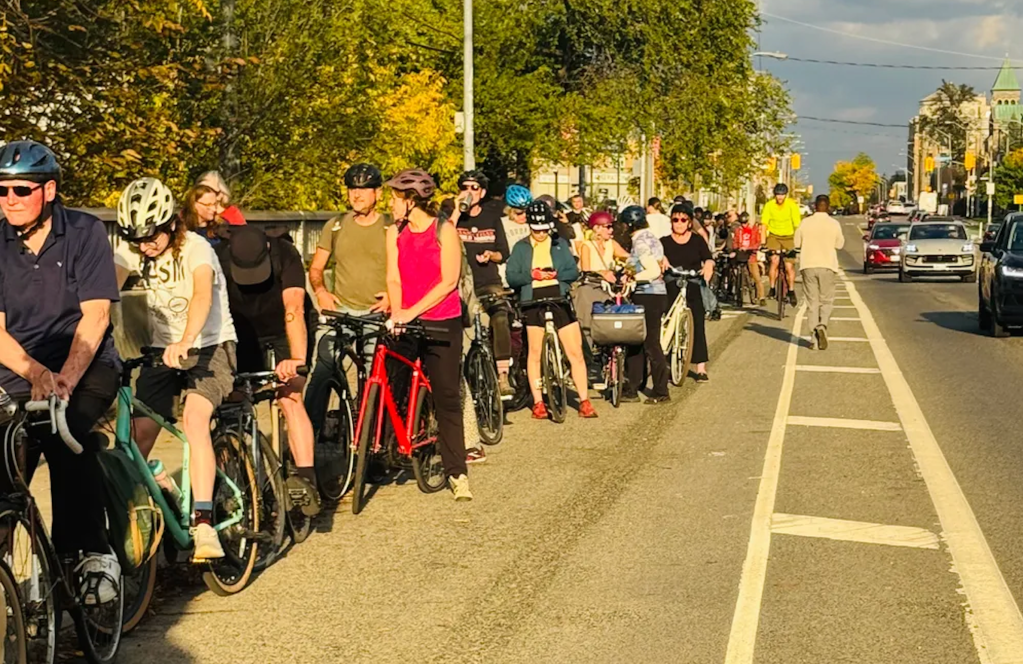
Toronto advocates are putting their bodies on the line to protect a bike lane the province wants to rip out — and and to fight a wave of anti-bike lane sentiment that this writer warns is sweeping the whole continent.