

Don’t Keep Wednesday’s Headlines Hanging
Is President Trump really going to kill congestion pricing? If so, how? And why?
By
Blake Aued
12:36 AM EST on February 12, 2025
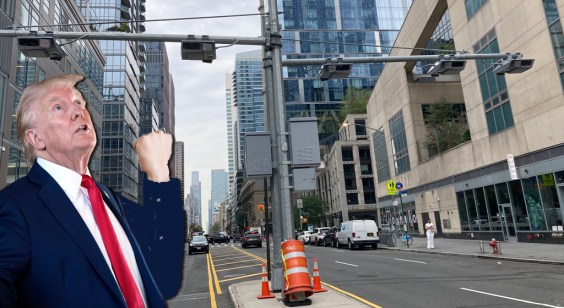
- President Trump is still threatening to kill congestion pricing in New York City, even if he doesn’t quite sure how to do it (NY Times). Former Times columnist Paul Krugman wonders why on his new Substack, considering that the policy is clearly working — congestion is down, transit ridership is up, and even two-thirds of drivers now support it. Regardless of whether Trump can or should, he might do it anyway (Streetsblog NYC).
- Cybertruck fires have killed five people in just one year, making them deadlier than the infamous Ford Pinto from the 1970s. (Mother Jones)
- Logan’s Substack muses on the relationship between dense commercial development and walkability.
- Cities continue to learn lessons from the late Donald Shoup, with San Diego eliminating free parking on Sundays (NBC 7) and Bellevue, Washington also considering ending free parking (Seattle Times).
- Bike lanes are a campaign issue for Boston Mayor Michelle Wu (MassLive), whose opponent Josh Craft wants to pause construction of them (CBS News).
- A Rutgers survey found that South Jersey residents want more transit stops and greater frequency. (WHYY)
- Ohio spends just $2.57 per person on transit, less than half the national average. (Policy Matters)
- San Francisco will not ticket drivers for violating California’s new daylighting law unless the curb is painted red. (Standard)
- Minneapolis is trying to make the area around Nicollet Mall friendlier to pedestrians, but it’s doing it by removing buses. (Minnesota Daily)
- Denver’s 16th Street pedestrian mall needs a rebrand. (Denverite)
- The Rochester Beacon is hosting a forum on Vision Zero in the upstate New York city.
- Albuquerque has started construction on Central Avenue bike lanes. (KRQE)
- Anchorage is considering recriminalizing jaywalking, blaming legalizing it for record pedestrian deaths in 2024. (Alaska News Now)
- During the first year of England’s second-largest low emissions zone, the National Health Service saved $40,000 a month because residents had fewer respiratory illnesses. (The Guardian)

Blake Aued has been doing Streetsblog's daily national news digest for years. He's also an Atlanta Braves fan, which enrages his editor in New York.
Read More:
Streetsblog has migrated to a new comment system. New commenters can register directly in the comments section of any article. Returning commenters: your previous comments and display name have been preserved, but you'll need to reclaim your account by clicking "Forgot your password?" on the sign-in form, entering your email, and following the verification link to set a new password — this is required because passwords could not be carried over during the migration. For questions, contact tips@streetsblog.org.
More from Streetsblog USA
Study: The Missing Ingredient in the Fight To End Car Crash Deaths is… Fewer Cars
The common denominator in every car crash is a car. So why don't we talk about it?

October 27, 2026
Op-Ed: Toronto’s Bike Lane Fight Should Be a Wake Up Call for the US, Too
The people of Toronto have shown up big to protect their bike lanes from removal. Will Americans stand with them?

October 27, 2026
Six Days on the Road and Tuesday’s Headlines May Not Make It Home Tonight
Jalopnik points out that there are certain vehicles that average people have no business driving.
October 27, 2026

Why Deadly, Illegal E-Motos Are On The Rise – And Why E-Bikes Are Being Blamed When They Crash
...and what we can do to protect our kids *and* the e-bike revolution.
October 26, 2026
Monday’s Great Smokey Headlines
While other countries work to reduce greenhouse gas emissions, the U.S. is moving in the opposite direction.
October 26, 2026
