A Streetsblog Field Guide to Sidewalk Wildflowers
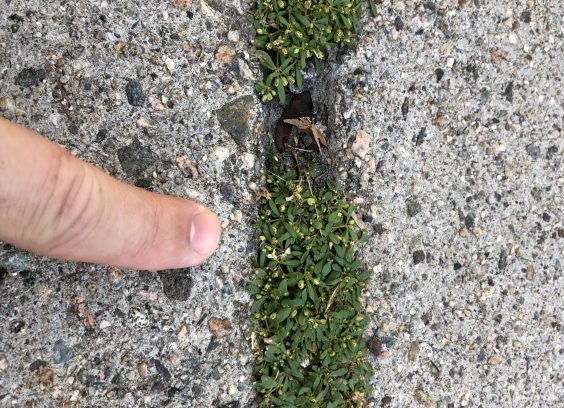
Each summer, hundreds of wild plant species seize the opportunity to grow through the narrow gaps between sidewalks and buildings or through tiny cracks in the pavement.
Many of these plants are often derisively dismissed as “weeds” or “invasive species.”
But these plants frankly don’t care what you call them. Many of them are here because they’ll grow where nothing else can.
Much of the information in this guide comes from the book Wild Urban Plants of the Northeast by Peter Del Tredici, a retired Arnold Arboretum botanist.
Del Tredici observes that “weeds” and “invasive species” are labels that constitute “a value judgement that humans apply to plants we do not like… Calling a plant a weed gives us license to eradicate it. In a similar vein, calling a plant invasive allows us to blame it for ruining the environment, when really it is humans who are actually to blame.”
“From the biological perspective, weeds are plants that are adapted to disturbance in all its myriad forms, from bulldozers to acid rain,” Del Tredici continues. “Their pervasiveness in the urban environment is simply a reflection of the continual disruption that characterizes the habitat.”
Chenopodium album, or Lambsquarters
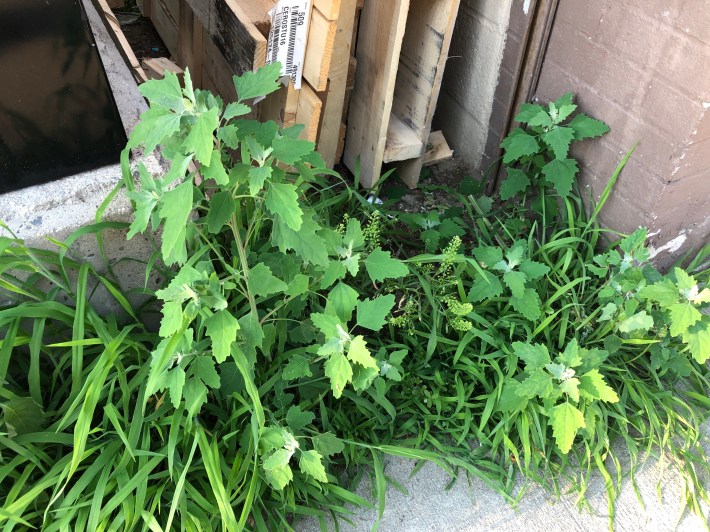
Lambsquarters are common along the edges of sidewalks and are frequently among the first plants to colonize freshly-disturbed dirt. You’ll often find it growing in piles of topsoil at construction sites.
The plant is related to the South American Chenopodium quinoa, which produces the quinoa grain.
In less polluted settings, young Lambsquarters leaves are edible. But you don’t want to eat any Lambsquarters that you find in the city: the plant absorbs heavy metals out of the dirt and binds them in its leaves and stems. Thanks to this characteristic, Lambsquarters plants can effectively clean up pollution in a process known as phytoremediation.
Artemesia vulgaris, or Mugwort
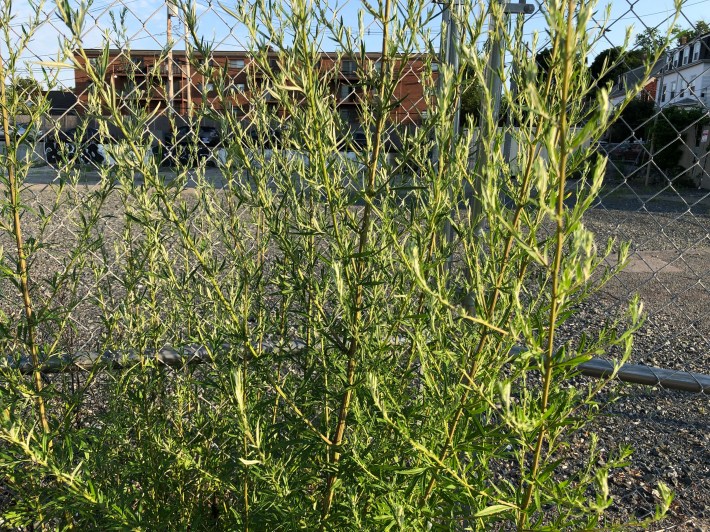
Mugwort, also known as Wormwood, is another common plant in vacant lots and neglected lawns. It’s a tall plant that can grow up to 6 feet high around a rugged woody stem. Its leaves can vary considerably in their shape – some are small like cilantro leaves, while others (like the ones pictured above) are long and feathery. The leaves’ undersides are silvery from tiny, white hairs.
Like Lambsquarters, Mugwort also tolerates polluted soil, and can absorb metals like zinc, copper, and lead – pollutants that are common next to busy roads thanks to the wear from automotive brake linings and tires.
In less polluted settings, artemesia plants can be used to brew beer, vermouth, and absinthe, and also have many uses in traditional Chinese and European medicine.
Polygonum caespitosum, or Ladysthumb
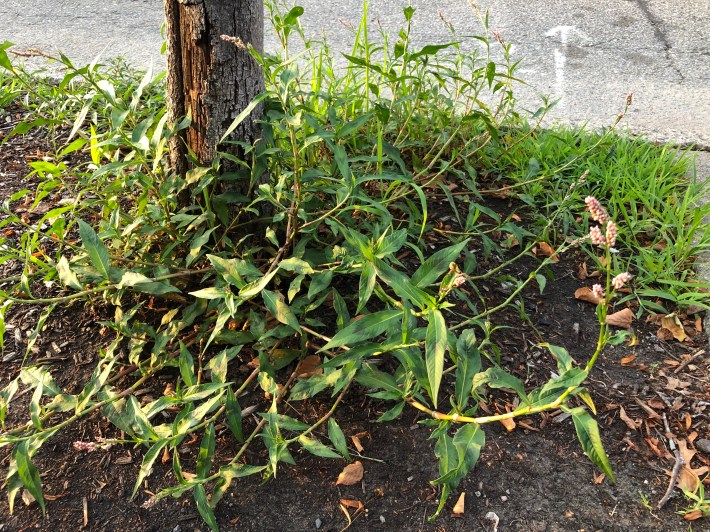
Ladysthumb gets its name from the subtle dark “thumbprint” that’s in the middle of each of its spear-shaped leaves, but you can also recognize it from the pinkish flowers that grow at the ends of its branches:

Ladysthumb is an effective colonizer of bare ground, so you’ll frequently see it at the base of sidewalk trees and in the thickly-mulched garden beds at the edges of parking lots.
Latuca serriola, or Prickly Lettuce
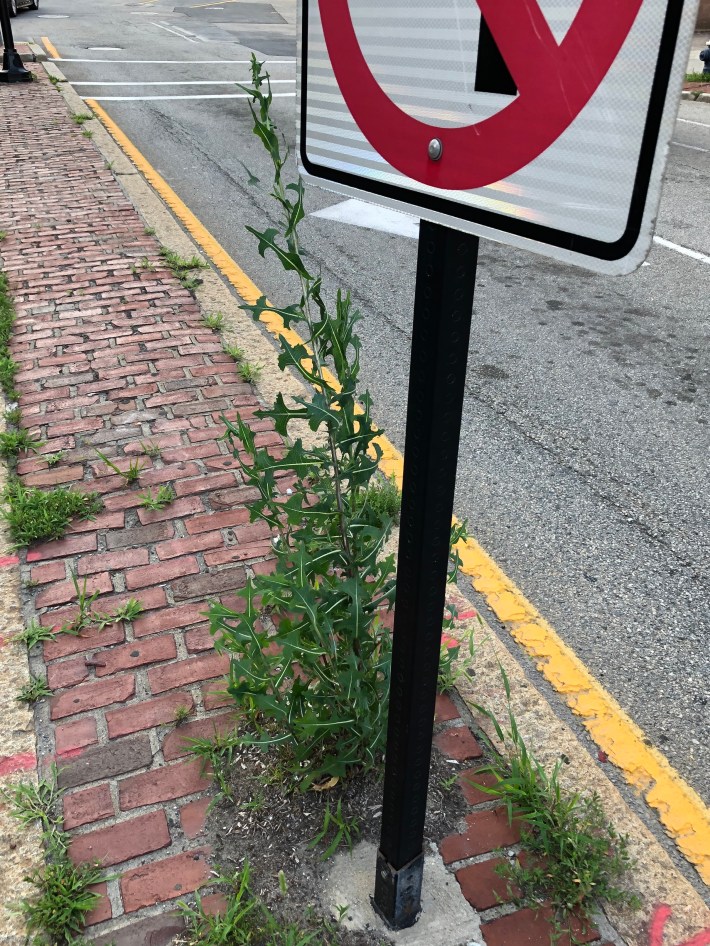
This plant is probably less common than others in this article, but it’s very striking in appearance, so it’s easy to spot once you know what to look for.
Prickly Lettuce can grow up to 6 feet tall and favors hot, sunny spots, like the median strip in the middle of Washington Street in Brookline Village, where several tall specimens are growing this summer.
It’s the wild relative of the cultivated lettuce we eat in salads, but is not particularly edible, especially because of the sharp prickles along the underside of each leaf.
Lepidium virginicum, or Pepperweed
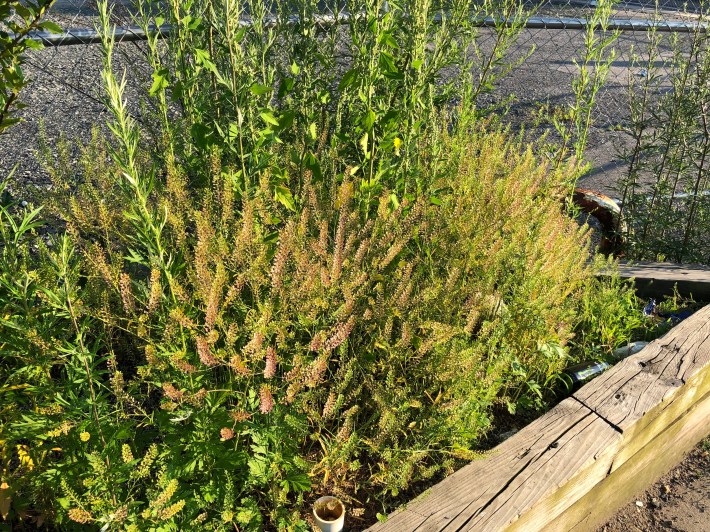
Pepperweed is another plant that you’ll start recognizing everywhere once you know what to look for. It’s easy to identify from its prolific cylindrical clusters of diaphanous greenish-white flowers, which look like pipe-cleaners coming off of branched stalks. Those flowers turn into reddish-green seedpods during the summer.
Those seedpods reportedly have a strong, spicy flavor, hence the plant’s common name (it’s probably safe to taste Pepperweed that’s growing in the woods or at the edge of a rural meadow, but again, do not eat plants growing in polluted urban soils).
The post A Streetsblog Field Guide to Sidewalk Wildflowers appeared first on Streetsblog Massachusetts.

Read More:
Streetsblog has migrated to a new comment system. New commenters can register directly in the comments section of any article. Returning commenters: your previous comments and display name have been preserved, but you'll need to reclaim your account by clicking "Forgot your password?" on the sign-in form, entering your email, and following the verification link to set a new password — this is required because passwords could not be carried over during the migration. For questions, contact tips@streetsblog.org.