Why It’s So Hard to Import Small Trucks That Are Less Lethal to Pedestrians
Rural Americans are buying miniature trucks from Japan that meet their needs better than U.S. megacars — and renewing calls for Congress to make it easier to buy smaller, safer vehicles from overseas, at least while U.S. automakers refuse to produce them here.
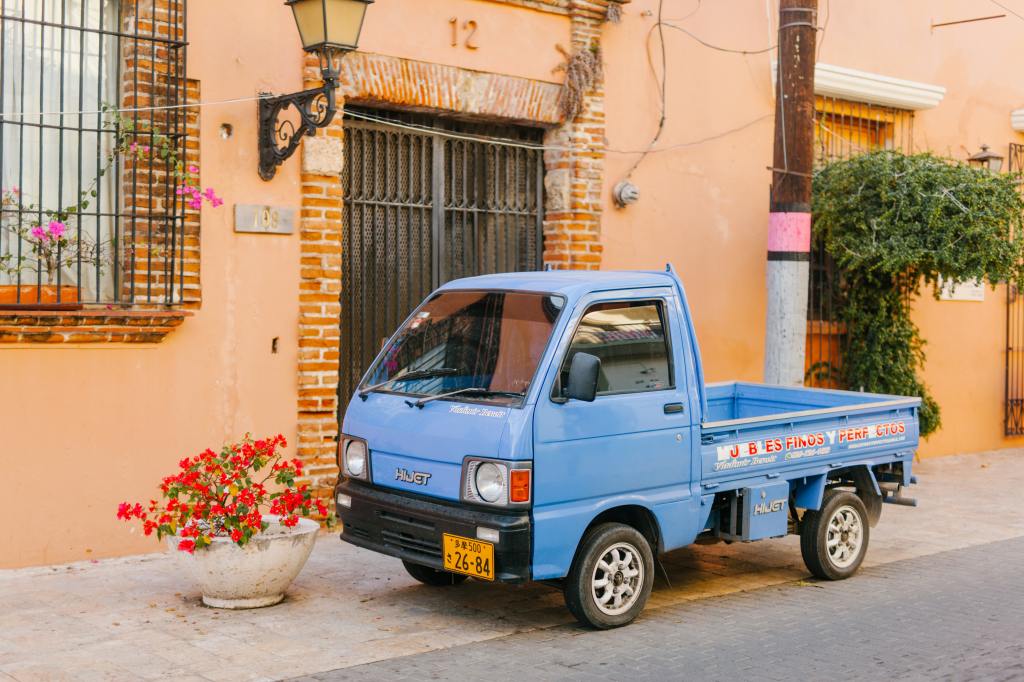
In a recent viral article for the Economist, Carmageddon author Daniel Knowles reported that U.S. demand is growing for small-format “kei trucks,” a Japanese micro-vehicle class created during World War II when full-sized car parts were expensive to produce. Those models, though, are increasingly sought-after among rural Americans today who want a pick-up that can actually fit through the doors of the average garage or barn.
Unlike U.S.-made models, kei trucks are subject to strict size and engine standards and generally top out at around 1,800 pounds. The average American pick-up, by contrast, weighs 5,000 pounds or more, and is significantly more lethal to pedestrians, cyclists and even the occupants of smaller cars because of their hulking size and massive blind spots.
Kei trucks, though, are still a relative rarity on U.S. roads, thanks in large part to the Imported Vehicle Safety Compliance Act of 1988, which bans the sale of most foreign cars newer than 25 years old. That law is theoretically meant to keep dirty and unsafe vehicles that don’t rise to U.S. safety and emissions standards out of the country, while still allowing car enthusiasts access to collectible vintage models that they’re not likely to drive very much, if at all.
In the case of kei trucks — which usually don’t have things like airbags and must be retrofitted upon arrival to move the steering wheel from the right side of the vehicle to the left — those restrictions make a kind of sense; many states, after all, don’t even allow mini-trucks to be operated on high-speed public roads, and many kei owners operate them exclusively on farms or other private property.
In one critical way, though, kei trucks and other small-format foreign cars actually exceed U.S. safety standards: because Japanese and European regulators both factor in the safety of people outside of vehicles, while Americans don’t. And when it comes to sustainability, most other countries may soon have us beat, too — particularly if U.S. automakers continue to ditch small-format EVs that make efficient use of scarce battery materials in favor of producing every more hulking E-SUVS and pick-ups that gobble those materials up.
Seen through that lens, some car fans argue that U.S. import laws are more “about protecting car companies and their dealers [from] so-called ‘grey imports'[that] were eating heavily into automakers’ domestic profits” before the ban was enacted, to quote Jalopnik’s Alex George.
Sustainable transportation advocates might argue they’re also protecting an auto-centric status quo in which Americans are too afraid to walk, bike, or roll, lest they be struck by an outsized automobile — and that to shift the balance, Congress must take action to let mini-cars in.

Read More:
Streetsblog has migrated to a new comment system. New commenters can register directly in the comments section of any article. Returning commenters: your previous comments and display name have been preserved, but you'll need to reclaim your account by clicking "Forgot your password?" on the sign-in form, entering your email, and following the verification link to set a new password — this is required because passwords could not be carried over during the migration. For questions, contact tips@streetsblog.org.