The Real Scandal Buried in the Uber Leak
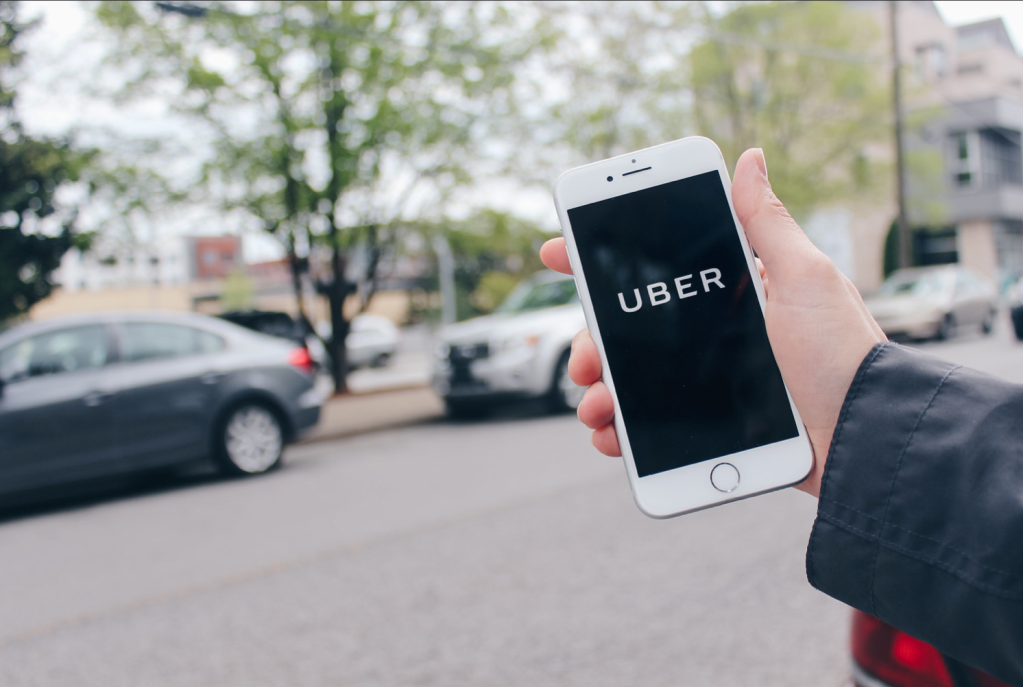
A major leak of confidential documents from Uber revealed the ruthless quest the company undertook to achieve its car-dependent vision for the future of city transportation — but that vision itself deserves just as much censure as the app-taxi giant’s bare-knuckle tactics, advocates say.
On Monday, journalists at The Guardian and the International Consortium of Investigative Journalists analyzed more than 124,000 emails and other documents acquired by chief-lobbyist-turned-whistleblower Mark MacGann between 2013 and 2017. The documents exposed a dizzying array of new allegations against the app-taxi outfit, including its efforts to influence elected officials, evade taxes, hide data from local law enforcement by deploying a “kill switch,” commission dubious academic studies to justify its business model, and exploit violence against its own drivers to lobby for harmful policy changes, among other outrages.
Pundits pointed to the sprawling trove as some of the most breathtaking evidence yet of the erosion of democracy and labor protections in the era of Big Tech, though perhaps no one summed up its revelations as succinctly as Uber’s own exec Nairi Hourdajia, who remarked that the company is “just fucking illegal” in one of the leaked messages.
Substantially less ink was allocated, though, for how these outrages directly accelerated Uber’s transformation of city transportation networks — or its harmful impact on many city residents, whether or not they ever used the app.
It’s critical to remember that during the same years that Uber was doing everything in its power to dominate the taxi industry and manipulate policy to legally pay its drivers well below a living wage, Uber’s customers were being gifted artificially cheap fares — and developing unsustainable travel habits that had massive consequences for their communities.
When those subsidies couldn’t legally be borne on the backs of its gig economy workers, Uber leaned on venture capital, which essentially paid more than two-thirds of its drivers’ wages in Madrid and nearly 90 percent of them in Hamburg, — and that’s before the $556 million the company avoided in global taxes in 2019 alone. Put simply, Uber amplified the persistent myth among the traveling public that city transportation — particularly single-occupancy luxury transportation like a taxi or a private car — can be had for cheap, and that the public at large won’t eventually be forced to pay the debt in other, far more painful ways.
In reality, of course, those near-giveaways came at a steep cost for public health, safety, mobility, and the environment.
Despite early claims that it would help make private car dependency obsolete — at least when the company wasn’t openly encouraging non-drivers to buy vehicles and join the gig economy — recent studies have shown that ride-hailing services like Uber have actually increased vehicle ownership in the U.S., especially in the nine transit-rich cities where Uber did 70 percent of its North American business in its early years. Unsurprisingly, other studies held tech taxis responsible for decreased transit usage while increasing vehicle miles traveled, congestion, emissions, and traffic violence.
“I am not saying people who use Uber and Lyft are bad, or that it’s never useful — of course it is,” tweeted Angie Schmitt, former Streetsblog USA editor and author of Right of Way: Race, Class, and the Silent Epidemic of Pedestrian Deaths in America. “It probably cost us a decade in decarbonizing transportation in cities, though, not to mention the impacts on labor, which are enormous and hard to quantify.”
Of course, no individual consumer can be blamed for using a below-market-rate, super-convenient, virtually private chauffeur service when it was sold to them — particularly in communities that have struggled to bring even realistically priced transit access to the places they need to go, never mind to make that service attractive and equitable.
The Uber leak, though, should prompt policymakers to ask themselves and so many of their peers mentioned in its pages — a list that includes, by the way, the current president of the United States — why they are still all too happy to take meetings with ride-hail industry lobbyists, even as evidence continues to mount that platforms like Uber are polluting, congesting, and bloodying U.S. streets, while pulling people off of shared and active modes at the very moment when they have never been more critical to our collective future.
One possible (if crushingly depressing) answer, of course, is that U.S. transportation leaders and politicians simply don’t care about ending traffic violence, climate change, and the other harms of our dominant transportation system, at least not if doing so requires dismantling car dependency in any significant way. And if we accept that answer, it is incumbent upon us all to demand that they start caring more — because if they don’t, we’ll end up with little more than a less-unsavory means to an unacceptable end.

Read More:
Streetsblog has migrated to a new comment system. New commenters can register directly in the comments section of any article. Returning commenters: your previous comments and display name have been preserved, but you'll need to reclaim your account by clicking "Forgot your password?" on the sign-in form, entering your email, and following the verification link to set a new password — this is required because passwords could not be carried over during the migration. For questions, contact tips@streetsblog.org.