Monday’s Headlines Are Willing to Pay More at the Pump
Gas prices are emerging as a political issue, but drivers need to get over it.
By
Blake Aued
12:00 AM EST on December 6, 2021
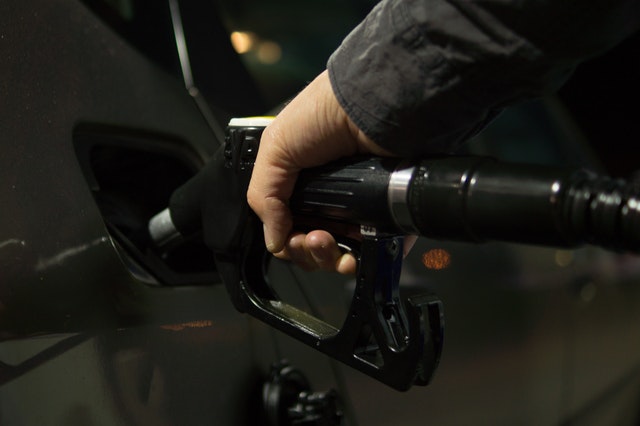
Gas prices are emerging as a political issue, but drivers need to get over it.
- Centrist Democrats in Congress are proposing suspending the gas tax. That’s a bad idea because there’s no proven link between rising gas prices and President Biden’s approval rating, and it will just require spending other revenue on transportation instead. (Bloomberg)
- Instead, the government should be raising gas taxes and redistributing the money back to consumers, preventing oil companies from reaping price-gouging profits while also encouraging less driving. (The Hill)
- Historically, gas prices were much higher back in 2008, anyway, the economy is good and climate change is a more important issue (Wisconsin State Journal). Even $4 a gallon would be a fair price (Tampa Bay Times).
Other news:
- The pandemic and a new focus on social justice has pushed transit agencies to rethink their priorities, such as by refocusing service away from affluent areas and toward ones where car-less residents and essential workers live, and by going fare-free. (Governing, Streetsblog)
- Experience shows that, given a choice, most states are going to spend their infrastructure funding mostly on roads. The U.S. DOT should take steps to prevent that. (Smart Cities Dive)
- Detroit is removing I-375, a freeway that slashed through a Black neighborhood, but replacing all the Black-owned businesses it destroyed will be much harder. (Grist)
- The Biden administration will extend its mask mandate on planes and public transit at least through mid-March. (Reuters)
- Vice President Kamala Harris and Transportation Secretary Pete Buttigieg, former campaign rivals, teamed up to tout the infrastructure bill in Charlotte last week. (Roll Call)
- New York’s Citi Bike bike-share has gotten so popular during the pandemic that users are having a hard time finding places to park their bikes. (NY Times)
- New bike racks in Philadelphia also prevent drivers from illegally parking in front of fire hydrants. (Inquirer)
- A Denver committee recommended dropping the residential speed limit to 20 miles per hour. (9 News)
- The Tampa city council voted to close a loophole in a law requiring developers to build sidewalks or pay into a trust fund. (Florida Politics)
- Portland finished a safety improvement project on dangerous Hawthorne Avenue. (KATU)

Blake Aued has been doing Streetsblog's daily national news digest for years. He's also an Atlanta Braves fan, which enrages his editor in New York.
Read More:
Streetsblog has migrated to a new comment system. New commenters can register directly in the comments section of any article. Returning commenters: your previous comments and display name have been preserved, but you'll need to reclaim your account by clicking "Forgot your password?" on the sign-in form, entering your email, and following the verification link to set a new password — this is required because passwords could not be carried over during the migration. For questions, contact tips@streetsblog.org.
More from Streetsblog USA
Inside Baseball: Kuntzman To Step Down At Streetsblog; David Meyer To Take Over
Streetsblog's longtime editor will take on new challenges. And so will his successor.

October 9, 2026

Friday Video(s): Two Urban Cycling Trips Worth Taking
Choose your own urban cycling adventure: domestic or international edition.

October 9, 2026

Friday’s Headlines Pay a Lot for Parking
The average apartment-dweller pays $200 a month for a parking space, included in their rent, whether they use it or not.
October 9, 2026
Talking Headways Podcast: The Long Road to Real Transit Progress
Jeff Wood and Reece Martin discuss China’s lessons for American infrastructure.

October 8, 2026

Thursday’s Headlines Are Another Front in the Culture War
David Zipper explains how transportation, once an issue with broad consensus, became politically polarized.
October 8, 2026