

Friday’s Headlines with Secretary Pete on a Bicycle!
Yes, the head of the US DOT rode on a two-wheeler. Plus all the other news of the day.
By
Blake Aued
12:01 AM EST on February 26, 2021
- Stop the presses: U.S. Department of Transportation Secretary Pete Buttigieg was spotted on a bicycle yesterday in D.C. (Michael Stafford via Twitter)
- Massachusetts Sen. Ed Markey and Memphis Rep. Steve Cohen have reintroduced their bill to federally fund Complete Streets — this time with Democrats in power. (Smart Growth America)
- Having a dedicated, free parking space is a major influence on whether city-dwellers own cars, so less parking within developments results in fewer cars on the road, according to a new study. (Journalist’s Resource)
- The pandemic at least temporarily reversed the long-term trend toward congested mega-cities. (Arch Daily)
- Maryland Gov. Larry Hogan told a U.S. Senate committee that Baltimore could have its own version of the Purple Line — if the private sector is interested. He also clashed with Democrats over his decision to cancel the Red Line. (Baltimore Sun)
- The effect of the pandemic on Atlanta’s MARTA has been catastrophic, if not as severe as on some transit systems. In Atlanta, though, the economic downturn and drop in ridership come just before the agency embarks on its largest-ever expansion. (Atlanta Magazine)
- The Utah Transit Authority’s five-year plan envisions a system with more midday and late-night service and buses on core routes that run every 15 minutes. (Salt Lake Tribune)
- Opponents of widening I-5 in Portland are worried that the Oregon DOT could eventually turn 12-foot shoulders shown in documents into travel lanes. (Willamette Week)
- Philadelphia will ask the Federal Transit Administration whether it’s OK to spend $40 million in coronavirus relief funds on the King of Prussia rail project. (Inquirer)
- A Virginia legislator has pulled a budget amendment that would have withheld funding from the D.C. Metro unless it named a station after a bank. (Washington Post)
- Planners and business groups want Illinois to take the politics out of transportation projects and use objective criteria to decide what to fund. (Crain’s Chicago)
- Pittsburgh is asking for feedback on plans to install 100 miles of new bike lanes. (Feedback: Do it.) (WPXI)
- Northwest Arkansas’s transit authority is considering a restructuring that would give a greater voice to urban areas. (Democrat-Gazette)
- The Asheville city council is asking the North Carolina legislature for permission to hold a referendum on a sales tax for transit. (Citizen-Times)
- Lyft, which swears it’s not a taxi company, is trying to attract Florida seniors by letting them request a ride by phone. (CNN)
- It’s taking Denver longer to build a two-way bike lane than to widen a freeway. (Denverite)
- Designers of a Montreal light-rail system thought one section was so ugly, they quit. (RT&S)

Blake Aued has been doing Streetsblog's daily national news digest for years. He's also an Atlanta Braves fan, which enrages his editor in New York.
Read More:
Streetsblog has migrated to a new comment system. New commenters can register directly in the comments section of any article. Returning commenters: your previous comments and display name have been preserved, but you'll need to reclaim your account by clicking "Forgot your password?" on the sign-in form, entering your email, and following the verification link to set a new password — this is required because passwords could not be carried over during the migration. For questions, contact tips@streetsblog.org.
More from Streetsblog USA
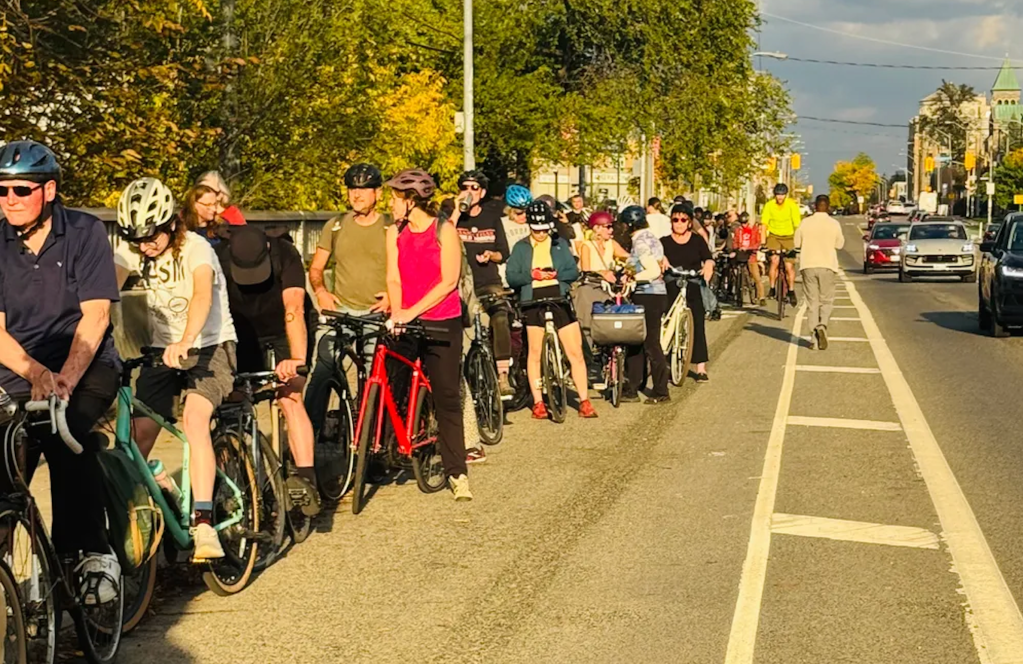
‘Premeditated Road Violence’: Toronto Protestors Block Bike Lane Removal
Toronto advocates are putting their bodies on the line to protect a bike lane the province wants to rip out — and and to fight a wave of anti-bike lane sentiment that this writer warns is sweeping the whole continent.

October 21, 2026
Take a Risk on Wednesday’s Headlines
Transit agencies that bet on high diesel costs are reaping rewards, but the strategy doesn't always work out.
October 21, 2026
Why US Roads Are Full of SUVs and Trucks, Part II
Yesterday, we looked at how SUVs and pick-ups captured the new car market. Today, let's talk about how they captured the used car market as well.

October 21, 2026
When Are Parking Debates Just A Smokescreen for Hate?
A new paper finds that mosques are more likely to face pushback over parking than other houses of worship. What should planners do about it?

October 20, 2026

Tuesday’s Headlines Do the Robot
Cities and states are filling the void, but the feds really need to step in to set rules for autonomous vehicles.
October 20, 2026
