Study: Two-Way Bike Lanes Produce More Injuries
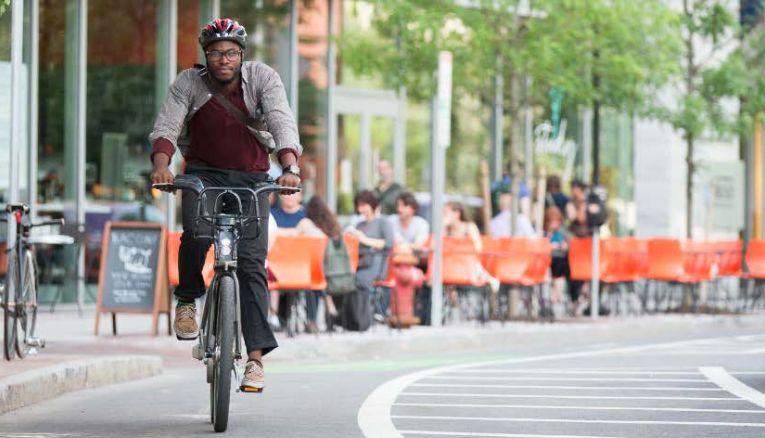
A new study is finding that the safest bike facilities on busy streets are Dutch-style, sidewalk-level bike lanes or protected bike lanes with no driveways or intersections, such as those on bridges.
And a surprising number of injuries are happening in two-way, street-level, protected bike lanes.
The Insurance Institute for Highway Safety study recently analyzed 350 bike-injury cases in New York, Washington and Portland in order to determine which street designs were safest for those on two wheels. The study surveyed injured riders who were treated in hospitals.
“Two-way protected bike lanes alongside two-way vehicle traffic add … complexity as turning drivers need to monitor both oncoming vehicle traffic and two-way bicycle traffic in the bike lane,” author Jessica Cicchino and her research team wrote.
Researchers found that calm, residential streets were the safest places for riding. But even unprotected bike lanes had lower injury rates than two-way, protected street-level bike lanes, the study showed.
Most injuries the study examined were minor, and only about half involved cars — including injuries from falling off a bike to avoid a car or crashing into a parked car.
Cicchino and her team noted that protected bike lanes work well at reducing the most dangerous crashes for cyclist — mid-block, high-speed, from-behind collisions with cars. But protected bike lanes with many intersections — especially two-way lanes — produced many conflicts, including conflicts with pedestrians, the study found.
The authors stressed that the potential for conflicts doesn’t mean that protected bike lanes are worse for safety than nothing. Rather, the findings indicate the need for careful engineering and more safety research.
The authors recommended countermeasures to reduce pedestrian use of two-way, protected bike lanes, including placing bike lanes at sidewalk level. Two-stage turn boxes, protected intersections, and special traffic signal with phases for cyclists also could help reduce more minor injuries, they wrote. Planners should try to avoid places with many driveways when considering where to install protected bike lanes, the study said.
One limitation of the study was that the authors did not compare the safety of the different bike lanes based on the severity of injuries that occurred in them. The study also did not control for the busyness of streets; those with two-way, protected bike lanes may have been the most crowded with drivers and pedestrians, producing more conflicts.

Read More:
Streetsblog has migrated to a new comment system. New commenters can register directly in the comments section of any article. Returning commenters: your previous comments and display name have been preserved, but you'll need to reclaim your account by clicking "Forgot your password?" on the sign-in form, entering your email, and following the verification link to set a new password — this is required because passwords could not be carried over during the migration. For questions, contact tips@streetsblog.org.