Nashville Bill Would Lower Residential Speed Limits
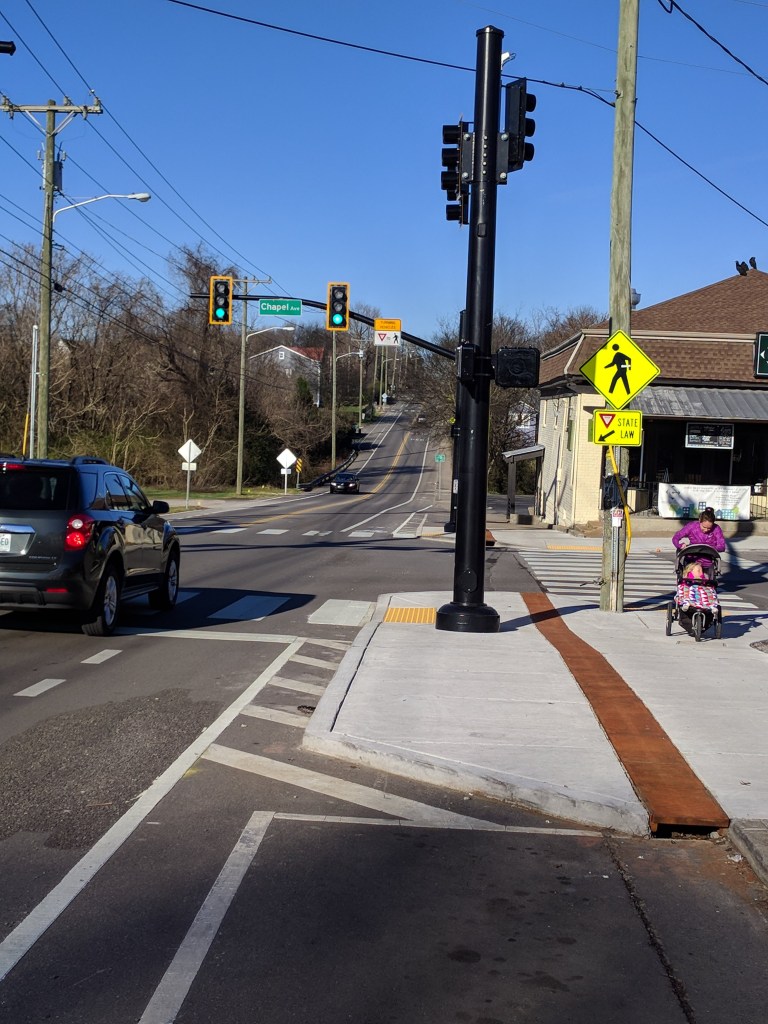
The dangerous streets of Nashville may soon become safer thanks to a new measure to reduce speed limits.
Nashville-Davidson County’s Metro Council is considering a bill to limit drivers to 25 miles per hour from the current 30 mph default speed limit.
The move comes after, 23 pedestrians and bicyclists were killed in the combined city-county municipality, which sprawls across 526 square miles.
“We know speeds are the largest contributing factor to the number of crashes and the severity of crashes,” Nora Kern, the director of Walk Bike Nashville, told Streetsblog. “As we’ve seen a rising number of crashes in Nashville we need urgent action to address the issue.”
The legislation, introduced yesterday, is vague, but it instructs the Traffic and Parking Commission to conduct a study determining the appropriate speed. It follows a pilot experiment with lowered speed limits to 20 mph in three neighborhoods.
A study by the Traffic and Parking Commission found the pilots were effective in lowering average speed, on average between 1 and 4 mph. Following the studies, the commission recommended residential speed limits be lowered to 25 miles per hour citywide.
Kern says she expects the legislation to pass. Next up, her group will push for the safety initiative to expand to include a 30-mile-per-hour limit on arterial streets and for traffic calming measures — such as speed humps or curb bump outs — to be added.
Speed limits have been dropping in recent years in cities such as New York, Boston and Portland, where the changes required state approval. A study out of Boston found reduced speed limits, in themselves, lowered average speeds even without any changes to the streets.
A pedestrian struck by a car traveling 40 miles per hour has a 55 percent chance of survival. But a pedestrian struck at 20 miles per hour will survive 93 percent of the time.

Read More:
Streetsblog has migrated to a new comment system. New commenters can register directly in the comments section of any article. Returning commenters: your previous comments and display name have been preserved, but you'll need to reclaim your account by clicking "Forgot your password?" on the sign-in form, entering your email, and following the verification link to set a new password — this is required because passwords could not be carried over during the migration. For questions, contact tips@streetsblog.org.