St. Louis Calms Traffic With Heavy Concrete Globes
Wide streets encourage speeding and make it uncomfortable to walk and bike. One solution is to expand sidewalks at intersections, making it easier to cross the street and slowing down turning motorists. Rebuilding curbs and drainage can be expensive and time-consuming, however.
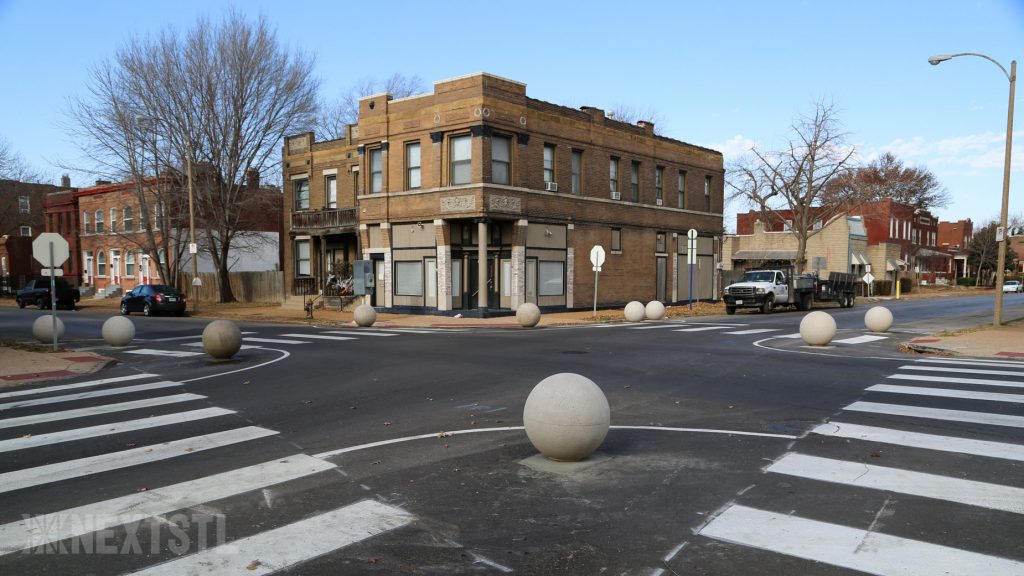
For the last 10 years, St. Louis has been using an inexpensive substitute for full sidewalk expansions: giant concrete globes, nicknamed “Slay balls” after former Mayor Francis Slay. The city recently installed a new round of Slay balls in Tower Grove East, and motorists are complaining about them, reports nextSTL‘s Michael Allen. But they respond to a real need for traffic calming and were requested by nearby residents, he explains:
In the 6th ward, where the bollards are now in place, Alderwoman Christine Ingrassia uses participatory budgeting as a form of popular input to determine how to spend money that City Hall still allows to be directed on the granular level of the ward. Ingrassia started a process in 2015 where a majority of residents who participated elected to place Slay balls up and down the street. Less ugly options, such as building out new curbs, exceeded available funds.
This particular configuration, where the bollards are placed in the roadbed to make car turns tighter and shorten crossing distances, is relatively new for St. Louis. Some people may not like the way they look, but the globes are a cost-effective solution to dangerously designed streets.
More recommended reading today: Bike Portland writes that an international cycling expert is none-too-impressed with the city’s bike infrastructure. Tri-TAG evaluates how well the city of Kitchener, Ontario, keeps its sidewalks clear of winter snow and ice. And Cleveland Scene reports the local transit agency RTA is offering free rides and shelters in stations as the east gets pummeled with bitter cold and wind.

Read More:
Streetsblog has migrated to a new comment system. New commenters can register directly in the comments section of any article. Returning commenters: your previous comments and display name have been preserved, but you'll need to reclaim your account by clicking "Forgot your password?" on the sign-in form, entering your email, and following the verification link to set a new password — this is required because passwords could not be carried over during the migration. For questions, contact tips@streetsblog.org.