Wisconsin Highway Costs Exceed State DOT Estimates By Nearly 100%
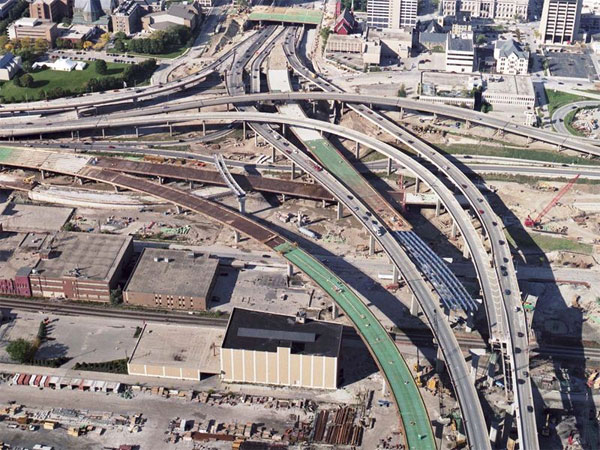
Wisconsin is the poster child for highway waste. Under Governor Scott Walker, the state has lavished billions on highway projects to serve the Milwaukee suburbs, including two massive interchanges each costing almost $1 billion.
The pricetag for Walker’s roadbuilding spree is much higher than what Wisconsin DOT sold to the public, the Milwaukee Journal-Sentinel reports. A recent audit found that highway costs have exceeded WisDOT’s projections by nearly 100 percent, and the overruns will be even bigger for projects that are still in the works:
It cost $1.5 billion to build 19 major projects between 2006 and 2015 — $772.5 million more than originally estimated, the Legislative Audit Bureau found. Even though the state was spending money on most of these projects for 18 years or more, the DOT didn’t take into account the considerable effects that inflation and changes to project design would have on those costs over time.
Another 16 projects that were ongoing as of August 2016 saw similar spikes in their costs. Originally expected to cost $2.7 billion, they are now slated to come in at $5.8 billion, the audit found.
The Federal Highway Administration is warning the agency to stop building new highway projects because so many are stalled. State officials have been weighing a gas tax hike to make ends meet. Walker won’t have it, but he’s not calling for a reduction in highway spending either.
Local political veteran James Rowen writes at the Political Environment that this has been building up for a long time:
This is nothing new.
People like former Milwaukee Mayor John Norquist for whom I worked between 1996 and 2004 fought for years against bloated WisDOT over-spending and over-building during gubernatorial administrations of both political parties, and even offered unsuccessfully an alternative plan crafted by city engineers to cut nearly $400 million from the roughly $8o0 million finally spent on the expanded Marquette Interchange and that also cost the city mightily in lost taxable property.
And I have recounted often on this blog — an example, here — that the Marquette was just the first step in a $6.4 billion (in 2002 dollars) Southeastern Wisconsin Freeway rebuilding and reconstruction plan which will add with all its maintenance and related costs going forward 127 new mile lanes across seven counties — a road-builders’ dream written by the sprawl-inducing and suburban-tilting Southeastern Regional Planning Commission through a $1 million WisDOT grant without, as Norquist pointed out, any financing plan.
As Politico’s Mike Grunwald pointed out in his definitive piece on highway waste, when the $800 million Marquette Interchange was built outside Milwaukee, the DOT joked it was so large it “could create its own weather.” Bloated highway projects like this are very clearly why Wisconsin is out of transportation money, but Walker won’t admit it.
More recommended reading today: Seattle Transit Blog reports that the city may dedicate more lanes downtown to buses to handle an anticipated traffic crunch, but plans for downtown bikeways may stall. Beyond DC ranks the country’s bike-share systems by size. And BikeWalkLee honors Billy Hattaway, who tried to make safe walking and biking a priority at Florida DOT.

Read More:
Streetsblog has migrated to a new comment system. New commenters can register directly in the comments section of any article. Returning commenters: your previous comments and display name have been preserved, but you'll need to reclaim your account by clicking "Forgot your password?" on the sign-in form, entering your email, and following the verification link to set a new password — this is required because passwords could not be carried over during the migration. For questions, contact tips@streetsblog.org.