Study: Diagonal Intersections Are Especially Dangerous for Cyclists
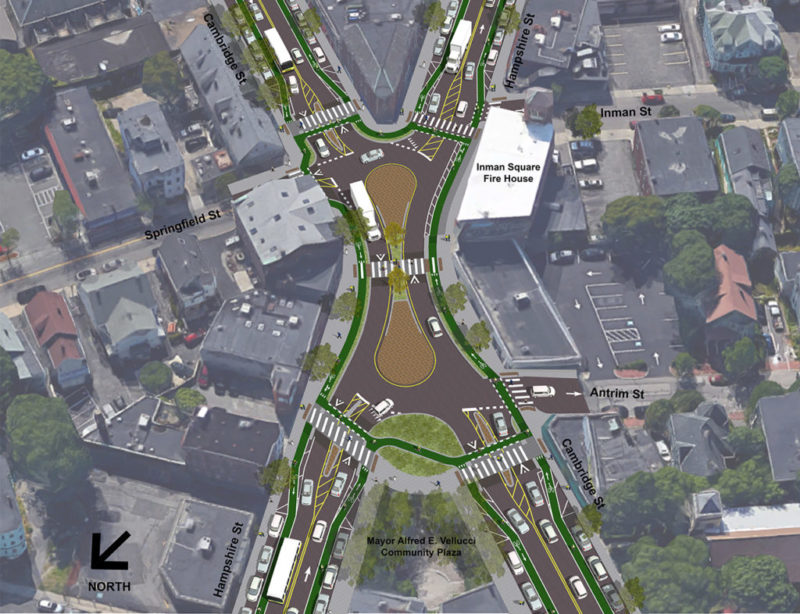
This week, Cambridge, Massachusetts, unveiled plans for a “peanutabout” that will make a tricky intersection with irregular angles safe for cycling. This type of design intervention could be crucial for locations that new research suggests are especially dangerous.
In a study published in the journal Injury Prevention [PDF], a team led by Dr. Morteza Asgarzadeh of Harvard’s T. H. Chan School of Public Health found that non-right-angle intersections are especially prone to crashes that cause severe or fatal injuries to bicyclists.
Asgarzadeh and his team mapped 3,300 injury crash locations in New York city involving a motorist and a cyclist. Then they analyzed the relationship between a number of factors and injury severity, including street width, weather conditions, gender and age of the cyclist, and posted speed limit.
In most cases, researchers did not identify a significant link. But the researchers did find that a few conditions are correlated with more severe injuries.
Crashes that occurred at diagonal intersections were 37 percent more likely to result in severe injury or death than crashes at right-angle intersections. In addition, while 60 percent of bike-car crashes happen at intersection, cyclists hit by a cars on straightaways — not at intersections — were 31 percent more likely to be killed or severely injured. The researchers hypothesize that crashes on straightways may be more deadly because drivers are traveling at a higher speed.
They also found, not surprisingly, that cyclists struck by a truck or bus driver were twice as likely to be killed as those hit by a car driver.
Asgarzadeh concluded that the findings bolster the case for protected bike lanes, which would shield cyclists on straightaways. They also suggest planning bike routes that have more right-angle intersections and giving cyclists a dedicated signal phase at non-right-angle intersections.
More peanutabouts may also be in order.

Read More:
Streetsblog has migrated to a new comment system. New commenters can register directly in the comments section of any article. Returning commenters: your previous comments and display name have been preserved, but you'll need to reclaim your account by clicking "Forgot your password?" on the sign-in form, entering your email, and following the verification link to set a new password — this is required because passwords could not be carried over during the migration. For questions, contact tips@streetsblog.org.