With No Transport Funding Fix, USDOT to Cut Payments to States Next Month
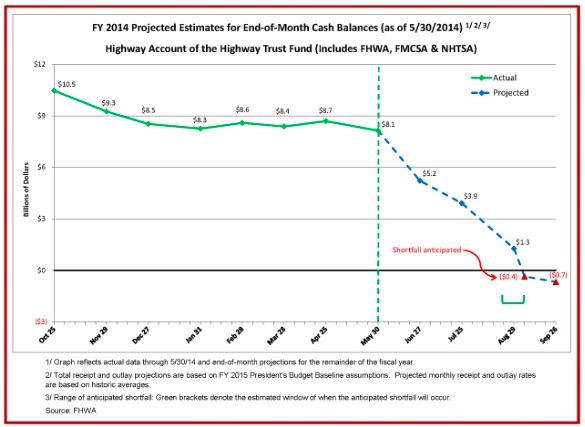
State transportation departments could see the federal funding they receive pared back as early as a few weeks from now if Congress doesn’t come up with a transportation funding solution.
A “cash management plan” to deal with the impending shortfall in the Highway Trust Fund — which actually pays for transit, biking, and walking projects in addition to roads — was outlined in a letter from U.S. DOT to state transportation officials yesterday [PDF]. U.S. Transportation Secretary Anthony Foxx wrote that “as we approach insolvency, the Department will be forced to limit payments to manage the reduced levels of cash.”
Federal transportation revenues have been faltering for a long time, primarily because inflation has eaten away at the gas tax, which hasn’t increased in more than 20 years. Congress and the White House have floated many possible solutions of varying merit — a gas tax increase, an excise tax on oil, “business tax reform,” even canceling Saturday mail service. Lacking an agreed-upon revenue source, the Highway Trust Fund has been propped up with general revenues over the last few years. It is unclear whether Congress will extend that stopgap before funding starts to run dry in the next few months.
In his letter, Foxx indicated that if the issue isn’t resolved by August 1, around the time when revenues are expected to dip below current spending levels, U.S. DOT will dole out the available money based on existing funding formulas. In other words, the funding cuts will be shared among all the states, based on population and other factors.
In a speech yesterday in Washington, President Obama urged Congressional action to ward off funding problems, saying inaction would put 700,000 jobs at risk — or about as many people as live in Denver or Boston. He blamed Congressional Republicans for failing to act to resolve the issue.

Read More:
Streetsblog has migrated to a new comment system. New commenters can register directly in the comments section of any article. Returning commenters: your previous comments and display name have been preserved, but you'll need to reclaim your account by clicking "Forgot your password?" on the sign-in form, entering your email, and following the verification link to set a new password — this is required because passwords could not be carried over during the migration. For questions, contact tips@streetsblog.org.