Richard Florida to Obama: Create a Department of Cities

If the U.S. federal bureaucracy includes Cabinet-level agencies dedicated to agriculture and “the interior,” why shouldn’t it have one dedicated to cities, which do so much of the heavy lifting for America’s economic productivity and innovation?
This is what urbanist Richard Florida proposed in an op-ed Sunday for the New York Daily News. He wants President Obama to create a new Cabinet-level Department of Cities.
It’s a nice idea, though I doubt Florida is doing himself any favors by minimizing the importance of the administration’s stated priorities for this term: immigration, gun control and climate change, all of which have enormous implications for cities.
Florida says a Department of Cities would weave together pieces of HUD and the Departments of Energy, Transportation, Education, Commerce and Interior. The concept is not unlike the inter-agency collaboration that HUD, DOT and EPA have been doing for the past several years, though it would be a quantum leap to go from being an unfunded program to being a Cabinet department.
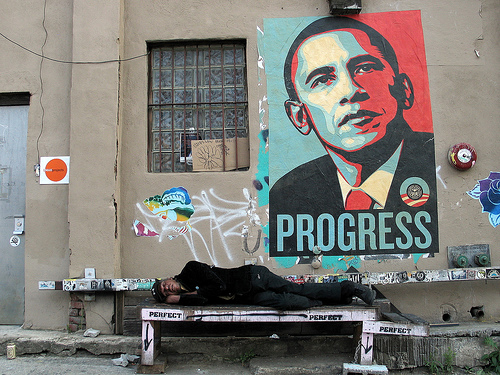
Some urbanists have been disappointed in Obama’s commitment to cities. While he was campaigning in 2008, Obama told the U.S. Conference of Mayors that “the truth is, what our cities need isn’t just a partner. What you need is a partner who knows that the old ways of looking at our cities just won’t do; who knows that our nation and our cities are undergoing a historic transformation.”
Soon after he took office, Obama did create a White House Office of Urban Affairs — a major symbol of commitment, if only a symbol. The low-profile office appears to be staffed by one person. Certainly, other folks within the Domestic Policy Council – not to mention the agencies Florida mentions – focus on cities. And Obama’s Urban Policy Working Group counts among its programs a Neighborhood Revitalization Initiative, which has brought together housing, education, crime prevention, and health and mental health support, together with anti-poverty initiatives.
But there’s no doubt that Obama — the first Saul Alinsky-style community organizer to ever become president of this country, who cut his political teeth on Chicago’s South Side — could do more to elevate urban issues. After all, as Florida notes, “Cities and metros are the engines of our economy.”
Just after his re-election, Atlantic Cities published a list of things Obama could do in his second term to further urban policy. The first item on the agenda: “Reform and cap the home mortgage interest deduction and spend the savings on low-income housing.” Other ideas include raising the gas tax, creating an infrastructure bank, pushing ahead with high-speed rail, adapting to climate change, and bringing a smart growth metric to federal funding decisions.
Those are all great ideas, and they’re all within reach, even without a Department of Cities. Could such a department bring more dedication and person power to advancing an agenda like that? Undoubtedly.
My personal feeling is that there’s a place for a concentrated push on urbanism within the federal bureaucracy that’s a little further along the spectrum than the current ragtag efforts and a little less ambitious than a full-scale department. (Consider that even the EPA, with its 17,000 employees and a mission that involves nothing less than planetary survival, is a sub-Cabinet agency.)
But who could blame Florida for going big with his call to action? As we enter the second term of America’s most urban-defined president ever, urban policy as such isn’t high on his agenda. And the most important rule in any negotiation is to start out demanding more than you ever expect to get. That’s a rule Florida seems to have internalized — and one Obama himself could stand to learn.

Read More:
Streetsblog has migrated to a new comment system. New commenters can register directly in the comments section of any article. Returning commenters: your previous comments and display name have been preserved, but you'll need to reclaim your account by clicking "Forgot your password?" on the sign-in form, entering your email, and following the verification link to set a new password — this is required because passwords could not be carried over during the migration. For questions, contact tips@streetsblog.org.