In Homage to Daniel Inouye, Feds Commit to Funding Honolulu Transit

Senate titan Daniel Inouye passed away Monday at 88. The Hawaii senator was the longest-serving member in the chamber at the time he died.
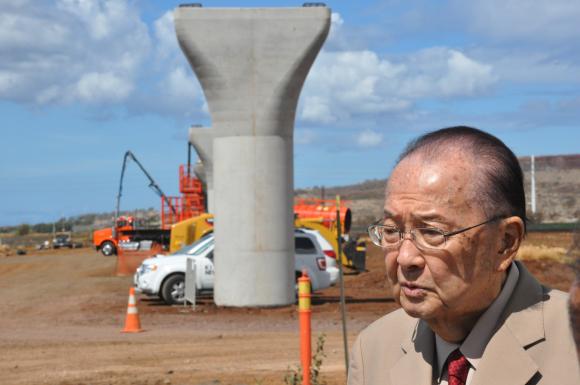
As a fitting tribute, Transportation Secretary Ray LaHood yesterday signed a full funding grant agreement with Inouye’s widow at his side, committing the federal government to $1.55 billion in transit assistance. The money will help build, at long last, the rail transit project Inouye had advocated for. Inouye had referred to the $1.55 billion offered by the FTA as “precious.”
Had Honolulu’s local election gone differently, yesterday might not have happened. Mayoral candidate Ben Cayetano wanted to scrap rail plans in favor of bus rapid transit. Sen. Inouye saw through Cayetano’s idea, saying the BRT plan “would force Honolulu to the back of the line, adding years upon years of continued traffic gridlock” since they would have to start from scratch to secure federal funding.
Hawaii’s first-ever rail transit system, already under construction, will include 21 stations along a 20-mile stretch and is expected to relieve traffic on Interstate H-1, “one of the most congested highways in America,” according to LaHood. In the 1960s, some suggestedbuilding a new freeway to relieve congestion on H-1, but the population rebelled. Fifty years later, their much better idea — rail transit — is finally inching closer to fruition.
Federal Transit Administrator Peter Rogoff said the rail line will save commuters up to 30 minutes each way. More than 60 percent of Oahu’s population and 80 percent of its employment is located in the designated transit corridor, according to civic affairs journalism website Honolulu Civil Beat.
In addition to the $1.55 billion from the New Starts transit capital funding program, Hawaii is getting $209.9 million in federal formula funds and $4 million from the American Recovery and Reinvestment Act for the project. The rail line is expected to cost just over $5 billion in total.
The signers of the FTA grant agreement left a poignant blank space where Inouye’s signature would have gone.

Read More:
Streetsblog has migrated to a new comment system. New commenters can register directly in the comments section of any article. Returning commenters: your previous comments and display name have been preserved, but you'll need to reclaim your account by clicking "Forgot your password?" on the sign-in form, entering your email, and following the verification link to set a new password — this is required because passwords could not be carried over during the migration. For questions, contact tips@streetsblog.org.