MassDOT Secretary: “We Will Build No More Superhighways”

OK, everybody, pack your bags. We’re all moving to Massachusetts.

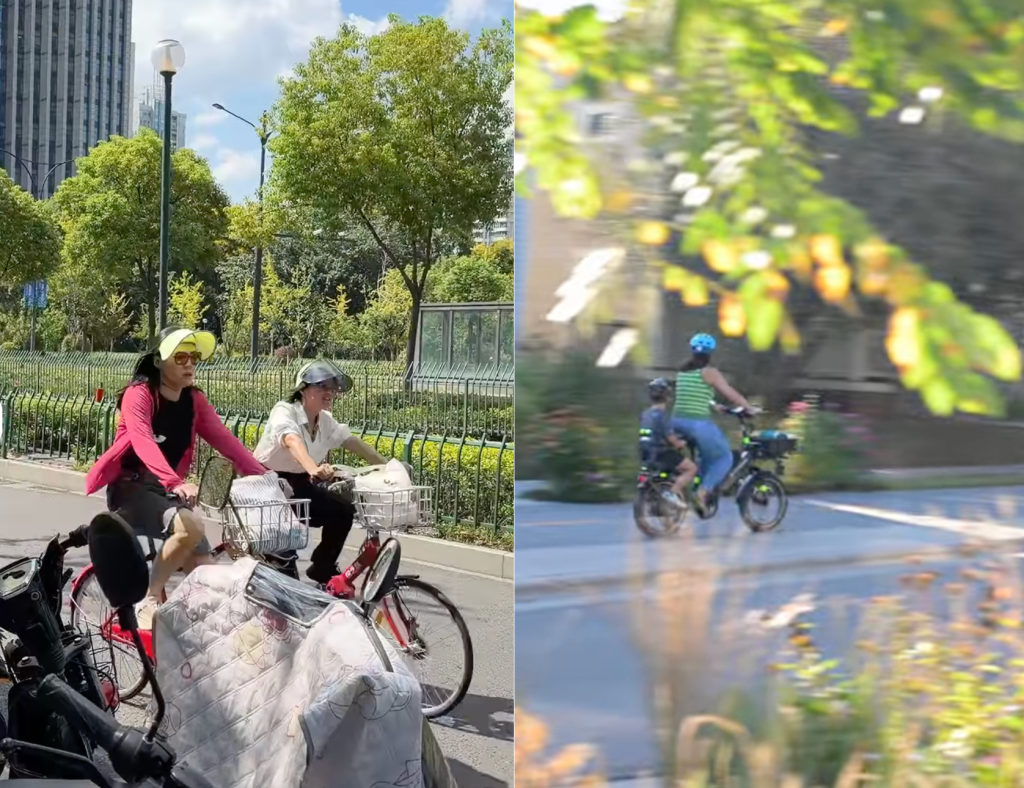
The Bay State’s transportation secretary, Richard Davey, has launched a “mode shift” campaign, saying in no uncertain terms that it’s time for people to get out of their cars and onto trains, buses, bikes, and their own two feet. His goal is to triple the share of trips taken by those modes, as opposed to single-occupancy vehicles, by improving transit service and active transportation amenities like lighting, sidewalks, curb cuts and rail-trails.
Here’s the part that gives me the shivers: “I have news for you,” Davey said at a news conference yesterday. “We will build no more superhighways in this state. There is no room.”
Massachusetts has 76,200 lane-miles of roadway, in a state that’s just 190 miles long. That’s a lot more asphalt than any other state in New England.
Eric Sundquist works with innovative state DOTs for a living, as director of the State Smart Transportation Initiative. What Massachusetts is doing is “leading edge but not bleeding edge,” Sundquist told Streetsblog. “There are other states that, even if they haven’t packaged a campaign around mode shift explicitly, are doing a lot of things to encourage mode shift.”
Still, Davey’s campaign is just the kind of forward thinking SSTI and Smart Growth America had in mind when they teamed up to publish a guidebook for state DOTs wishing to innovate. “This represents an opportunity for the Massachusetts Department of Transportation to make better use of financial resources, save taxpayer money and lower congestion,” SGA’s Tom Madrecki told Streetsblog in an email, “all while keeping people moving across the commonwealth.”
Davey says a shift toward sustainable transportation will “foster improved quality of life by improving our environment and preserving capacity on our highway network; by letting other travel options absorb travel demand that contributes to highway congestion that is slowing our potential for economic growth.” He also says the mode shift will “achieve positive public health outcomes by providing more healthy transportation options.”
The mode shift will be a centerpiece of MassDOT’s GreenDOT Implementation Plan, being finalized this fall, which strives for multi-modalism. “Of all the state’s green policies, this is the one that really counts,” Marc Draisen, who directs the Metropolitan Area Planning Council, told the Boston Globe.
Richard Davey is the only state transportation chief who doesn’t own a car.

Read More:
Streetsblog has migrated to a new comment system. New commenters can register directly in the comments section of any article. Returning commenters: your previous comments and display name have been preserved, but you'll need to reclaim your account by clicking "Forgot your password?" on the sign-in form, entering your email, and following the verification link to set a new password — this is required because passwords could not be carried over during the migration. For questions, contact tips@streetsblog.org.