“Drill Baby Drill” Won’t Solve America’s Energy Problems
House Republicans are calling for offshore oil drilling as an answer to foreign oil dependency and high gas prices — and they’re not the only ones. President Obama recently announced his intention to cut oil imports by one-third by 2025, partly by increasing domestic production was the answer to the country’s energy woes. In his speech announcing the plan, Obama barely mentioned transit and land use, even though more and more evidence points to these as real solutions for high gas prices.
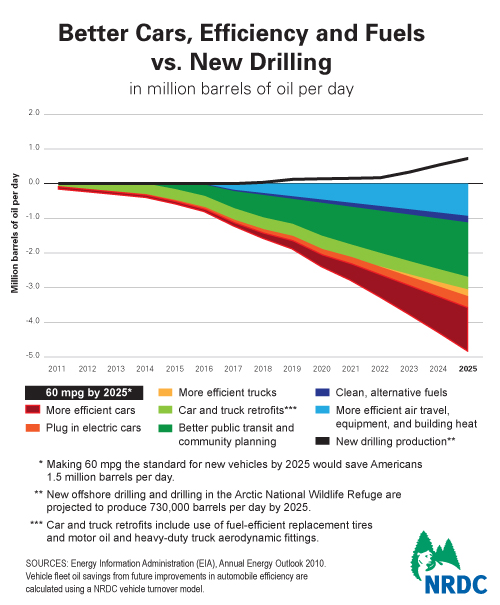
The Natural Resources Defense Council has provided this neat graphic illustrating how demand side solutions — like better land use planning, transit access and more fuel efficient vehicles — match up against the tired “drill, baby, drill” mentality that has made the country so fossil-fuel dependent in the first place. The graphic is based on an NRDC analysis examining how much fuel could be saved using a variety of smart conservation policies, given the limits of our existing technology. Then the group compared the savings with the best available information about the country’s remaining domestic oil resources.
The result is a stark demonstration of the inadequacy of oil drilling as a solution. The analysis indicates that the United States could cut oil imports by 44 percent by focusing on clean energy technologies — about eight times what could be produced by domestic drilling. Previous studies have documented that better transit and community planning alone could reduce vehicle miles traveled in the country by 20 percent.
The implications for political leaders should be clear, says Luke Tonachel, writing for NRDC’s Switchboard blog. Unfortunately, the budget proposal introduced by House Budget Committee Chairman Paul Ryan last week only affirms the oil subsidies and transit cuts that have led to our current predicament.
“As our analysis demonstrates, we have the know-how to break our oil addiction and meet the President’s goal of reducing oil imports by one-third,” he said. “The real question is whether we have the political will.”

Read More:
Streetsblog has migrated to a new comment system. New commenters can register directly in the comments section of any article. Returning commenters: your previous comments and display name have been preserved, but you'll need to reclaim your account by clicking "Forgot your password?" on the sign-in form, entering your email, and following the verification link to set a new password — this is required because passwords could not be carried over during the migration. For questions, contact tips@streetsblog.org.