Florida Gov. Rick Scott Chooses Politics Over Constituents, Rejects HSR Funds
Florida Governor Rick Scott announced today he would forfeit $2 billion in federal grants to build a high-speed rail line between Orlando and Tampa.
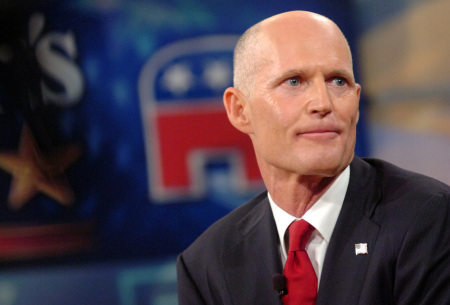
The announcement ended months of speculation about whether Scott would join fellow Republican Governors John Kasich (Ohio) and Scott Walker (Wisconsin) in turning down federal funds for expanding passenger rail in the U.S. — an important initiative of the Obama administration.
In his announcement, Scott included a lengthy indictment of President Obama’s policies and recently-released 2012 budget.
“We cannot expect individuals to build businesses in America if our taxes are higher than other countries,” he said. “Let us never forget, whether it is Washington or Tallahassee, government has no resources of its own. Government can only give to us what it has previously taken from us.”
But, like his counterparts in the Midwest, Scott does not seem to favor an equally austere approach for the state’s highways.
“Rather than investing in a high-risk rail project, we should be focusing on improving our ports, rail and highway infrastructure to be in a position to attract the increased shipping that will result when the Panama Canal is expanded,” he said.
In a statement following the announcement, Transportation Secretary Ray LaHood said other states would be happy to accept the money Florida rejected, as well as the accompanying jobs:
We are extremely disappointed by Governor Rick Scott’s decision to walk away from the job creating and economic development benefits of high speed rail in Florida. This project could have supported thousands of good-paying jobs for Floridians and helped grow Florida businesses, all while alleviating congestion on Florida’s highways. Nevertheless, there is overwhelming demand for high speed rail in other states that are enthusiastic to receive Florida’s funding and the economic benefits it can deliver.
Officials from the U.S. High-Speed Rail Association chalked Scott’s decision up to putting political ambitions over the interests of his constituents. The project had also attracted significant interest on the part of private developers, who would have provided as much as 10 percent of the project costs, USHSR added.
“National and state organizations are mobilizing to appeal this decision and explore alternative ways to bring high speed rail to Florida, utilizing the funding, engineering and momentum already generated around the project,” the organization said in a statement.
The rail advocacy organization America 2050 recently rated the Florida high-speed rail line the most feasible in the nation on the basis of project readiness and public ownership of the right of way for the initial segment.

Read More:
Streetsblog has migrated to a new comment system. New commenters can register directly in the comments section of any article. Returning commenters: your previous comments and display name have been preserved, but you'll need to reclaim your account by clicking "Forgot your password?" on the sign-in form, entering your email, and following the verification link to set a new password — this is required because passwords could not be carried over during the migration. For questions, contact tips@streetsblog.org.