Washington DOT Officially Endorses NACTO Street Design Guide
One state down, 49 to go.
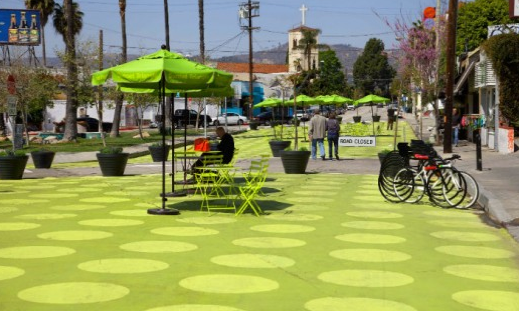
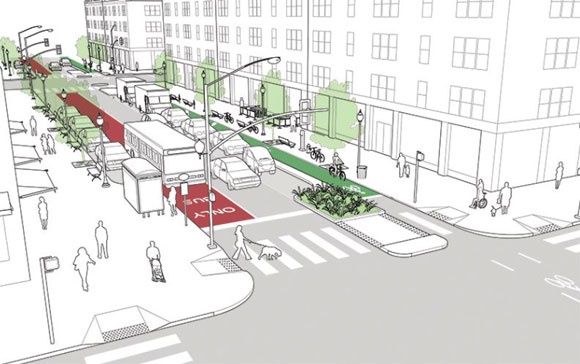
The Washington state Department of Transportation is the first state DOT to endorse the Urban Street Design Guide put out by the National Association of City Transportation Officials’ (NACTO). The manual provides instruction on creating treatments like protected bike lanes, transit-priority streets, and parklets, which aren’t included in the predominant American engineering guides.
“We believe the low-cost innovations, interim solutions, and improvements outlined in the Guide can bring many significant benefits to communities across Washington in a short period of time,” wrote WDOT Secretary Lynn Peterson in a letter outlining the policy.
While a growing number of cities are implementing features like pedestrian plazas and raised intersections, these treatments aren’t recognized by the AASHTO Green Book, a leading engineering manual. Lack of official recognition by state DOTs can make it difficult for cities to install these designs, especially on streets that happen to be classified as state highways.
Now, cities and towns in Washington will have greater freedom to adopt the type of designs in the NACTO guide.
Washington DOT has an engineering staff of about 2,000. Nancy Boyd, an engineer with WSDOT, said the NACTO guide will help the state design streets that are not just thoroughfares for motor vehicles. “We’re actually using it as a reference to update our design manual,” said Boyd. “Most of the [existing] guidance was developed really for freeways and limited access facilities.” The NACTO guide, she said, provides “supplementary information that helps us be much more aware of different contexts.”
NACTO’s David Vega-Barachowitz said he is hopeful Washington’s decision will encourage other states to endorse the guide. The states of Tennessee, Delaware and Massachusetts are currently reviewing it, he said. Two other states — Georgia and Massachusetts — have endorsed NACTO’s Urban Bikeway Design Guide.

Read More:
Streetsblog has migrated to a new comment system. New commenters can register directly in the comments section of any article. Returning commenters: your previous comments and display name have been preserved, but you'll need to reclaim your account by clicking "Forgot your password?" on the sign-in form, entering your email, and following the verification link to set a new password — this is required because passwords could not be carried over during the migration. For questions, contact tips@streetsblog.org.