The Simple Design Change That Could Open the Doors to Automated Rail
A version of this article originally appeared on Greater Greater Washington and is republished with permission.
Platform screen doors, or PSDs, provide a physical barrier between riders and open train tracks. And they may be coming in the near future to Metrorail’s Red Line in Washington, D.C.
PSDs are the next step in the Washington Metropolitan Area Transit Authority’s long-term plans to upgrade all six of its rail lines to full automation. That is, the trains would be able to drive themselves across each line, and the employee who currently operates the train would be more of a train attendant, rather than being confined to the operator cab.
Before getting to that point of automation, though, the agency needs to upgrade various systems, including by installing these doors.
What WMATA has approved

The agency’s overall automation goals cover all six rail lines, but funding is only currently available to cover the first phase for the Red Line. In April 2026, WMATA’s Board of Directors added a $913 million Red Line Modernization project to the agency’s Fiscal Year 2027-2032 Capital Improvement Program.
That will fund upgrades needed for full automation, including adding PSDs to all of the Red Line’s 27 stations, incorporating newer signaling, called Communications-Based Train Control (CBTC), at three rail yards (Shady Grove, Glenmont, and Brentwood), and adding CBTC signaling to 7000-series and future 8000-series railcars.
That upgraded signaling can allow trains to operate closer together and also reduce maintenance costs. But before WMATA can take advantage of a better signaling system, it needs the environment its trains run in to be more controlled than it is today.
That’s where the platform doors come in. This technology ensures that the signaling and control software knows exactly what is on the tracks, and where, and makes sure unwanted items like trash or dropped AirPods are kept off.
Platform doors are a global standard
The Singapore Mass Rapid Transit (MRT) system was one of the first to deploy platform doors when it opened in 1987. WMATA has studied several systems that use the technology, including the London Underground and the Madrid Metro, through site visits and interviews coordinated through the American Public Transportation Association (APTA).
In Montreal, the first line of a new regional rail system called the Metropolitan Express Network (REM) opened in 2023, complete with full-height platform doors. Since the doors remain closed when there is no train in the station, it is also easier for the agency to keep the stations air conditioned during winter and summer for rider comfort and energy cost savings.

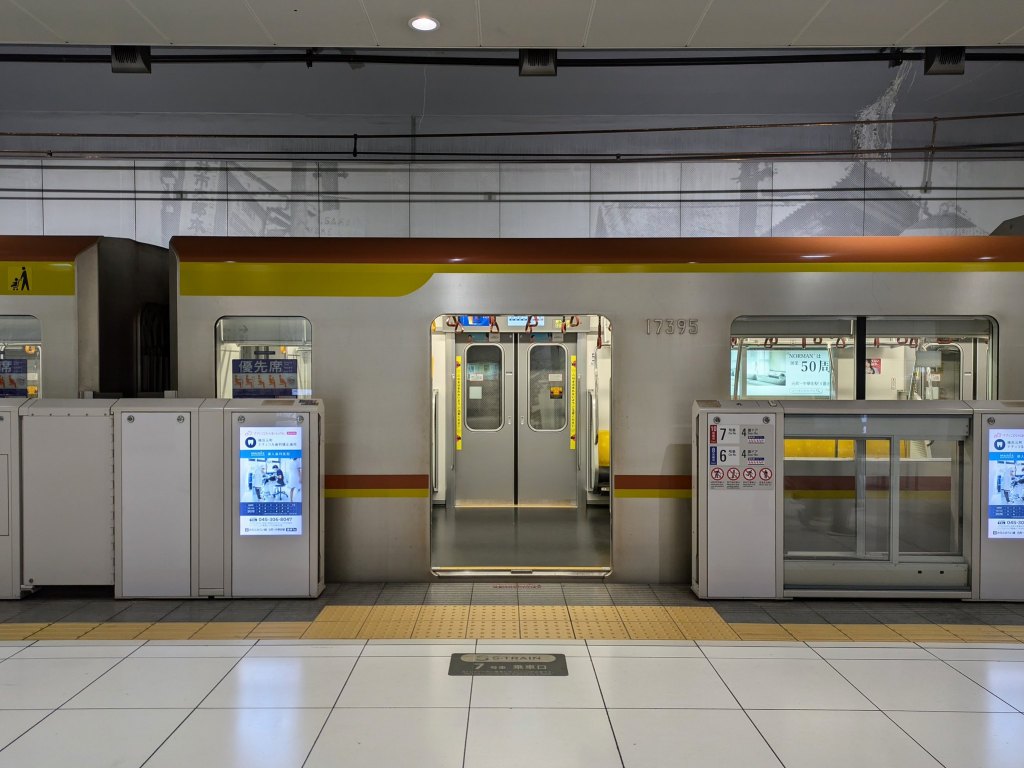
Other systems including those in Japan have shorter platform-screen gates, which make it harder to access the tracks, but not impossible. They still provide benefits of protecting the track right-of-way from intrusion, while not intruding on adult sightlines.

Similar to Metro, Amtrak and almost all rail systems in the US have no border or protection between people on the platform and the tracks. Metro has encountered incidents in the past where riders have fallen onto the tracks, which platform doors could help prevent. Without the doors, there can be large gaps between the train and the platform especially in the diaphragm area between cars.

New York City Transit previously had plans to pilot and potentially expand platform-screen doors or gates throughout the system, but those plans seem to have been dropped. The photo below is an example of a screen that was installed at the 96th Street Station.

Platform doors can also be incorporated into station design and used for wayfinding, like the system in Sao Paolo, Brazil. Line maps are helpfully scattered above the doors for ease of viewing, and decals on the ground denote where to stand for boarding and where best for bicyclists to board.

What’s next for Metrorail
WMATA’s plan calls for doors that are 5 feet 7 inches tall, which is more similar to the Tokyo Metro system’s doors. The sliding doors will block the tracks so people can’t walk (or trip) onto them, but don’t block the full height of the platform allowing for the station architecture to still be visible and for air circulation to make its way through.
Given the DC Metro’s architectural prominence, the agency does note that it plans to consult on the design of its platform doors, both for indoor and outdoor stations, with review boards including the Commission of Fine Arts (CFA) and the National Capital Planning Commission (NCPC).
With the project funding approved, WMATA expects to begin on project development activities throughout the rest of 2026 and into 2027, finishing no later than July 2028 to make sure it qualifies for some federal funding. The agency’s timeline sets engineering for future implementation to begin in 2028. Installation and implementation of the system would occur during 2030-2034.
Whether or not the rest of the system is upgraded with CBTC and PSDs remains to be seen; that depends on receiving “future funding from the DMVMoves efforts and other sources,” according to WMATA.