Interview: ‘Arrested Mobility’ Star Charles T. Brown On Why The New ‘Bikelash’ Is A Misdirection Ploy
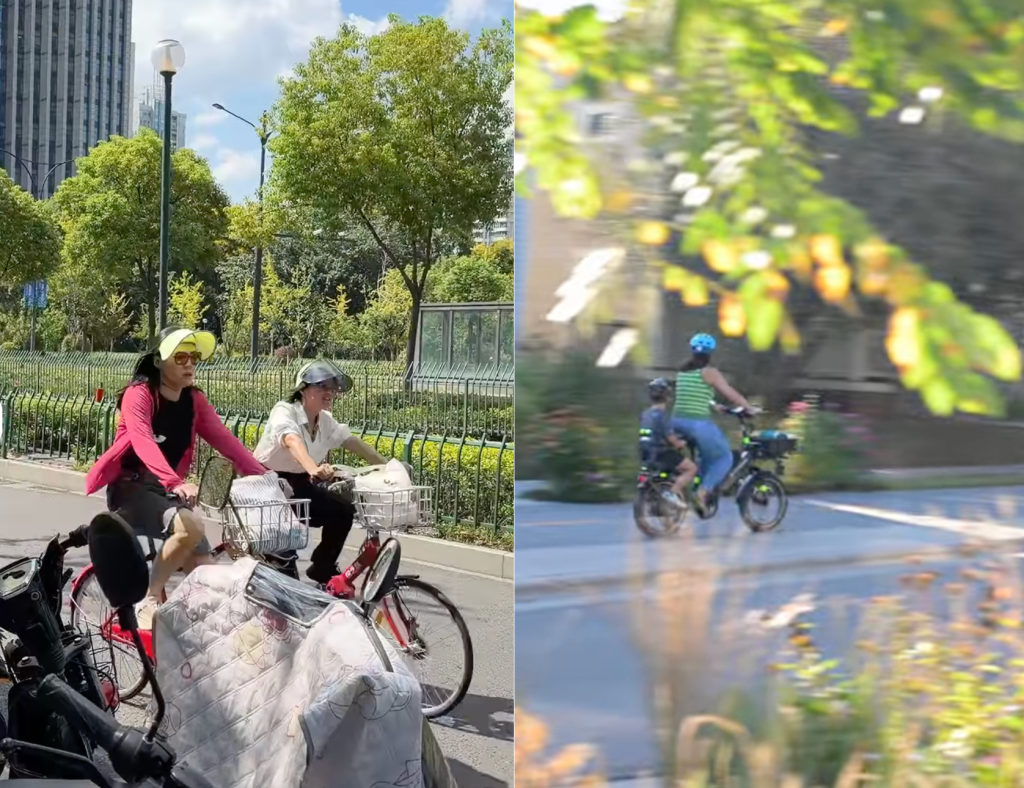
The nation is in the midst of another “bikelash” — this time, not from motorists who detest cyclists because of all the alleged “space” they “steal” from drivers or because “bike lanes cause traffic jams.”
No, this time, pedestrians and cyclists are enraged at e-bikes. New Jersey lawmakers cracked down with a notorious victim-blaming bill. Another New York City suburb simply banned legal e-bikes with a law that was so ham-handed that will likely be rescinded. A Philly suburb banned e-bikes in parks. More and more cities and towns are prepping restrictions.
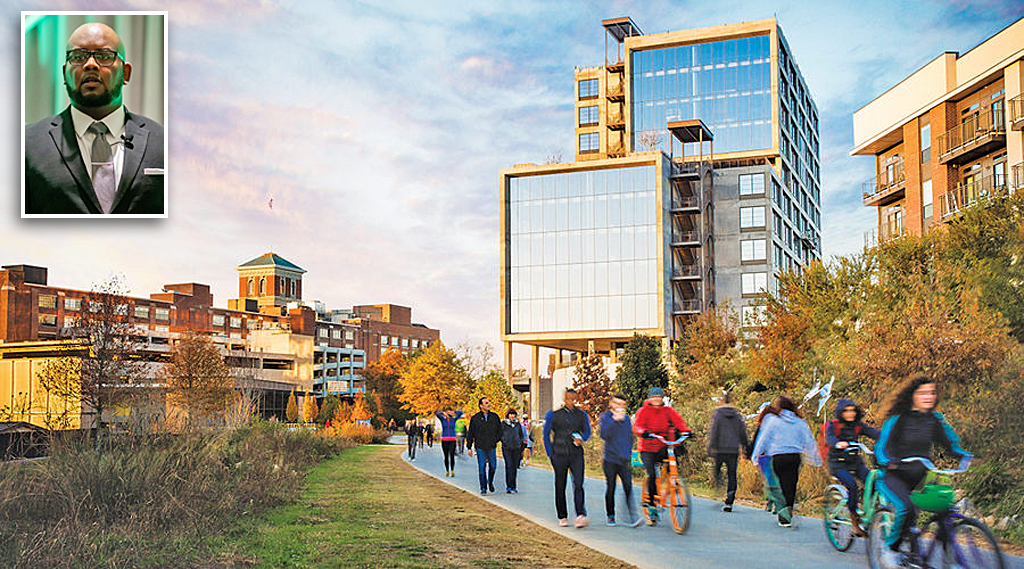
And earlier this summer, Atlanta became a new epicenter for concerns about “e-bikes” that are allegedly ruining the city’s premier recreation space , the BeltLine.
But the pushback against e-scooters and e-bikes on the BeltLine and elsewhere is a misdirection ploy for two reasons (neither of which make any difference to the haters): First, in almost all cases, the vehicles being criticized are not legal e-bikes, but illegal e-motos or mopeds. As Streetsblog NYC has exhaustively reported, many consumers think they are buying a legal, safe electric bike when they shop online, but are often buying machines that can exceed even car speed limits with fatal repercussions (typically for victims, not pedestrians or drivers — who are nonetheless the biggest complainers).
RELATED: IT’S IMPOSSIBLE TO STOP THE ONLINE FLOOD OF ILLEGAL E-MOTOS
But the griping over electric mobility is also flawed because it’s elitist and divorced from the essential street safety argument that it purportedly is bolstering: Low-income and minority commuters depend on micromobility for safe, affordable transportation, and they need the roadways to be safe. But because roadways are not safe, these micromobility users end up in spaces where they are perceived as the danger. In short, a few pedestrian complaints are shaping the new policy of bikelash.
The real issue, of course, is car-dominated streets. But given the direction of this debate, Streetsblog Editor Gersh Kuntzman decided to reach out to Charles T. Brown, the famed the host of the Arrested Mobility podcast and author of “Arrested Mobility: Overcoming the Threat to Black Movement” (Island, 2025). Brown founded Equitable Cities in 2014, but now he’s growing it into Horizon 54, which bills itself as “an urban planning, public policy, and research firm working at the intersection of transportation, health, and equity.”
Sounds like the perfect person with whom to discuss the current bikelash and how to frame the scooter debate as a proxy fight over who gets to use public space. (This interview has been edited for space and clarity):
Gersh Kuntzman: So let’s start with Atlanta. I’m hearing all sorts of anger from BeltLine users that scooters are ruining the public space. I’m always concerned whenever pedestrians feel unsafe, but I’m also a huge advocate for micromobility.
Charles T. Brown: There’s a growing tension on the BeltLine between non-motorized and what we would call motorized modes of transportation, relative to pedestrians, and in particular pedestrians with animals, such as dogs; and seniors; and persons with disability. But no matter which side you’re on, the heart of this has more to do with the fact that there needs to be more infrastructure to accommodate those modes on Atlanta streets.
Now, Atlanta has made tremendous headway in putting down protective bike lanes and other bicycle accommodation. However, when you take an artery like the BeltLine, which is what it is in terms of popularity from the social, fiscal, economic standpoint, clashes will happen, and what I don’t want to happen is for that to disproportionately impact the people who depend on that mode, not just for recreational reasons, but utilitarian reasons as well.
So there, there needs to be a healthy discussion that isn’t one that has demonized motorized transportation, especially as it continues to blossom and become popular for people of color, low-income populations.
Kuntzman: We find this in New York a lot. People point out that many of the devices that are causing concern are already completely illegal, but the safe are the legal ones. Nobody really wants to ever hear that part because they don’t really care if the whole baby gets thrown out with the bathwater. So how do you even make the argument to users of the BeltLine? It’s a recreational space, but people do use it for transportation.
Brown: Initially, you had many people that were looking to use it for recreational reasons, but it has expanded into other areas of Atlanta that didn’t have direct connections to other parts of Atlanta, such as employment centers. So we should encourage people to get out of their vehicles, especially in Atlanta, and to use the BeltLine as a place to get to work safely. And that comes with a clash.
Kuntzman: People want sustainable modes to get around. They’re cheaper, they’re more efficient, they’re safer, once you provide the right infrastructure. What happens when you make an argument, not just in Atlanta, but anywhere where drivers are initiating a bikelash?
Brown: Well, so context does matter. So, let’s start with Atlanta. Atlanta is auto-centric. Atlanta, as a city, has a history of deprioritizing alternative modes of transportation, whether we mean biking, walking, or public transit. Remember, it was up for a vote several years ago to expand MARTA, and it was voted down.
Kuntzman: Yeah, we covered that.
Brown: Right, transit has historically been voted down. So, in that context, we already start from a place being auto-centric. And when you then look at the demographics of use in terms of these, these modes, these alternative modes of transportation, they’re much more enticing to younger people, younger people of color, younger people of lower socio-economic means. So the argument is that it should be balanced, it should be enforced in a way that prioritizes the most vulnerable user, which is the pedestrian. I’m in agreement with that, particularly as it relates to seniors and pedestrians with disabilities.
However, we do not want to get to a point where those modes, which are greener, which are more sustainable, which are more accessible, are now being pushed further to the periphery because they don’t have space on our roads, and now they don’t have space on our trails, which provide people with direct connections that are safer than the alternative, right?
Kuntzman: Worse, what we’re seeing now in New York, but it’s happening elsewhere, is that people are focusing on e-bikes and using them to conveniently forget that the car is still the most-dangerous (and lest we forget, most-expensive) thing on the roads. We are having battles in New York over protected bike lanes that have been being installed for 20 years now, and you hear people say things like, “This is a radical design” even though the city has been using this very design for 20 years. I mean, the BeltLine is probably a hell of a lot safer for all its users than the rest of the city, right?
Brown: No question. But let’s be real here for a second. We’re talking about people who are biased — and I don’t mean that in a judgmental way. The population that is being interviewed by the media and the people who design our streets are predominantly car users. The people who enforce them, and the professionals with the power and the access to various media platforms are disproportionately auto-centric themselves. So when something is new on the block, the new kid on the block is much easier to demonize that than it is this behemoth of a lobby that exists on your roads every day.
Now I am not a “Let’s do away with cars” guy. I’m not saying that. But I think there’s a healthier conversation that could be had regarding how do we better accommodate these modes on popular places like the BeltLine. And here’s a specific: we hear only that seniors fear that they will become victims of an e-bike rider, but too many people ignore at the same time that many seniors are using e-bikes to help them be more active and healthy.
Kuntzman: It’s worth noting, of course, that the blame really falls to the politicians, who drive or are driven everywhere. They really let us down time and time again. And in that context, how do you get ahead of this cyclical bikelash debate? It seems like all cities are dealing with this in a lot of ways.
Brown: You have a much more holistic conversation, a town hall discussion regarding what does true safety and inclusion look like. There is space for all modes. Enforcement is a part of it — now, I know I’m the Arrested Mobility guy, but I certainly think enforcement has a role here, because there are some behaviors that are detrimental to public safety, and I think you can police that in a responsible way without demonizing the entirety of the modality, which is my point.
But the narrative is pushing much more towards abandon and disallow.
Kuntzman: Sorry, but that’s partly because there are some bad faith actors on the anti-micro-mobility side. I mean, they won’t acknowledge, for example, how dangerous cars actually are. You bring up actual statistics about crashes, and they first deny them and then claim that unreported crashes involving e-bikes far exceed reported crashes for cars, which is simply false. This is the United States. No one alive remembers roadways without cars, and car manufacturers have spent the last 100 years and hundreds of billions of dollars creating a mass car culture. Yet you say, “Well, let’s have a real discussion about this.” How is that possible when pro-car forces have shifted the Overton window?
Brown: The part that concerns me most now is that the discussion is happening and cars are not being mentioned, or the discussion is happening and the people of Atlanta and Atlanta metro region are not being held responsible for voting down other alternative modes like transit. And it doesn’t help when you have these parallel stories that are happening where youth across the country are perceived to be more violent because they’re using these modes.
For instance, unfortunately, a young lady lost her life on the BeltLine, and the perpetrator was on one of these modes, and so then these modes get again demonized because of that behavior, and that’s unfair, because we know in Atlanta every day there are people who are driving cars doing the same thing, right? It’s just becoming a pedestrian versus scooter versus e-bike argument, and that helps no one except the person who drives a car every day.

Read More:
Streetsblog has migrated to a new comment system. New commenters can register directly in the comments section of any article. Returning commenters: your previous comments and display name have been preserved, but you'll need to reclaim your account by clicking "Forgot your password?" on the sign-in form, entering your email, and following the verification link to set a new password — this is required because passwords could not be carried over during the migration. For questions, contact tips@streetsblog.org.