The Forgotten History of ‘Bloody 66’ And How Public Memory Helps Perpetuate Traffic Violence
A century ago, businessmen, automobile clubs, and politicians came together to form the U.S. 66 Highway Association. Unlike the congestion-obsessed highway-builders of today, they wanted traffic, which they saw as synonymous with a burgeoning, mass-motoring public who would spend money in their towns. They even advertised Route 66 as “Main Street of America.”
Known as an “all-year-all-weather-road” and the “Mother Road,” Route 66 was 200 miles shorter than any other transcontinental railway or highway at the time, making it the speediest route between Chicago and Los Angeles, the Association bragged. It was also touted as an economic engine, generating new jobs for men to lay asphalt across the country. More importantly, though, it was an opportunity to mythologize an enduring new idea: America’s “open road.”
But as with all myths, many people are left out of frame.
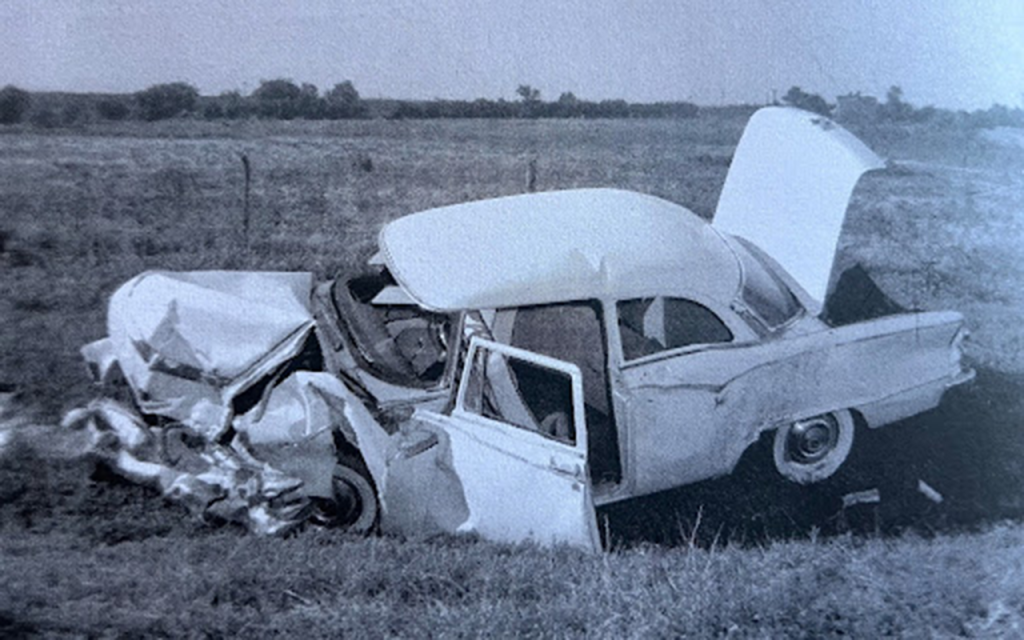
“It wasn’t really the fun, happy place we think of when we look back at the ‘good ole days,'” wrote Barry Duncan in his pictorial book Route 66: A Trail of Tears, which compiles the work of car crash photographer and Carthage, Mo. mayor William Carl Taylor. “Many were maimed or killed during the existence of Route 66.”
The title of Duncan’s book may be an insensitive reference to the forced displacement of American Indian tribes from the South and Southeast, but there’s no doubt that Route 66 has a long and violent history of its own. The author served in the Carthage, MO police force between 1977 and 2009, and claims to have witnessed over 2,000 wrecks personally, in addition to curating Taylor’s grisly collection in his book.
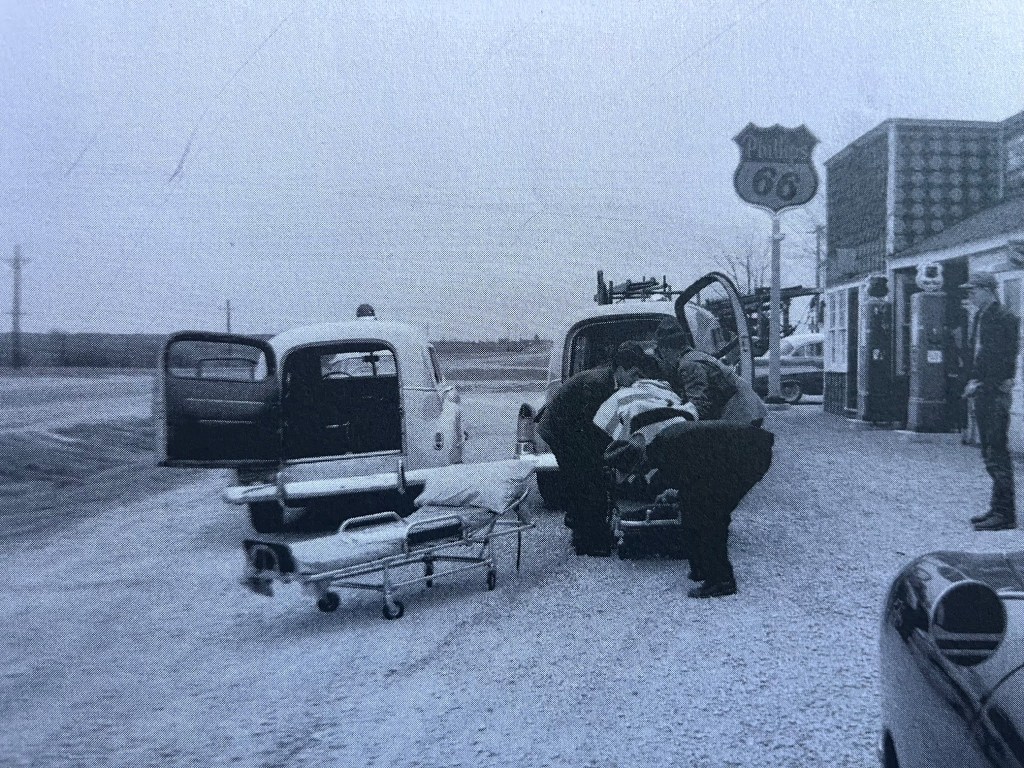
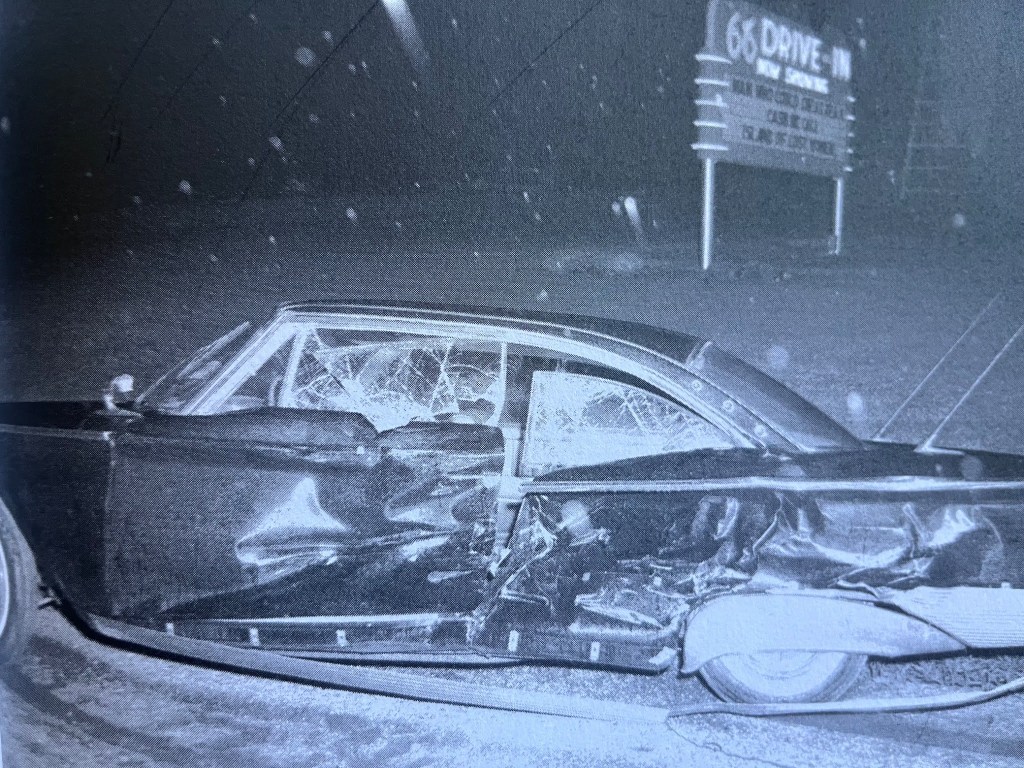
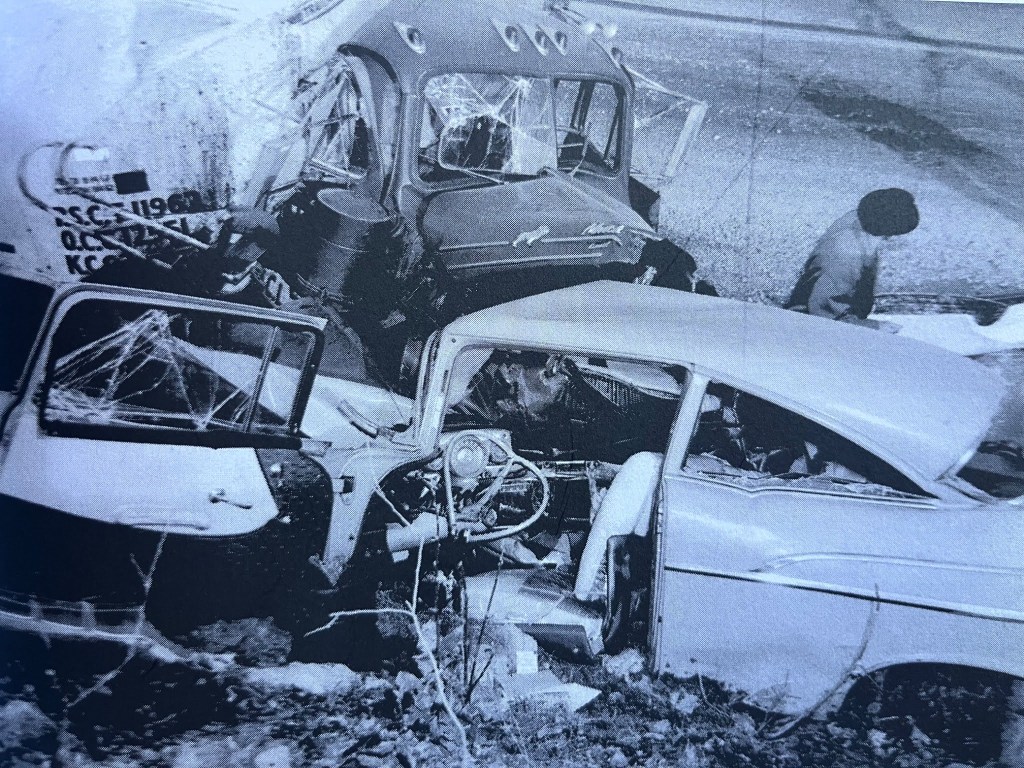
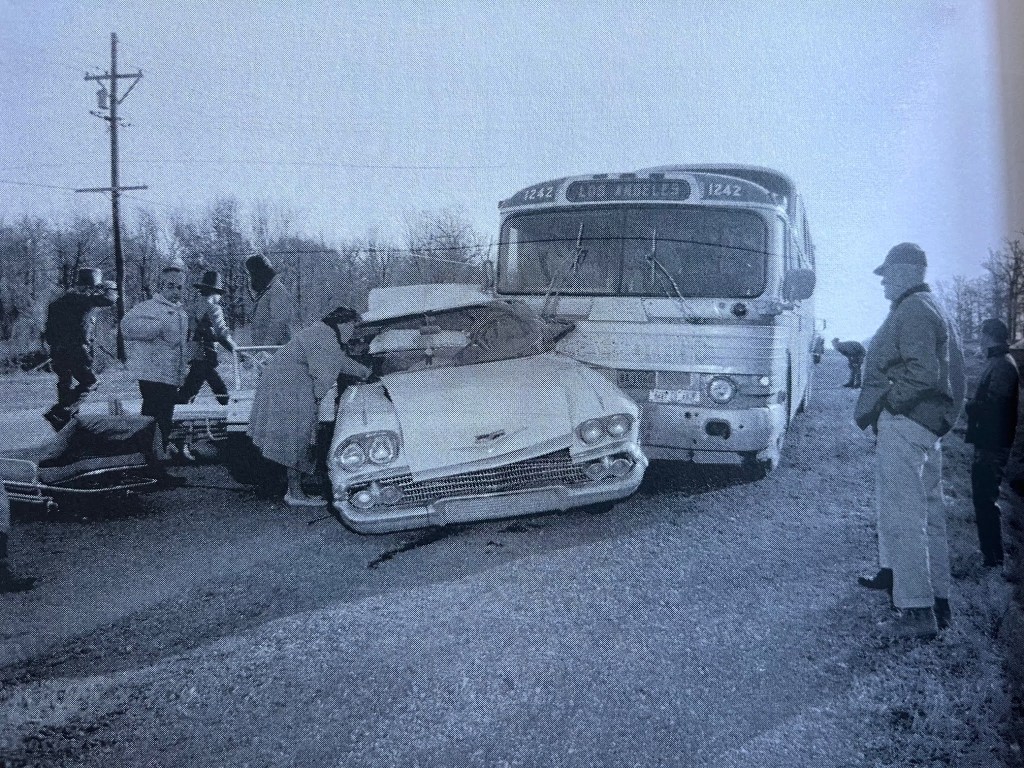
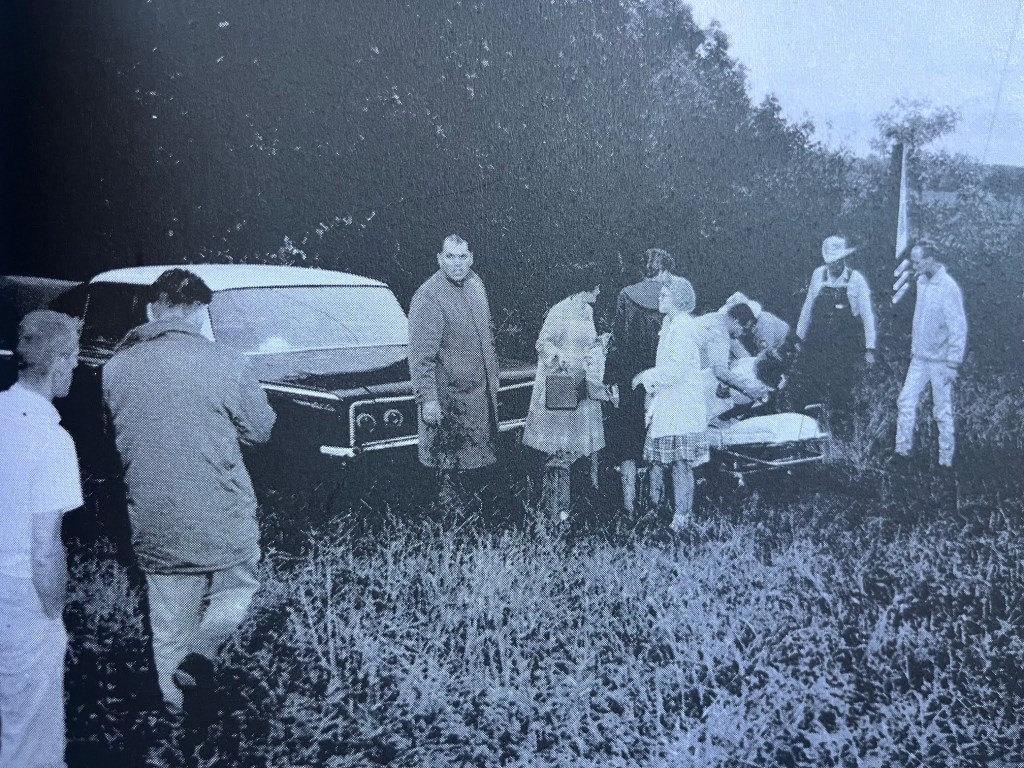
And that collection speaks to those tragedies stark terms. Fender benders stand next to piles of unrecognizable rubble. Cabs are literally flattened. Dozens stand around overturned vehicles. A service station entrance is smashed. Civilians help carry stretchers to ambulances. Police officers stare at cars from a distance and write on notepads. A girl cries.
One crash that particularly haunted Duncan involved a family called the Ruminers. In 1957, they were traveling Route 66 from Washington State to their relatives’ home in Mississippi for Christmas. On their way, they were crushed in a Ford sedan by an oncoming truck. The 28-year-old parents and their six-year-old twins were killed, leaving one child to survive with a fractured pelvis and foot.
In the media circus for Route 66’s centennial celebration this year, though, these kinds of stories remain mostly hidden – and the road’s once well-known nickname, “Bloody 66,” is almost nowhere to be found.
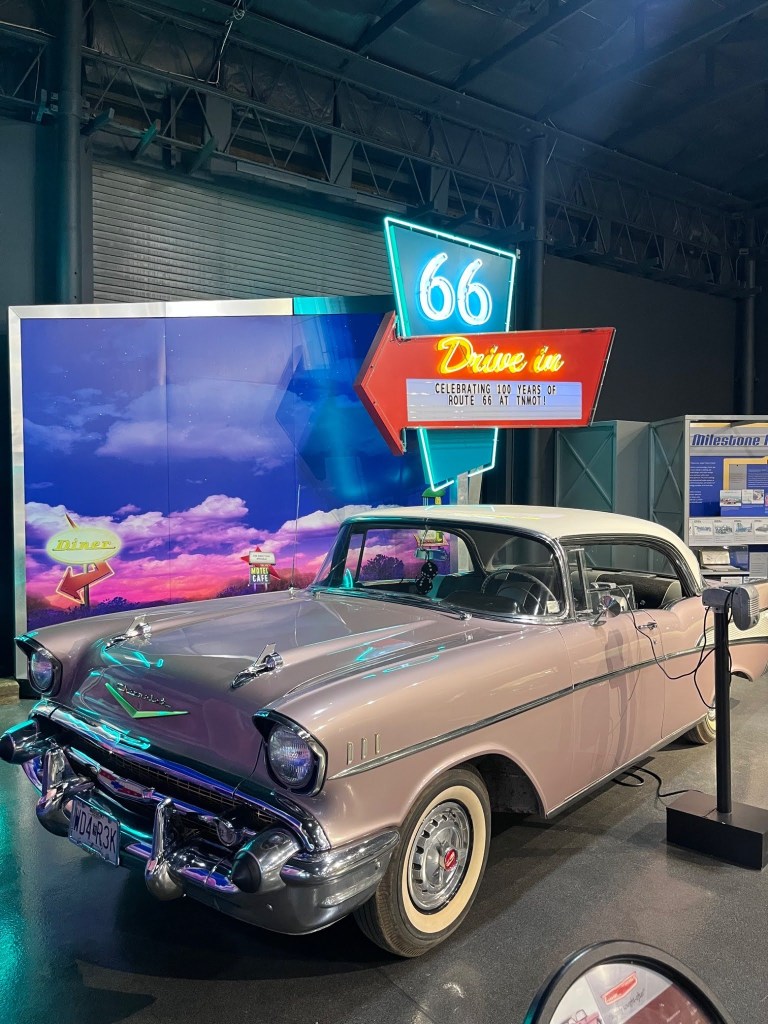
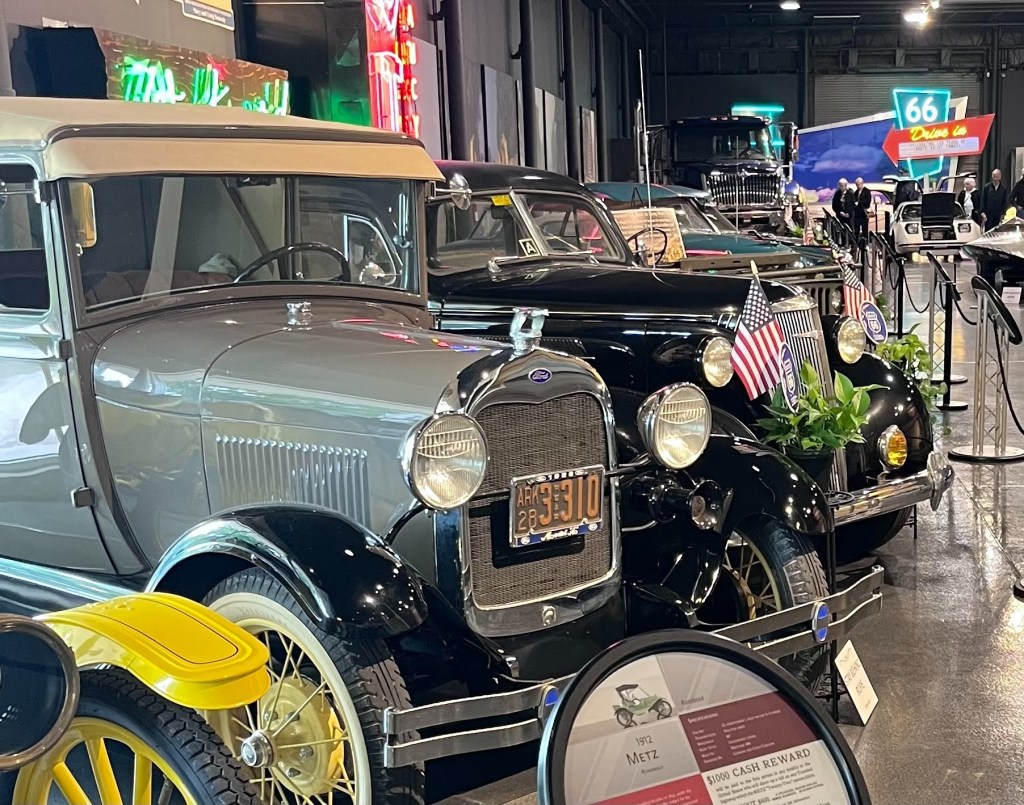
At the Missouri History Museum’s Route 66 festival, for instance, ten pristine vintage cars line the front drive. A rockabilly tune fills the main lobby. Neon signs make a dark room glow. Placards trace the origins of “the concrete ribbon to adventure,” its local landmarks, and the challenges it posed to Black, queer, and Jewish travelers. You learn about the first McDonald’s west of the Mississippi, the birth of the Phillips 66 gasoline brand, and motor cottages.
But you don’t learn nearly as much about Route 66’s bodycount. In 1941, for instance, a single short stretch of the Mother Road near the Army training installation of Fort Leonard Wood, Missouri claimed the lives of 54 people in just nine months, including 19 American soldiers.
The National Museum of Transportation in suburban St. Louis, too, highlights local landmarks associated with the highway while largely ignoring its bloodshed. On display is a replica of the silver steamer S.S. Admiral, which travelers may have seen bridging the Mississippi. Drive-in theaters are featured, as “they symbolized freedom of the open highway, mid-century American design, community gathering spaces, and the romance of the open road.”
In another building, an exterior wall of the Coral Court Motel, impressively reconstructed, stands in a corner. Ten cars, one for each decade, face viewers as they might have once in a dealer’s window.
To some, the story of Highway 66 is the story of a lost America. Route 66 represents a simpler, slower time before the Interstate, nostalgia for cross-country motoring in proximity with tree canopy, town squares, rivers, and diners. It represents postwar prosperity and adventure too; as Missouri History Museum Curator Sharon Smith says, “It is about finding hope in the west for the early years and excitement of Midwesterners traveling to the coast of California.”
The images Duncan published, though, present a shadow narrative. Greyhound buses and youngsters with bikes, generally left out of Route 66’s frame, enter it. The Studebaker is dented. The ambulance looms underneath the Phillips 66 sign. The girl is crying.
Americans aren’t supposed to die on Main Street. But many did – and still do.
The year Highway 66 opened 23,400 US residents died in motor vehicle crashes, more than 20 deaths per 100,000 residents, according to the National Safety Council. In 1953, fatalities ballooned to 37,956, or 24 deaths per 100,000 in the U.S.
So what responsibility do the stewards of public memory have to account for the scale of automobile violence on America’s most iconic highway? And how does that responsibility shift when motorists are still killing nearly 37,000 people per year on US roads today — and when the automakers and oil companies who continue to fuel that killing still have their advertisements reproduced in centennial retrospectives?
It’s true that the Missouri History Museum’s exhibit offers at least one anecdote of an “accident,” and Smith assures that the perils of the road were addressed in a fuller exhibit in 2016. But overall, these stories are footnotes amidst what otherwise seems like a glowing tribute to automobility.
But you don’t have to look far to find evidence of Route 66’s dark side — or the many human lives it’s claimed. One Sedalia news article reports that First Lieutenant George Orchard of Richmond, VA died in a head-on collision on Highway 66 in 1941; he was the 21st soldier to be killed by cars within a year in the vicinity of Fort Leonard Wood, which the highway serves.
Widening the frame of Route 66 matters, too, because of how deadly legacy highways remain to this day.
For instance, on Gravois Avenue in St. Louis — which includes a portion of Historic 66 — 22 people were killed and 1,000 injured in car crashes between 2020 and 2024 alone. Meanwhile, the US Department of Transportation has rescinded a memorandum outlining how to improve legacy highways through Complete Streets, a toolkit that can keep humans safe in and outside of cars.
As DOT Secretary Sean Duffy calls for a “Golden Era” of transportation that coalesces around the “Freedom to Drive,” public memory plays an even greater role in confronting the deadly costs of “freedom” on the open road. We owe it to the dead not to forget.

Read More:
Streetsblog has migrated to a new comment system. New commenters can register directly in the comments section of any article. Returning commenters: your previous comments and display name have been preserved, but you'll need to reclaim your account by clicking "Forgot your password?" on the sign-in form, entering your email, and following the verification link to set a new password — this is required because passwords could not be carried over during the migration. For questions, contact tips@streetsblog.org.