‘Best Bikeshare in America’: An Unexpected Community Launches Free, All-Electric Micromobility For Residents
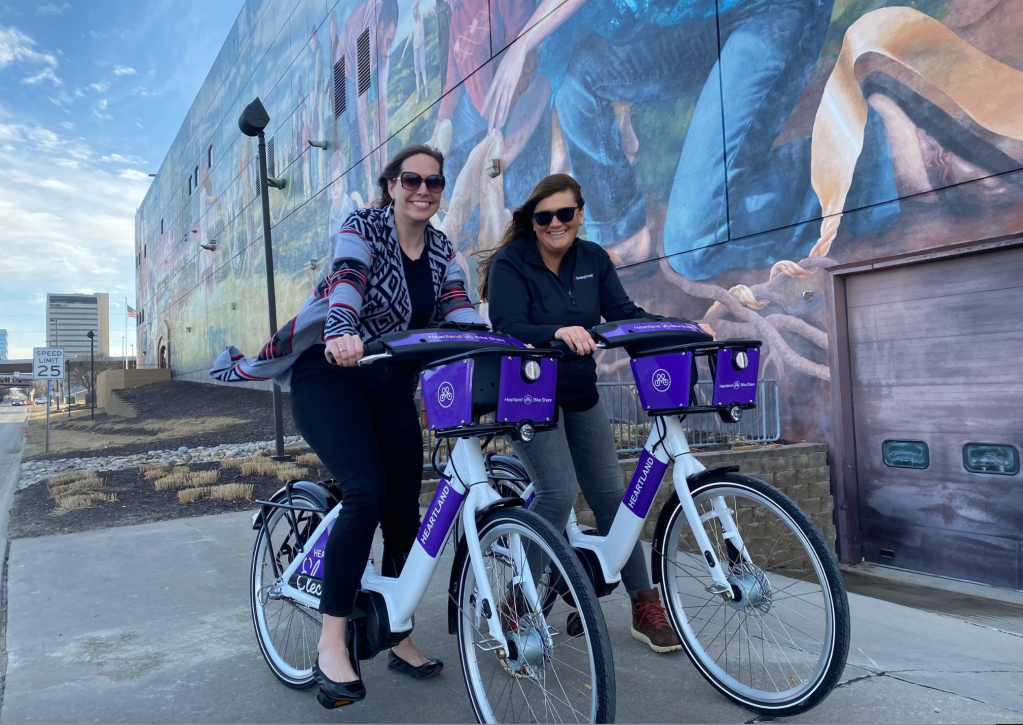
A Midwestern metro is making its sprawling, all-electric bikeshare system free to all residents — and challenging other communities to be more ambitious in their plans to get people in the saddle.
The nonprofit behind Heartland Bikeshare in metro Omaha announced on Sunday that everyone over 16 living within its service area will now get unlimited 60-minute rides for free, with no special surcharge for e-bikes, which make up the entirety of its 400-vehicle fleet. Back-to-back rides are allowed, too, which means an all-day roll isn’t out of the question.
Those vehicles can even be ridden across the Iowa border and into neighboring communities like Council Bluff, making Heartland one of only a handful of multi-state micromobility providers around — and the “Free Rides” program makes it one of the country’s most-affordable systems, too.
Local leaders say those features collectively may rank the region among the best U.S. bikeshares, period, which they think raises the profile of the entire community.
“I believe Omaha is the best place to live in America, so leading the way [on bikeshare] comes naturally to a city like ours,” Mayor John Ewing, Jr. said in a statement to Streetsblog. “I also know that when efforts like the Free Rides program are rolled out, Omahans will seize the opportunity to get around and pedal for work and play. We’re natural pioneers.”
Heartland isn’t the first U.S. bikeshare system to go fare-free for residents, even if the specific way it’s doing it is more ambitious than most.
Indianapolis began offering free bikeshare to residents in 2024, but restricted rides to just 30 minutes at a time. Most other communities that waive micromobity fees are tiny micro-municipalities compared to the Heartland program, which covers more than 80 stations across a massive, 125-square mile footprint.
Even Heartland itself has experimented with fare-free rides before when it re-launched as an all-electric fleet in 2023 — before the program got so wildly popular so quickly that the nonprofit behind it was forced to pause the fee waivers after just one month.
Now, though, Heartland CEO Benny Foltz says his team has streamlined their ability to rebalance stations and swap batteries on dying e-bikes quickly, and it’s ready and excited for an influx of new riders.
“We firmly believe in the bicycle as a valid form of transportation. … [But] oftentimes, the cost can be a barrier,” Foltz added. “So we’re just eliminating that barrier completely.”
Foltz explains that while fares can be an important part of keeping a micromobility system afloat, Heartland’s program only recovered 10 to 15 percent of its operating expenses from riders before Free Rides went into effect— and more than half of that money came from out-of-towners anyway.
“Certainly we recognize system-generated revenue as an important part of our budget. … [But] it’s a small percentage compared to everything that we that it costs to run a bike share, and that’s not unusual for public transit,” he added.
By making bikeshare free to locals, though, Foltz hopes it can unlock a new tranche of riders who can build safety in numbers for people on personally-owned bikes, too — and build demand for new bike lanes in the process. Omaha currently ranks in the 70th percentile on People ForBikes’ annual rankings; Council Bluffs ranks in the 76th.
“We can only do so much here at Heartland Bikeshare, but we can definitely provide bikes,” Foltz added. “We have an amazing trail network, [but] we’re lacking in certain parts of bicycle infrastructure. … If we have more people riding bikes, whether it’s bikeshare or personal bikes, hopefully the outcome is that we see more bicycle infrastructure over time.”
In order to afford all those waived fares, Heartland is relying largely on sponsorships and philanthropy — though Foltz says the city is pitching in, too, by helping the nonprofit to procure equipment, lend city staff’s specialized knowledge of things like GIS, shovel snow from stations, and more money-saving measures.
Even so, the Free Rides program is funded only for an initial pilot year. But Fotlz is optimistic he can make the case for at least two more years of the program, particularly as the public health, economic, and equity benefits become clear.
“It always strikes me as odd how I have to justify the benefits of a bicycle to potential funders, but that is what I have to do,” he said. “[We get] rejected more times than we win. But we kept in touch [potential funders] over the years, and we finally had some face time with [enough of them] to show how great Free Rides is going to be.”
Of course, there’s a lot of competition for the title of “best bikeshare in America” — and who wins will depend on what you value. Massive metropolises like New York City, Chicago and San Francisco have thousands more bikes and hundreds more miles of bike lanes than metro Omaha, and they’re also supported by transit-rich landscapes that more radically decenter automobiles than most midwestern cities.
Still, Foltz argues that the region Heartland serves is an unsung hero of the bikeshare revolution — and not just because they’re attracting sponsors, going electric, and slashing fares while many communities do the opposite. He points out Nebraska was the first state he knows of to introduce legislation to fund bikeshare programs with taxpayer dollars, to make bikeshare passes available at public libraries, and other industry-leading initiatives.
And if Free Rides proves to be a success, he hopes it can serve as an example for other communities — including places not known for multimodality.
“I’ve been all over the country, and rode a lot of the bikeshare programs,” added Foltz. “We have been at the forefront of this bike share evolution. … People from the coasts and bigger cities maybe pay too much attention to it. But I know that bikes are great, and I know that bike share is helping people move here.”
Read More:
Streetsblog has migrated to a new comment system. New commenters can register directly in the comments section of any article. Returning commenters: your previous comments and display name have been preserved, but you'll need to reclaim your account by clicking "Forgot your password?" on the sign-in form, entering your email, and following the verification link to set a new password — this is required because passwords could not be carried over during the migration. For questions, contact tips@streetsblog.org.