What If All Cars Were Autonomous, Electric, and Free?
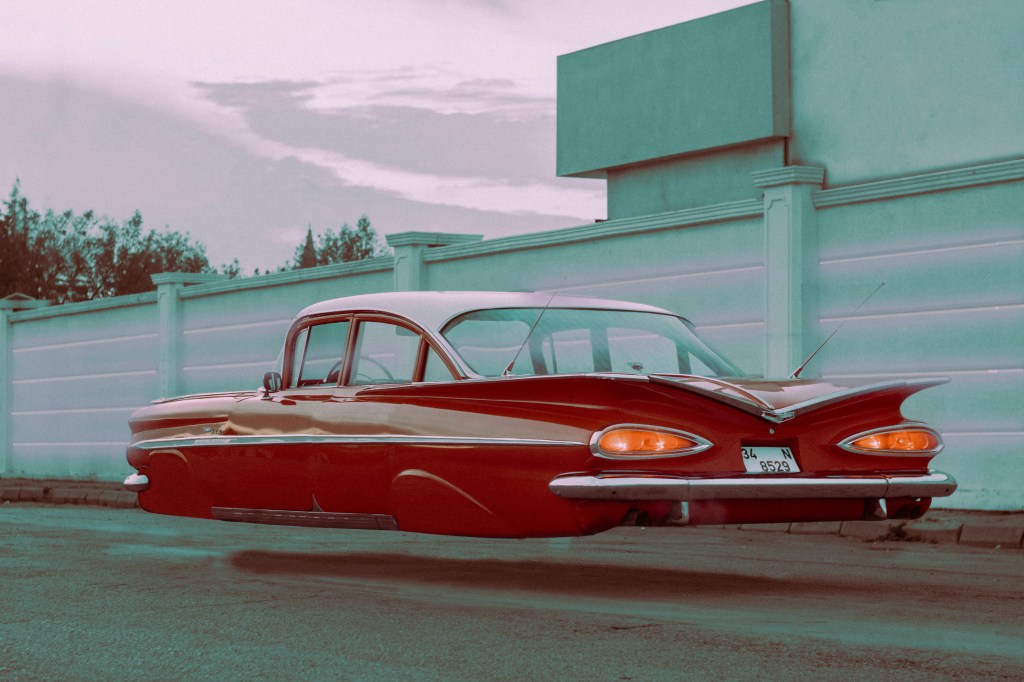
Imagine a world where, with the wave of a magic wand, we could make every car on the road perfectly autonomous, fully electric, and dirt-cheap to boot.
Thanks to our theoretical fairy godmother, we’ve vaulted past decades of scientific progress and bruising political battles, and immediately welcomed in the era of the magical, mysterious Wondermobile— without even needing to wait for those pesky motorists to retire their old vehicles and phase in new ones.
Every car on the road is completely perfect. It will never hit a single pedestrian, spew an ounce of carbon, put a single family into financial distress. We have solved for all of the most glaring negative externalities of automobility in one fell swoop.
But would that really be the world we want?
I like to pitch this thought experiment whenever I find myself mired in yet another debate with someone who insists that America’s car-dominant transportation system could and should be redeemed … if we could just made cars better.
Autonomous vehicles are already safer than human drivers in most circumstances, these debaters claim, and surely they will be safer in all circumstances soon; EVs are cleaner in every way than cars that run on gas, and we will outlast the oil-drunk politicians who are throwing their full bodyweight on the scale for the internal combustion engine; China has plenty of cheap cars ready to roar onto U.S. roads, if we could just relax those tariffs and give consumers options.
Rather than poke holes in many of these arguments — and after six years of writing five to seven articles a week about car dependence, trust me that I could — I double-down. I dare whoever I’m speaking to imagine a world where the Wondermobile showed up right now. And I even up the ante.
Let’s say, in our thought experiment, that these ultra-autonomous cars will never face the trolley problem dilemma where they have to choose between the safety of their passengers and the safety of the people around them; our fairy godmother has solved that in advance, with no more transforming pedestrians into unwitting guinea pigs while tech companies tweak their algorithms.
Let’s say the Wondermobile is somehow fully carbon neutral from cradle to grave, too. There will be no wars over non-renewable battery minerals, no nasty bits of tire microplastics or brake dust or asphalt particulates scraped off the roads by heavyweight EVs swirling into our lungs. Every component of this thing is made out of rainbows, unicorn hair, and kitten dreams — like a bike, but even better.
And you know what, sure: it’s free now! Every single U.S. resident is issued a Wondermobile of their very own at birth, for the low price of zero dollars. No monthly payments, no maintenance, no fuel costs gobbling up a collective 17 percent of the average U.S. paycheck. And they can trade in for a new one whenever they want. Take that, subsidized bus pass!
If we think about what the world of the Wondermobile would look like for even a moment, though, it becomes clear it would be a nightmare. And we know this because we’re already most of the way there.
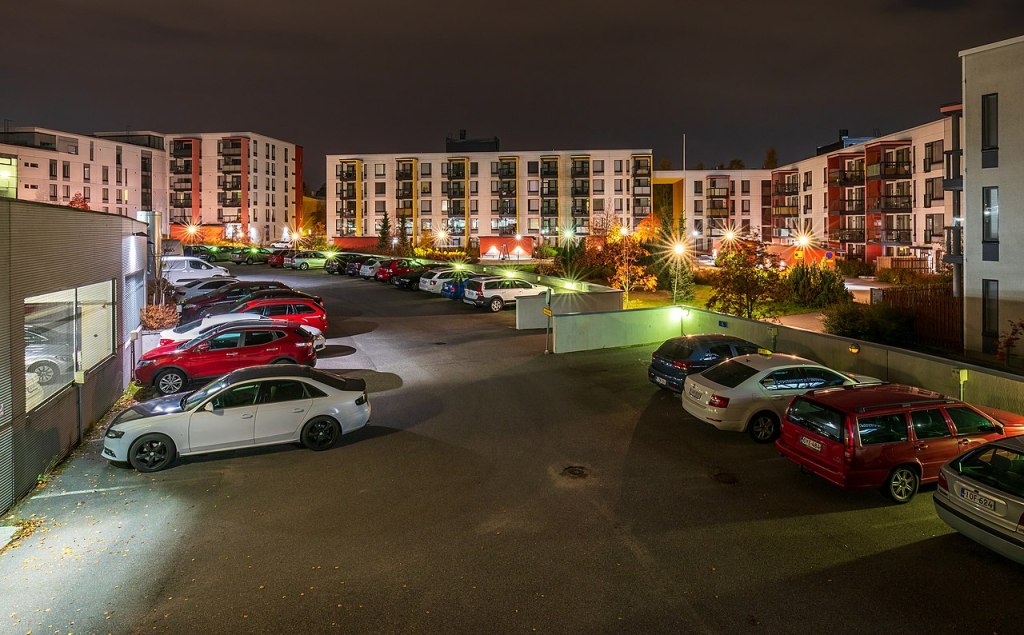
The more we have subsidized, greenwashed, and, yes, safety-washed, the American automobile over the course of the last century, the more our communities have been transformed to make space for them — and not for the better. Roads have gotten wider and longer and faster; parking lots have proliferated and swelled; grocery stores and homes and job centers have gotten further and further apart, all to accommodate the inescapable geometry of thousands of pounds of metal per person.
To make all this space for cars, we’ve torn down whole neighborhoods, dynamited open mountains, and disrupted countless ecosystems. In places without good transit systems, we’ve doomed people with disabilities that prevent them from driving to utter dependence on those who can; we have traded our children’s very ability to walk to school for a spreading ocean of asphalt.
And every time a traffic jam inevitably arises on those monster roads, we lay even more asphalt to give drivers more space, even though a universe of research tells us it won’t work.
Of course, all this overbuilt infrastructure doesn’t come cheap, and most drivers don’t want to pay for it. So we cannibalize enough money from the general fund every single year to end national homelessness four times over — and then we do it again next year, even though congestion never seems to abate and people are still sleeping on the streets.
We also fund our police departments more and more every year, even as we claim increasing vehicle automation is already making our roads safer. And while some imagine that total automation will mean the end of the human traffic stop, it’s not hard to imagine an autonomous world where politicians demand even more money for police in the transportation realm.
After all, every new car model that rolls off the line is a new opportunity to accelerate the transformation of the modern vehicle into a data collection device on wheels. What new categories of pretextual stops will arise as computers expand law enforcement’s ability to surveil our every move — including for crimes that have nothing to do with traffic safety, like transporting an immigrant or helping a pregnant person get an abortion?
Let’s be clear: I am in no way making a pitch for ending our efforts to make cars greener, safer, and more affordable to people who have no choice but to rely on them. I live in a city with dangerous roads and deeply insufficient transit; I try to walk, bike, and bus when I can, but I still bought the cheapest used electric car I could get with the best safety features I could find, and I happily accepted a tax credit to do it. The Wondermobile isn’t really the problem, at least on its own; we’d be damn lucky to have it.
If we changed nothing else about our heavily car-dependent system, though, the Wondermobile would unleash a wave of new drivers and car trips not our roads that would amplify many of the worst harms of mass automobility, even as it solves some of the others. It would speed our descent into transportation monoculture and divest us of the freedom to choose other ways of getting around — and all of the joys and benefits that come with those choices.
And before I get accused of being a bike-crazy zealot again, let’s be clear about one more thing: there is no transportation monoculture that deserves our defense — including one dominated by a single sustainable mode. A world where everyone of all abilities is forced to walk or bike or bus everywhere in all circumstances would not be any more just than one where everyone is forced to drive; even the best “car-free” pedestrian plaza will let the odd ambulance or paratransit van in, and cars will and should always be a part of our lives.
We should wish for every car on the road to be autonomous, electric, and affordable. But If our fairy godmother could give us a couple more waves of her wand, we should also add a few more adjectives to that list: “rare” and “part of a balanced transportation ecosystem.” Because when we allow one mode to dominate them all, we send all our ecosystems into chaos — and when we look at automobility only from one angle, we miss the forest for the trees.

Read More:
Streetsblog has migrated to a new comment system. New commenters can register directly in the comments section of any article. Returning commenters: your previous comments and display name have been preserved, but you'll need to reclaim your account by clicking "Forgot your password?" on the sign-in form, entering your email, and following the verification link to set a new password — this is required because passwords could not be carried over during the migration. For questions, contact tips@streetsblog.org.