Disturbing Utah ‘Bikelash’ Bill Takes Aim at Salt Lake City Traffic Calming

A controversial provision in a sprawling Utah transportation bill could force its state capital to rip out key traffic calming infrastructure at the taxpayer’s expense — and possibly set a new standard for state interference in cities’ Vision Zero efforts.
In a disturbing echo of the infamous Ontario law that forced Toronto to destroy popular bike lanes, the final lines of Utah’s State Bill 242 would require Salt Lake City to “mitigate the impacts” of traffic calming efforts on three specific corridors that have been the target of bikelash among opponents of Vision Zero.
One of those traffic calming projects isn’t even completed yet, however, while the others have shown minimal impacts on vehicular mobility in recent studies. All three rededicate only a tiny fraction of driving space on the Beehive State’s notoriously massive roads.
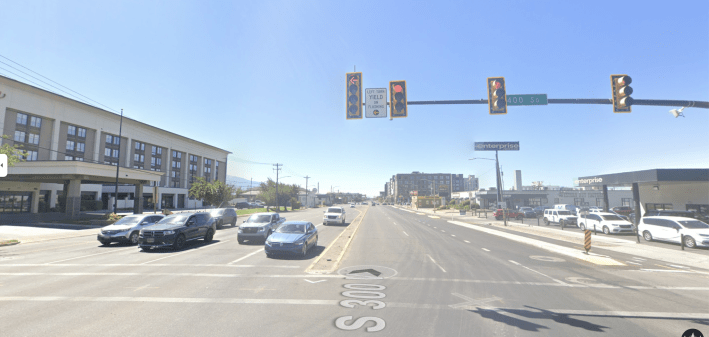
Sponsoring Republican State Sen. Wayne Harper told City Weekly that “nothing in here says they have to take [bike lanes] out,” but also said locals would have to prove that bike lanes aren’t “causing an impediment.” That would add costly administrative review to projects with already proven benefits.
The same section of the bill takes aim at Salt Lake City’s traffic safety future, too, essentially barring local officials from implementing “highway reduction” strategies on many of its arterials, and granting the state veto power over proposed changes on others.
The proposal unleashed a flurry of outrage among advocates, who packed a Feb. 9 Senate Transportation Committee hearing so full that officials forced would-be testifiers into an overflow room in another building. Those who spoke challenged Republican narratives that the state should have a say local street design because Salt Lake is home to important events like the Olympics and attractions like the Mormon Church’s Salt Lake Temple — because to them, Salt Lake is home, period.
“Local is where decisions are made best,” said Troy Saltiel, an executive board member for Sweet Streets SLC, a local advocacy group organizing opposition to the bill. “I think it’s important that the people who are actually living near these streets — the ones who are put in danger on the streets — have the most say about what’s happening.”
Of course, Salt Lake isn’t the first city to deal with state interference into what some advocates argue should be firmly local transportation efforts. States across the country have preempted their cities’ abilities to regulate ride-share companies like Uber; Indiana once attempted to pass a bill that would stop the construction of any bus rapid transit lines in the state for one year, and then negotiated away that sweeping provision in exchange for changes to one specific BRT line in Indianapolis.
The hyper-specificity of S.B. 242, though, would be a particularly stunning example of a state squashing a city’s traffic violence prevention efforts, forcing Salt Lake to adhere to 11-foot minimum car lane widths on many roads and mandating onerous “stakeholder engagement” requirements to remove as few as three parking spaces on specific categories of roads.
Advocates have already succeeded in getting lawmakers to make some of those provisions less severe, but question where the bill’s authors, who are not traffic engineers, are getting the idea for those sorts of arcane details. A previous anti-traffic safety bill in Utah reportedly drew inspiration from a debunked study that claimed that specific traffic calming features like road diets, speed humps and traffic signal timing adjustments can decrease air quality, increase congestion and even “endanger all road users.”
S.B. 242 could weaponize that pseudoscience even further by allowing the state to interfere in traffic safety in an even wider subset of Salt Lake City roads.
“The way that it’s worded could be interpreted that they can look at any street in the city and [make changes],” added Saltiel. “It’s essentially a back door for them to pick on certain streets when someone who’s well-connected has a complaint.”
With the current version of S.B. 242 now passed out of committee along party lines, advocates have turned their attention to getting the bikelash portions of the bill struck out on the Senate floor. They warn, though, that if they don’t succeed, it could have echoes in other communities, too.
“If this can happen in Salt Lake City, you’re setting a precedent that this could come to another city in Utah — and maybe other states, too,” added Saltiel.

Read More:
Streetsblog has migrated to a new comment system. New commenters can register directly in the comments section of any article. Returning commenters: your previous comments and display name have been preserved, but you'll need to reclaim your account by clicking "Forgot your password?" on the sign-in form, entering your email, and following the verification link to set a new password — this is required because passwords could not be carried over during the migration. For questions, contact tips@streetsblog.org.