This Holiday Travel Season, It’s Time to End the Stigma Around Intercity Buses
"The future of travel is not about choosing one mode over another. It is about building a balanced, interconnected system where buses, trains, planes, and cars complement each other."
Streetsblog provides high-quality journalism and analysis for free — which is something to be celebrated in an era of paywalls. Once a year, we ask for your tax-deductible donations to support our reporters and editors as they advance the movement to end car dependency and strengthen our communities.
If you already support our work, thank you! If not, can we ask for your help?
Together, we can create a walkable, bikeable, equitable and enjoyable USA for all. Happy holidays from the Streetsblog team!
As the winter holidays approach, millions of Americans brace for one of the busiest travel seasons of the year. But 2025 has already exposed a glaring vulnerability in the nation’s transportation system: our over-reliance on air travel.
Communications equipment failures disrupted the work of air traffic controllers and brought major airports in Newark and Dallas to a standstill. Recurring FAA staffing shortages caused cascading delays from Boston to Atlanta, to Los Angeles. And a government shutdown grounded thousands of flights nationwide, leaving travelers stranded, exhausted, and scrambling for alternatives.
With airports overwhelmed, one often-overlooked mode of long-distance travel came into sharp focus: intercity buses.
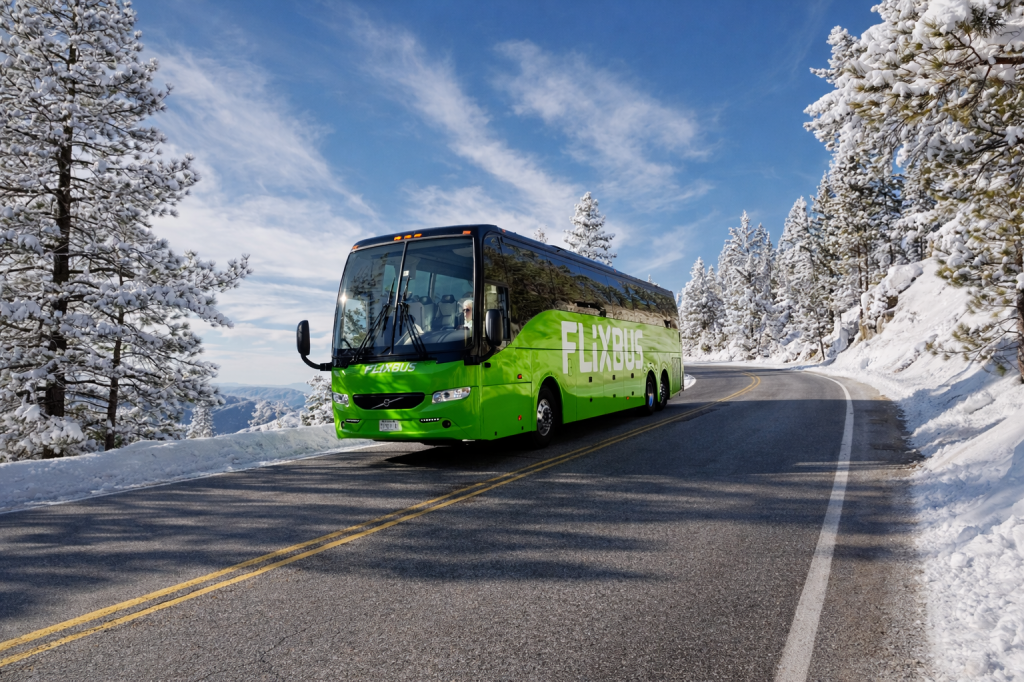
They carried passengers to their destinations reliably and affordably, demonstrating their essential role in maintaining the resilience of America’s transportation network. Yet buses remain burdened by an outdated stigma, often viewed by the public and government stakeholders as a last resort rather than a core component of national mobility.
That perception is not only inaccurate; it actively weakens the resilience of our transportation system. It is time to change that.
For more than a century, intercity buses have connected communities in ways no other mode can. They reach small towns, rural areas, and regions untouched by airlines or passenger rail. They serve people from all walks of life, but they are especially vital for millions of Americans earning under $50,000 a year, as well as students, seniors, military personnel, people with disabilities, and travelers priced out of flying or owning a car.
Buses connect nearly 95,000 unique origin-and-destination pairs across the country, far more than any other long-distance mode. Yet they are routinely excluded from transportation planning and policy discussions and are underappreciated in public perception.
What is not widely recognized is that intercity buses are the most cost-effective, least subsidized, and most fuel-efficient mode of long-distance travel.
Intercity bus service is run primarily by private companies and doesn’t require substantial taxpayer investments. Buses receive roughly a penny per passenger mile in federal support, compared with long-distance passenger rail, which receives nearly fifty times more per mile. Airlines rely on publicly funded airports, air-traffic control, and security systems. Private bus operators also contribute fuel taxes to the Highway Trust Fund that supports the national transportation infrastructure.
The stigma surrounding bus travel has deep roots in decades of underinvestment, negative stereotypes, and outdated perceptions of who rides buses. Poor customer experiences, lack of amenities, slow schedules, and minimal technology fueled a narrative that buses were inconvenient and uncomfortable. But the industry is rapidly changing. Investments by private companies over the last few years have modernized fleets, improved service, and upgraded passenger experience.
Today’s buses offer comfortable seats, Wi-Fi, power outlets, climate-controlled cabins, real-time booking and ride tracking. Smarter routing and AI-driven scheduling have improved efficiency, while on-time performance increasingly rivals planes and trains. Ridership has been steadily increasing, and millions of passengers now choose buses not out of necessity, but because they are convenient, reliable, and affordable.
Yet modern buses and improved service cannot overcome outdated policies alone. Across the country, too many local governments still push intercity buses to the outskirts.
These decisions are justified as congestion management or neighborhood compatibility, but in practice, they reflect lingering stigma. Remote bus service is difficult to reach and creates an inconvenient and less safe travel experience for travelers. This weakens access to jobs, education, healthcare, and essential services for the communities that rely on buses most. They disconnect intercity travel from local transit networks that taxpayers have already funded.
The good news is that change is underway thanks to a number of forward-thinking cities. They recognize the benefit of intercity buses and are renovating or opening intermodal terminals that integrate bus service with public transportation, long-distance trains, and airports.
Cities such as Los Angeles, Washington D.C., Boston, and New York are collaborating with intercity bus companies to co-locate services at publicly owned transportation centers. Where buses are integrated with other modes, ridership grows, safety improves, local businesses benefit, and publicly funded infrastructure is better utilized. These partnerships demonstrate that strong collaboration between city, state, and private operators works — and should be the national standard.
The benefits of intercity buses are clear. They connect people to opportunity, support local economies, reduce emissions, and add redundancy to a fragile transportation network. This year’s disruptions to air travel proved just how essential they can be.
The future of travel is not about choosing one mode over another. It is about building a balanced, interconnected system where buses, trains, planes, and cars complement each other. Intercity buses are ready to play their part. Governments, communities, and travelers must recognize their value and embrace them as the modern, essential mode of travel they have become.
If we want a transportation system that is affordable, sustainable, and crisis-ready, we must erase the stigma that has held buses back for decades. The bus is not the past. It is an essential part of America’s transportation future.
Kai Boysan is CEO of Flix North America, the parent company of FlixBus and Greyhound Lines. With over 25 years of global experience transforming and scaling businesses, he is focused on modernizing intercity bus travel and advancing more affordable, convenient, and sustainable long-distance transportation options for all.
Streetsblog has migrated to a new comment system. New commenters can register directly in the comments section of any article. Returning commenters: your previous comments and display name have been preserved, but you'll need to reclaim your account by clicking "Forgot your password?" on the sign-in form, entering your email, and following the verification link to set a new password — this is required because passwords could not be carried over during the migration. For questions, contact tips@streetsblog.org.
Toronto might be in the center of the fight to resist bike lane teardown today. But if some far-right politicians have their way, this fight won't be the last.